

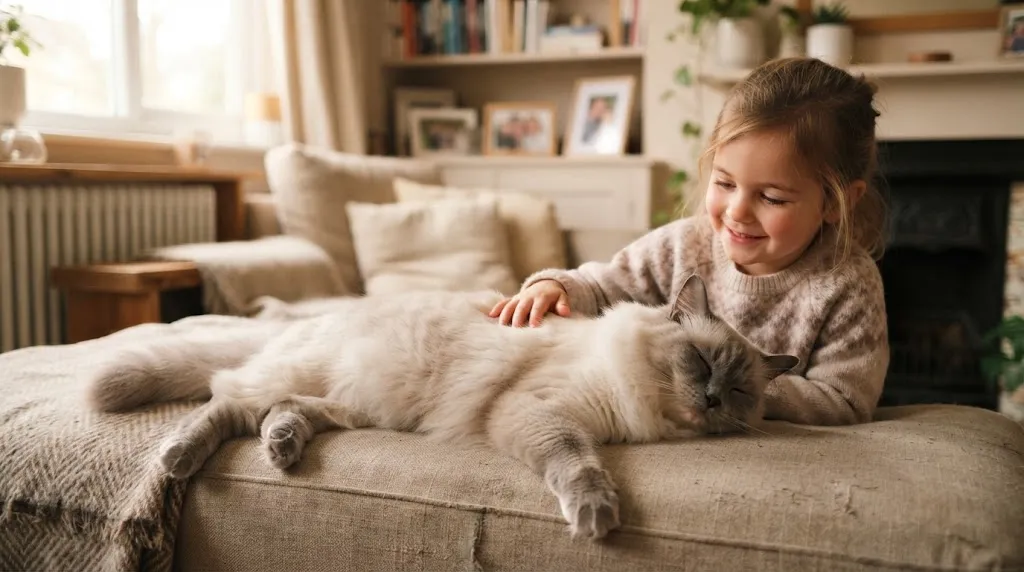
Every rescue centre sees family cats come back for the same reason: a lovely cat placed in a home that didn’t suit it. A nervous cat in a loud house with toddlers, or a kitten that hasn’t learned to use its claws gently, can turn an exciting new arrival into a stressful one for everyone.
The good news is that matching a cat to a family is very predictable once you know what to look for. This guide covers the best cat breeds for kids, which ones also cope well in homes with dogs, the breeds to think twice about, and why a rescue cat with a known history around children is often the safest choice of all.
Every pick below is judged against the same criteria, using UK veterinary data and breed registry information, so you can see exactly why each breed is here and when another option would suit you better.
Key Takeaways
- The best cat breeds for kids share a calm, confident temperament: British Shorthair, Birman, Ragdoll, Maine Coon and Burmese are the most reliable choices.
- Temperament beats breed: Cats Protection advises looking for a cat that is confident, friendly and not stressed by loud noises or change.
- Kittens are not the best match for toddlers; a calmer adult cat usually copes better with young children.
- Burmese and Birman cats have the longest UK life expectancy at about 14.4 years, according to Royal Veterinary College VetCompass research.
- Crossbred cats in the same study lived about 1.5 years longer on average than purebred cats, which is a strong case for adopting a rescue moggy.
- For homes with kids and dogs, the British Shorthair and Maine Coon are the safest breed picks, but the dog’s behaviour matters as much as the cat’s.
- No cat breed is truly hypoallergenic, so children with allergies should meet the individual cat before you commit.
Quick Answer
The best cat breeds for kids are the British Shorthair, Birman, Ragdoll, Maine Coon and Burmese, because they are typically patient, sociable and tolerant of a busy household. For homes with kids and dogs, the British Shorthair and Maine Coon are the strongest choices. For toddlers, an adult rescue cat (of any breed or none) with a proven history around children is often the safest option.
What Makes a Good Cat Breed for Kids?
A good cat for kids is confident, tolerant of handling and noise, and sturdy enough to cope with enthusiastic small hands. Breed gives you a head start on predicting this, but every cat is an individual.
Cats Protection’s guidance on choosing a cat for children lists the qualities to look for:
- Confidence: a friendly cat that approaches people rather than hiding.
- Resilience: not too stressed by loud noises or changes in routine.
- Handling tolerance: happy to be stroked and handled.
- Curiosity: calm and curious when meeting new people, especially children.
- History: a positive past with children, or a personality that suits a busy home.
Size and build matter too. A larger, solid cat is less likely to be hurt by clumsy handling, and a confident cat is less likely to lash out when startled. Grooming needs also count, because a coat that needs daily brushing adds work to an already busy family routine.
How We Chose These Cat Breeds for Kids
Each breed was scored against five transparent criteria, and every figure links to its source. We did not carry out hands-on testing of individual cats; this is an evidence-led guide built on UK registry and veterinary data.
- Temperament: the breed’s described temperament on its Governing Council of the Cat Fancy (GCCF) breed profile, the UK’s main pedigree cat registry.
- Life expectancy: UK figures from the RVC VetCompass life table study of 7,936 cats, because a family cat should be around for most of a child’s growing up.
- Inherited health risks: known breed conditions and whether a DNA test exists, so you know what to ask a breeder.
- Grooming load: how much coat care the breed needs, according to the GCCF.
- Dog-home fit: our editorial judgement based on the breed’s described confidence and size, plus registry notes on tolerance of other pets.
Which Are the Best Cat Breeds for Kids?
These eight options combine a family-friendly temperament with manageable care, and each has honest drawbacks you should weigh up. Weights are converted from GCCF figures and rounded.
1. British Shorthair: Best for Busy Homes with Dogs
The British Shorthair is the UK’s most popular pedigree cat, and the GCCF describes it as patient and tolerant of other pets such as dogs and rabbits. It is calm, stable and rarely rattled by household noise.
- Best for: lively families who already have a dog.
- Temperament (GCCF): patient, tolerant and a bit lazy.
- Size: roughly 3.2 to 7.7 kg.
- Grooming: short, dense coat; brush during moulting.
- Pros: very steady temperament; easy coat care; copes well with indoor life.
- Cons: most prefer four paws on the ground and dislike being carried, so children need to learn to stroke rather than pick up. The GCCF notes HCM (a heart condition) can be a problem in the breed, with no DNA test available, and British cats can gain weight easily.

2. Birman: Best All-Round Gentle Family Cat
The GCCF calls the Birman an incredibly gentle, loving cat with a playful side. It is also one of the longest-lived breeds in the UK, with a life expectancy of about 14.4 years in the RVC study.
- Best for: families wanting a long-term, affectionate companion.
- Temperament (GCCF): playful and affectionate.
- Size: roughly 4.5 to 6.8 kg.
- Grooming: silky semi-long coat; weekly brushing.
- Pros: gentle nature; long life expectancy; less demanding coat than most longhairs.
- Cons: a quieter cat that may retreat from very noisy play; still needs regular grooming.
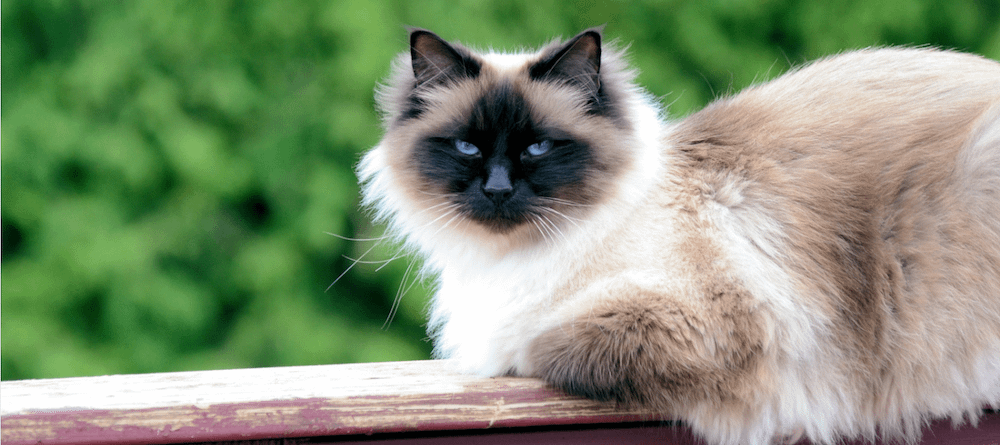
3. Ragdoll: Best for Calm Kids Who Love Cuddles
The Ragdoll is famous for its relaxed, laid-back temperament, and the GCCF notes it generally loves interaction with people and other animals. It is a large, people-focused cat.
- Best for: gentle children who want a lap cat.
- Temperament (GCCF): gentle and playful.
- Size: roughly 4.5 to 9 kg.
- Grooming: medium-length silky coat; weekly brushing.
- Pros: very tolerant of handling; sociable with other pets; sturdy size.
- Cons: its floppy, trusting nature means children must be taught not to carry it around carelessly. Langford Vets estimates around 13% of Ragdolls carry an HCM mutation, so ask for DNA test results. UK life expectancy is about 10.3 years.
4. Maine Coon: Best for Active Kids and Dog Households
The GCCF describes the Maine Coon as a gentle giant that is affectionate and tactile, and intelligent enough to learn to fetch and walk on a lead. Its size and confidence make it hard for a bouncy dog or child to intimidate.
- Best for: active families with older children or a dog.
- Temperament (GCCF): sweet natured, playful and friendly.
- Size: roughly 4.5 to 9 kg.
- Grooming: weatherproof semi-long coat; weekly brushing.
- Pros: robust and confident; very playful; trainable.
- Cons: needs space and costs more to feed. UK life expectancy is about 9.7 years (RVC). The breed is prone to HCM, according to the GCCF, and to spinal muscular atrophy, according to International Cat Care.
Read our full Maine Coon cat guide for more on this breed.
5. Burmese: Best for Kids Who Want a Playful, Dog-Like Cat
The GCCF calls the Burmese the extrovert of the cat world: playful, energetic and devoted to human company. It shares the top spot for UK life expectancy at about 14.4 years.
- Best for: school-age children who want an interactive playmate.
- Temperament (GCCF): confident, sociable and athletic.
- Size: roughly 2.7 to 6.4 kg.
- Grooming: low; short, glossy coat.
- Pros: very people-focused; easy coat; long-lived.
- Cons: mischievous and dislikes being left alone for long periods. Ask the breeder about the DNA test for Burmese hypokalaemia, an inherited cause of muscle weakness.

6. Norwegian Forest Cat: Best for Outdoorsy Families
The GCCF describes the Norwegian Forest Cat as a robust natural breed and an interactive, playful, loving member of the household. It is slow to mature and keeps a kitten-like playfulness for years.
- Best for: families with space and a garden.
- Temperament (GCCF): gentle and friendly.
- Size: roughly 4.1 to 7.3 kg.
- Grooming: woolly undercoat; weekly brushing, more when moulting.
- Pros: sturdy; playful; gentle with family.
- Cons: sheds heavily; UK life expectancy is about 10 years; the GCCF notes an increased incidence of HCM has been reported in the breed.
7. Siberian: Best for Energetic Older Children
The GCCF describes Siberians as powerful, gentle cats that enjoy playing and clowning around with their families. They are big, athletic jumpers.
- Best for: older children who will play actively.
- Temperament (GCCF): energetic and intelligent.
- Size: roughly 5.9 to 11.8 kg.
- Grooming: high maintenance; daily brushing.
- Pros: playful and robust; affectionate with family.
- Cons: a minority breed, so harder to find; heavy grooming load. Siberians are often sold as hypoallergenic, but Allergy UK states there is no such thing as a truly hypoallergenic cat.

8. Rescue Moggy (Domestic Shorthair or Longhair): Best Overall Value and Best for Toddlers
A non-pedigree rescue cat is not a breed, but it is often the best cat for kids. In the RVC VetCompass study, crossbred cats had a life expectancy of 11.9 years, against 10.4 years for purebred cats.
- Best for: families with toddlers, and anyone on a budget.
- Temperament: individual, but rescue staff can tell you how the cat reacts to children and dogs.
- Size: varies.
- Grooming: usually low for shorthairs.
- Pros: known personality; usually arrives vaccinated, neutered and microchipped; longer average life expectancy.
- Cons: less predictable adult size and coat if adopted as a kitten; you may need to wait for the right match.

Cat Breeds for Kids Compared
Use this table to shortlist breeds by your family’s needs. Life expectancy is from age 0, from the RVC VetCompass study; the Siberian was not included, so the GCCF lifespan range is shown.
| Breed | Best For | Temperament (GCCF) | UK Life Expectancy | Grooming | Dog-Home Fit | Health Check to Ask About |
|---|---|---|---|---|---|---|
| British Shorthair | Busy homes with dogs | Patient, tolerant, a bit lazy | 9.6 years | Low | Excellent | HCM screening, healthy weight |
| Birman | Gentle all-rounder | Playful and affectionate | 14.4 years | Medium | Good | General health records |
| Ragdoll | Calm, cuddly kids | Gentle and playful | 10.3 years | Medium | Good | HCM DNA test |
| Maine Coon | Active kids and dogs | Sweet natured, playful, friendly | 9.7 years | Medium | Excellent | HCM DNA test, SMA |
| Burmese | Interactive playmate | Confident, sociable, athletic | 14.4 years | Low | Good | Hypokalaemia DNA test |
| Norwegian Forest Cat | Outdoorsy families | Gentle and friendly | 10.0 years | Medium | Good | HCM screening |
| Siberian | Energetic older children | Energetic and intelligent | 12 to 15 years (GCCF range) | High | Good | HCM screening |
| Rescue moggy | Toddlers, budget, known history | Individual | 11.9 years (crossbred) | Usually low | Ask the rescue | Vet check from rescue |
Which Cat Breed Is Best for My Child’s Age?
The younger the child, the calmer and more experienced the cat should be. Cats Protection points out that kittens need training, are still learning to use their claws, and are not the best cats for toddlers, who don’t yet understand that kittens are not soft toys.
| Child’s Age | Best Match | Why |
|---|---|---|
| Babies and toddlers (0 to 4) | Calm adult rescue cat with a known child history, British Shorthair or Birman | Steady temperament; less likely to play rough than a kitten |
| Young children (5 to 9) | Ragdoll, Birman, Maine Coon, adult moggy | Tolerant of handling; children can start helping with feeding and play |
| Older children and teens (10+) | Burmese, Maine Coon, Siberian, Norwegian Forest Cat | Can match the energy of playful breeds and help with grooming |
Whatever the age, adults stay responsible for the cat’s care. Our guide to choosing a pet for your kid covers how to share responsibilities fairly.
What Are the Best Cat Breeds for Kids and Dogs?
The best cat breeds for kids and dogs are confident, sturdy breeds such as the British Shorthair and Maine Coon, followed by the Ragdoll and Birman. The GCCF specifically describes the British as tolerant of dogs, and the Maine Coon’s size and confidence help it hold its own.
The dog matters just as much as the cat. Cats Protection’s kitten care guide notes that some cats will never get along with a dog, and that introductions are easier when the kitten had positive experiences with dogs between two and seven weeks of age. Ask the rescue or breeder whether the cat has lived with dogs.
Follow these steps, based on Cats Protection’s advice on introducing a cat to a dog:
- Keep the cat in its own dog-free room at first.
- Swap scents by stroking each pet with a soft cloth and leaving it in the other’s space.
- Let them see each other through a glass or mesh barrier before any face-to-face meeting.
- Keep the dog on a lead, reward calm behaviour, and never let the dog chase the cat.
- Give the cat high ledges and escape routes, and never leave them together unsupervised.
If you are still choosing a dog, our guide to dog breeds that are great for families can help you think about how the two will get along.
Which Cat Breeds Should Families with Young Kids Avoid?
Breeds with extreme features or demanding care needs are a poor fit for most homes with young children. This is not about temperament; many of these cats are sweet natured. It is about health, fragility and workload.
- Persian: gentle, but needs daily grooming. International Cat Care raises welfare concerns about severe flat-faced (brachycephalic) types, and Persians should be DNA tested for polycystic kidney disease. See our Persian cat guide.
- Sphynx: had the shortest UK life expectancy at about 6.7 years in the RVC study, which also cites research linking the breed to heart disease. Hairless skin needs regular care.
- Scottish Fold: the folded ears come from a gene linked to osteochondrodysplasia, an inherited cartilage and bone disorder, according to International Cat Care.
- Manx: often recommended because there is “no tail to pull”, but the tailless gene is linked to Manx syndrome (spina bifida), which International Cat Care lists as an inherited disorder.
Some breeds are also simply more highly strung. Our list of the most aggressive cat breeds explains which temperaments need a quieter home.
Why a Rescue Cat Is Often the Best Choice for Kids
From a rescue point of view, the single most useful fact about a family cat is how it has behaved around children before, and only an adult cat with a known history can tell you that. A pedigree kitten’s future temperament is an educated guess; a rescue cat’s is on record.
Rehoming charities assess cats in their care and match them to families. Cats Protection says it gets to know each cat so it can match them with the right owner, and its cats are vaccinated, microchipped, neutered (or come with a neutering voucher for kittens) and health checked before adoption, according to its adoption page.
It is also worth busting two popular myths:
- Myth: a kitten will bond better with children. Kittens need more supervision and are more likely to scratch in play. A calm adult cat often bonds just as closely.
- Myth: a pedigree is safer than a moggy. The RVC found that being purebred was linked to a shorter lifespan, and crossbred cats lived about 1.5 years longer on average.
Rescues such as Battersea Dogs and Cats Home and Cats Protection also take in pedigree breeds, so you can often adopt a British Shorthair or Ragdoll too.
How Do You Introduce a New Cat to Your Children?
Go slowly, let the cat set the pace, and always supervise. Cats Protection recommends settling the cat in a quiet sanctuary room first, then following these steps:
- Wait until the cat is comfortable with the adults in the house.
- Have children sit quietly in a neutral space; a baby gate helps with toddlers.
- Let the cat sniff a child’s outstretched hand at its own pace.
- Never force the cat to stay; it must always be free to return to its safe space.
- Build up time together gradually, and teach gentle stroking.
- Use fishing rod toys and balls so play happens at a safe distance from small hands.
Teach children to read warning signs. Swishing tails, ruffled fur and hissing are obvious, but Cats Protection also lists subtler signals such as dilated pupils, ears turned back, nose licking and looking away. Before the cat arrives, use our checklist to prepare your home for a new cat.

Recommended viewing: Cats Protection explains the body language cats use to show they are relaxed, stressed or want to be left alone, which is ideal to watch with your children.
Are Cats Safe for Babies, Pregnant Mums and Children with Allergies?
Yes, with sensible hygiene and supervision, cats and children can live together safely. The main risks are scratches, litter tray germs and allergies.
- Pregnancy: cat faeces may carry toxoplasma. The NHS advises avoiding emptying litter trays while pregnant, or wearing disposable gloves if nobody else can. The NHS also confirms you cannot catch toxoplasmosis from stroking a cat.
- Litter trays: keep them out of children’s reach, and cover sandpits so cats don’t use them.
- Hand washing: children should wash their hands after handling the cat, its bowls or toys.
- Allergies: all cats produce the main allergen, Fel d 1, so no cat is hypoallergenic. Levels vary between individual cats, so spend time with the specific cat before adopting.
- Safe space: give the cat a child-free retreat, such as a room behind a baby gate.
How Much Does a Family Cat Cost in the UK?
The PDSA estimates a cat costs at least £11,400 to £13,600 over its lifetime, before vet bills for illness or injury. Pedigree breeds can cost more, as the PDSA notes purebred cats are often at higher risk of certain health problems.
| Cost | Estimate | Source |
|---|---|---|
| Cats Protection adoption fee (adult cat) | £80 to £120 on average | Cats Protection |
| Cats Protection adoption fee (kitten) | £100 to £120 on average | Cats Protection |
| Set-up costs (bed, bowls, litter trays, carrier and more) | About £366 | PDSA |
| Minimum monthly cost (food, insurance, preventive care) | About £79 | PDSA |
| Microchipping and registration | Around £25 on average | GOV.UK |
In England, the law requires every pet cat to be microchipped and registered on an approved database by 20 weeks old, including indoor cats, and owners can be fined up to £500, according to GOV.UK. If you buy from a breeder, ask to see proof of the microchip and the health test certificates for both parents.
FAQs
What is the most kid-friendly cat breed?
The British Shorthair, Birman and Ragdoll are the most consistently kid-friendly cat breeds, thanks to their patient, gentle temperaments. The British Shorthair is the most robust choice for busy homes, while the Ragdoll suits calm children who want a cuddly cat. Remember that individual personality matters more than breed, so meet the cat first.
Is a kitten or an adult cat better for young children?
An adult cat is usually better for young children. Cats Protection advises that kittens need training, are still learning to use their claws and are not the best cats for toddlers. A calm adult cat with a known history around children is often the safest and most rewarding choice for a young family.
Which cat breeds get along with kids and dogs?
The British Shorthair and Maine Coon are the best cat breeds for kids and dogs, followed by the Ragdoll and Birman. These breeds tend to be confident and sturdy. Success also depends on the dog, so introduce them slowly using scent swapping and barriers, and never leave a new cat and dog together unsupervised.
Are there hypoallergenic cat breeds for children with allergies?
No. Allergy UK states there is no such thing as a truly hypoallergenic cat, because all cats produce the main allergen, Fel d 1. Levels vary between individual cats, so some allergic people react less to certain cats. Spend time with the specific cat before adopting, and speak to your GP if your child has asthma.
Can I have a cat if I am pregnant or have a baby?
Yes. The NHS advises pregnant women to avoid emptying litter trays, or to wear disposable gloves if nobody else can, because cat faeces may carry toxoplasma. You cannot catch toxoplasmosis from stroking a cat. Never leave a baby and cat together unsupervised, and give the cat a quiet, baby-free space.
How much does a family cat cost in the UK?
The PDSA estimates a cat costs at least £11,400 to £13,600 over its lifetime, including about £79 a month for basics such as food and insurance. Adopting from Cats Protection costs around £80 to £120 for an adult cat and usually includes vaccination, neutering and microchipping.
Related Articles
- Best Cat Breeds for Beginners
- Low Maintenance Cat Breeds
- Getting a New Cat
- Adopting a Kitten: How and When
- Choosing a Pet for Your Kid
Conclusion
The best cat breeds for kids are the ones with steady, sociable temperaments: the British Shorthair, Birman, Ragdoll, Maine Coon and Burmese lead the way, with the British Shorthair and Maine Coon the top picks for homes with kids and dogs. Check health tests before buying any pedigree, and steer clear of breeds with extreme features.
Above all, remember that the right individual cat matters more than the right breed. A calm adult rescue cat that has already lived happily with children can be the perfect family friend, and it gives a cat in need a second chance.
Ready to find your family’s new best friend? Start by visiting UK rescue centres near you or browsing cats on Cats Protection’s adoption pages, and tell the team about your children and any other pets so they can make the perfect match.
Medical Disclaimer: This article is for informational purposes only and does not replace professional veterinary advice. Always consult your vet before changing your pet’s diet, medication or care routine.