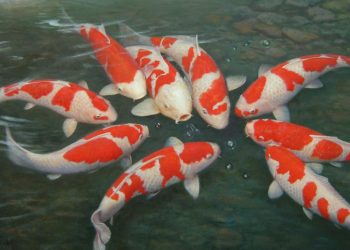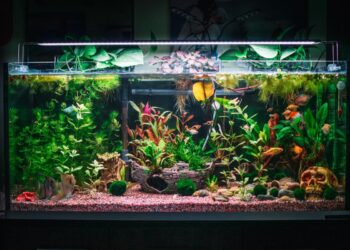



Goldfish are known to live for as long as 25 years, according to the RSPCA’s freshwater fish care guide. Whether a fish gets anywhere near that depends far more on its water than its food, and the piece of kit doing most of that work is the fish tank filter.
Maybe you have taken on a rehomed goldfish, inherited a second-hand tank or are planning a tropical community. Either way, the choices can feel confusing. Internal or external? Sponge or cartridge? And how do you clean the thing without wiping out the good bacteria living inside it?
This guide answers all of it in plain English, using RSPCA welfare guidance and manufacturers’ own maintenance manuals, with UK prices throughout.
Key Takeaways
- The RSPCA says no fish should be kept without a well set-up and maintained filter, because fish waste produces toxic ammonia very quickly.
- Internal filters suit small and medium tanks, external canister filters suit larger tanks, and air-driven sponge filters suit fry, shrimp and hospital tanks.
- A widely used sizing rule is a flow rate of four times the tank volume per hour, so a 54 litre tank needs a filter rated at roughly 216 litres per hour or more.
- Never rinse filter sponges under the tap. Swish them in the tank water you removed during a water change so the beneficial bacteria survive.
- Clean or replace biological media in stages, never all at once, and swap carbon on schedule because it can release what it has absorbed.
- A filter does not replace water changes. RSPCA guidance calls for a partial water change every week and regular tests showing 0 mg/L of ammonia and nitrite.
Quick Answer
The best fish tank filter is one rated for your tank’s volume with a flow of about four times that volume per hour. For small and medium tanks, an internal filter such as the Fluval U series works well. For larger tanks, an external canister such as the Fluval 207 or Eheim Classic 250 holds more media and runs more quietly. Clean it by swishing the sponges in old tank water, never tap water, and change part of the water every week.
What Does a Fish Tank Filter Actually Do?
A fish tank filter removes waste from the water and grows the bacteria that turn toxic ammonia into safer nitrate. Without one, fish are swimming in their own waste.
The RSPCA explains that fish release ammonia, which is toxic to them. Bacteria in the filter convert it to nitrite, which is also toxic, and then to nitrate, which is safer but can still cause problems at high levels.
Most filters do this in three stages:
- Mechanical: sponges and pads trap uneaten food, waste and other debris.
- Biological: beneficial bacteria colonise sponges and ceramic media and break down ammonia and nitrite.
- Chemical: optional carbon pads or cartridges remove odours, discolouration and some impurities.
The RSPCA is clear that no fish should be kept in a tank without a well set-up and maintained filter. The charity also warns against goldfish bowls and novelty tanks, partly because they leave no room for an efficient filter.
What Are the Main Types of Fish Tank Filter?
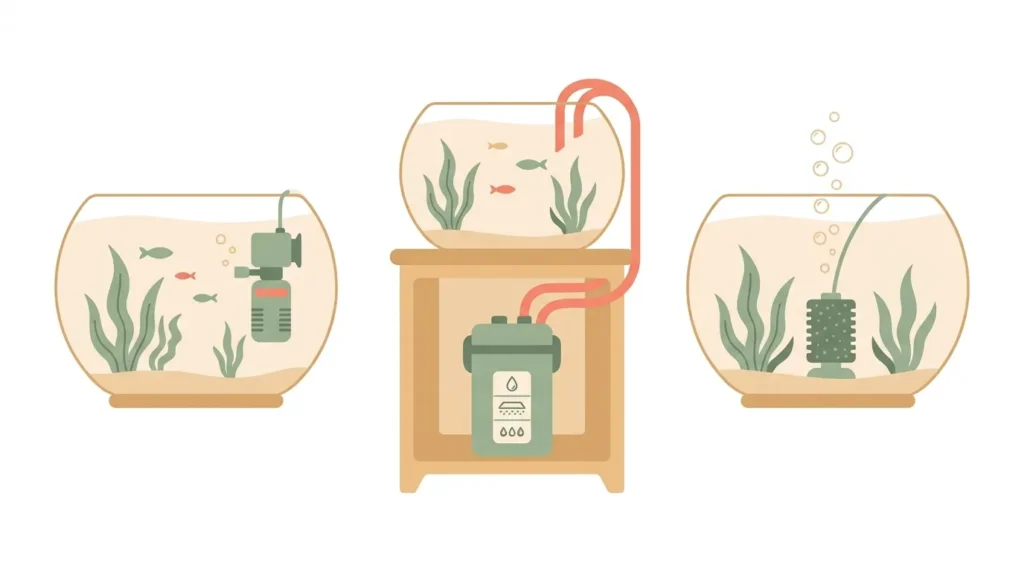
There are four main types of fish tank filter: internal, external (canister), sponge and built-in, and each suits a different tank size and type of fish.
| Filter type | How it works | Best for | Watch out for |
|---|---|---|---|
| Internal filter | A submersible unit with its own pump, fixed inside the tank | Small to medium tanks | Takes up swimming space; sponges clog faster |
| External (canister) filter | Sits in the cabinet below; hoses carry water to and from the tank | Medium to large tanks, planted tanks | Higher price; hoses need priming and checking for leaks |
| Sponge (air-driven) filter | An air pump pushes bubbles up a tube, pulling water through foam | Fry, shrimp, bettas and hospital tanks | Needs a separate air pump; limited mechanical filtration |
| Built-in (integrated) filter | A filter chamber fitted inside the tank, such as Juwel Bioflow | Owners of complete aquarium kits | Replacement media is brand-specific |
Internal fish tank filters
Internal filters are the simplest to set up and the most common choice for a first tank. UK retailer Fishkeeper lists the Fluval U series as covering tanks from up to 55 litres (U1) through to 130 to 240 litres (U4).
External fish tank filters
An external fish tank filter holds far more media, so it copes with bigger tanks and needs opening less often. The Fluval 207, for example, is rated for tanks of 60 to 220 litres and pumps up to 780 litres per hour. Because only the pipes sit in the water, Fishkeeper notes that external filters leave fish more room to swim.
Sponge filters
Sponge filters are the gentlest option. AllPondSolutions recommends sponge or air-powered filters for hospital and breeding tanks because they prevent suction injuries and reduce water movement.
What is a fish tank filter pump?
“Filter pump” usually means the motor and impeller that pushes water through the filter. Sponge filters rely on a separate air pump instead. Whichever you have, the RSPCA advises removing and cleaning the impeller as part of routine care so the filter keeps running smoothly.
Which Fish Tank Filter System Is Best for Your Tank?
The best fish tank filter system is the one matched to your tank’s volume, the fish you keep and how much noise and upkeep you are happy with. Use this table as a starting point.
| Your setup | Suggested filter | Why it fits |
|---|---|---|
| Small tank (around 40 to 55 litres) | Small internal filter or sponge filter | Compact, affordable and gentle |
| Tropical community tank (60 to 200 litres) | Larger internal filter or external canister | Enough flow and media for a mixed group |
| Cold water or goldfish tank | Oversized internal or external filter | Goldfish produce a lot of waste |
| Fry, shrimp or a hospital tank | Air-driven sponge filter | No suction risk to tiny or weak fish |
| Living room or bedroom where noise matters | External canister in a closed cabinet | The motor sits out of the water and out of sight |
Small fish tank filter
Small tanks need small filters, but they should not be too small to begin with. The RSPCA recommends only buying a tank larger than 45 x 30 x 30cm, which is about 40 litres, because bigger volumes keep temperature and water quality more stable. A compact unit such as the Fluval U1, rated for tanks up to 55 litres at 250 litres per hour, suits this size well.
Tropical fish tank filter
Tropical tanks need a heater as well as a filter, and the filter has to keep pace with a mixed community. The RSPCA suggests allowing 1.5 to 2 litres of water per 1cm of tropical fish length, excluding tails. AllPondSolutions recommends that the full tank volume passes through the filter four times an hour in a healthy tropical aquarium.
Cold water fish tank filter
Goldfish are the classic cold water fish, kept at 10 to 21°C, so a heater is not normally needed. They need plenty of room, though: the RSPCA says goldfish require at least 60 litres of water each. The RSPCA in Australia describes goldfish as heavy feeders and high waste producers that need efficient filtration with an adjustable current. In practice, that means choosing a filter rated for a bigger tank than yours.
For more on their care, see our guide to why goldfish are much more than a starter pet.
Silent fish tank filter
No powered filter is completely silent, but some are much quieter than others. Fluval says its 07 series canisters run 25% quieter than the previous generation. Juwel’s Bioflow manual describes a built-in design with almost no discernible water movement. Sponge filters are quiet in the tank, but their air pumps hum, so stand the pump on a soft mat. If you hear splashing, lower the outlet just beneath the water surface.
What Size Filter Pump Does Your Fish Tank Need?
Choose a filter rated for your tank size with a flow rate of at least four times your tank’s volume per hour. Here is how to work it out.
- Measure the tank: note the inside length, width and water depth in centimetres.
- Work out the litres: multiply the three figures and divide by 1,000. The RSPCA’s example is a 60 x 30 x 30cm tank, which holds 54 litres.
- Allow for gravel and decor: the RSPCA care guide suggests taking off around 10% for the space they fill.
- Multiply by four: that gives your target flow in litres per hour, following the AllPondSolutions rule of thumb.
- Check the rating: make sure the filter’s stated tank size covers your tank.
For the 54 litre example, four turnovers an hour means about 216 litres per hour. The Fluval U1, at 250 litres per hour and rated up to 55 litres, fits. Quoted flow rates are maximums, so allow some headroom, and go up a size for goldfish or a well-stocked tank.
Fluval, Juwel and Other UK Fish Tank Filters Compared
Fluval, Eheim and Juwel are the established names in UK aquatic shops, with prices from under £10 for a sponge filter to well over £100 for a canister. These are examples of widely available filters, chosen from manufacturer specifications and UK retailer listings. We have not tested them hands-on.
| Filter | Type | Tank size | Maximum flow | Price range |
|---|---|---|---|---|
| Air-driven sponge filter (e.g. PK200) | Sponge | Up to about 200 litres, lightly stocked | Depends on the air pump | £4 to £10, plus an air pump |
| Fluval U1 | Internal | Up to 55 litres | 250 litres per hour | £30 to £40 |
| Fluval U2 | Internal | 45 to 110 litres | 400 litres per hour | £40 to £50 |
| Fluval 207 | External | 60 to 220 litres | 780 litres per hour | £120 to £150 |
| Eheim Classic 250 | External | About 80 to 250 litres | About 440 litres per hour | £100 to £115 |
| Juwel Bioflow | Built-in | Supplied with Juwel aquariums | Varies by model | Included with the tank; media extra |
Prices vary by retailer and are drawn from Complete Aquatics, Pondkeeper, AAC Online and other UK aquatic retailers. The Eheim flow figure comes from a European retailer listing.
Fluval fish tank filters
The Fluval U series uses three-stage filtration, adjustable flow and a flip-top lid for quick access to the media. It is easy to find, too: price comparison site Trolley lists the U2 at Pets at Home. The honest downside is running cost. Fluval’s schedule calls for a fresh poly/carbon cartridge every two weeks, and a twin pack costs around £8 at UK retailers.
Juwel fish tank filters
Juwel filters come built into Juwel aquariums. The Bioflow manual says the in-tank design removes the need for hoses, which prevents leaks, and its large filter volume allows long cleaning intervals. On the downside, Juwel advises using only original Juwel media, and the white filter wool pad is meant to be replaced weekly, which adds up.
Eheim external filters
The Eheim Classic is a long-running canister design. UK retailer Complete Aquatics lists the Classic 250 at 8 watts, for aquariums of up to 250 litres. Like any canister, it needs priming after each clean, which takes a little practice at first.
Buying a filter at Pets at Home or an aquatic shop
Pets at Home and specialist aquatic shops both stock mainstream filters. Wherever you buy, the RSPCA notes that reputable retailers will test a water sample for you before you add fish, which is worth using in the early weeks.
How Do You Clean a Fish Tank Filter Without Killing the Good Bacteria?
To clean a fish tank filter, switch it off, remove the media and swish it in a bucket of water taken from the tank, then clean the impeller and reassemble. Never use tap water, soap or hot water on the media.
You will need a clean bucket used only for the aquarium, a siphon, a small brush or old toothbrush, any pads or cartridges that are due for replacement, and a tap water dechlorinator.
- Clean it during a water change. Siphon the water you are removing into your aquarium bucket. This is the water you will rinse the media in.
- Switch off the power. The Juwel manual advises unplugging all electrical equipment in the tank before putting your hands in the water.
- Take out the media. Lift an internal filter into the bucket. For an external filter, close the taps, disconnect the hoses and carry the canister to the bucket.
- Swish and squeeze the sponges. Gently squeeze them in the removed tank water until most of the dirt comes out. They should look tidier, not brand new.
- Replace only what is due. Swap fine pads and carbon on schedule, but never replace all the biological sponges or ceramic media at the same time.
- Clean the impeller and housing. Pull out the impeller, brush away slime and check the magnet for wear, as the Juwel manual suggests.
- Reassemble and restart. Refit the media in the original order. Prime an external filter, switch on and check the flow is strong.
- Top up the tank. Add dechlorinated water at the same temperature as the tank, which the RSPCA says avoids shocking the fish.
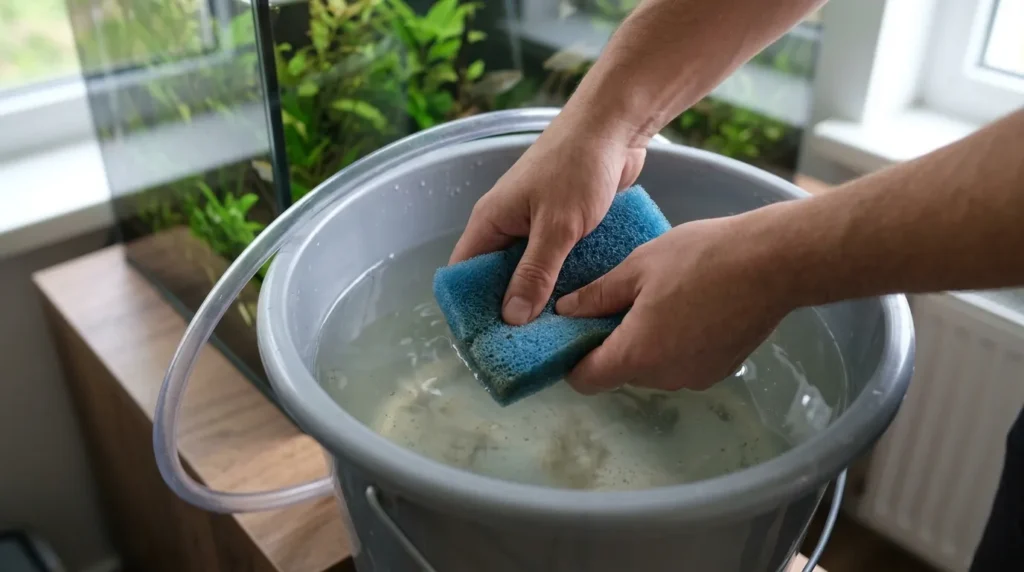
The RSPCA warns never to wash filter media under the tap, because the chlorine kills the beneficial bacteria. Fluval’s own care instructions, printed on its replacement foam packs (US listing), say the same and add: never use soap or detergents.
How to clean an internal fish tank filter
Unplug it, slide it off its suction cups and lift it straight into your bucket so trapped dirt does not escape into the tank. Open the media chamber, squeeze the sponges in the tank water and brush the impeller before refitting.
How to clean an external fish tank filter
Close the taps before disconnecting so the hoses stay full, which makes priming easier. Rinse each media tray in tank water, wipe the canister seal and check the hoses for slime. Fluval shows the process in its 07 series maintenance video.
How to clean a fish tank filter sponge
Lift the sponge filter out, pull the foam off its frame and squeeze it in tank water until it runs fairly clear. The RSPCA in Australia suggests rinsing filters monthly or whenever they start to clog, whichever comes first, and warns against over-cleaning.
How Often Should You Clean a Fish Tank Filter and Replace Cartridges?
Rinse the filter whenever the flow slows noticeably, which for many tanks works out at about once a month, and replace pads, carbon and cartridges on the manufacturer’s schedule.
UK aquatics chain Fishkeeper suggests a monthly media rinse timed with that week’s water change, and sums it up neatly: keep your water clean and your filter dirty.
| Filter media | Job | Typical schedule |
|---|---|---|
| Juwel white filter wool | Traps coarse dirt | Replace weekly |
| Juwel black carbon sponge | Chemical filtration | Replace every 4 to 6 weeks |
| Juwel coarse blue sponge | Biological filtration | Clean or replace every 6 to 12 weeks |
| Juwel fine blue sponges | Biological filtration | Clean or replace every 3 to 6 months |
| Fluval U poly/carbon cartridge | Fine mechanical and chemical filtration | Replace one cartridge every 2 weeks |
| Fluval U foam pads | Mechanical and biological filtration | Replace alternate pads every 3 to 6 months |
Schedules from the Juwel Bioflow manual and Fluval’s U series maintenance guide. Always check the manual for your model.
Two rules matter more than any timetable. First, Juwel advises cleaning or replacing the blue sponges and ceramic media alternately, never together, so a bacterial colony always survives. Second, change carbon on time: the Juwel manual warns that chemicals absorbed by carbon can be released back into the water if it stays in too long.
How Often Should You Change the Water in a Fish Tank With a Filter?
Change part of the water every week, even with a good filter, because filters cannot remove the nitrate that slowly builds up.
The RSPCA says weekly water changes dilute the waste your biological filter cannot break down, and its guidance quotes figures from 10% up to 30% of the tank. Fishkeeper suggests 25% a week for most tanks, with larger, more frequent changes for messy fish such as goldfish and large cichlids.
- Treat new water: add a dechlorinator, or leave tap water standing for 24 hours, as chlorine harms fish and filter bacteria.
- Match the temperature: water that is warmer or colder than the tank can shock fish.
- Test regularly: the RSPCA recommends testing every fortnight. Ammonia and nitrite should both read 0 mg/L.
- Act on bad results: if either reads above zero, the RSPCA advises changing half the water every day and testing until levels improve.
If weekly maintenance feels like too much, our look at professional aquarium cleaning services explains what a paid visit covers.
What Do Fish Keepers Most Often Get Wrong About Filters?
Most filter problems come from over-cleaning, rushing a new tank or trusting clear water, not from buying the wrong brand. These are the myths that UK welfare and manufacturer guidance warns against most often.
- Myth: a clean filter should look spotless. The goal is restoring flow, not sterilising sponges. Juwel’s manual even says the sludge that settles in the filter housing holds useful biological material and is nothing to worry about.
- Myth: a quick rinse under the tap is fine. Both the RSPCA and Fluval say never use tap water on filter media, because chlorine kills the bacteria.
- Myth: new media gives a fresh start. Replacing everything at once removes the bacteria and can trigger an ammonia spike. Replace in stages.
- Myth: a new filter works on day one. The RSPCA strongly advises fishless cycling for at least two weeks, and Juwel says its filters can take 6 to 8 weeks to fully mature.
- Myth: clear water means healthy water. The RSPCA points out that you cannot judge water quality by eye. Only a test kit tells you.
There is a rescue angle here too. The RSPCA encourages getting fish from a rehoming centre or a reputable aquatics retailer, and it opposes giving fish away as prizes. If you take on rehomed fish or a second-hand tank, the charity says filter media from a mature tank can help seed a new filter, as long as that tank is disease-free. Our beginner’s guide to setting up a freshwater aquarium covers the rest of the setup.
When Should You Call a Vet About Your Fish?
Test the water first, then contact a specialist fish vet if your fish show signs of illness that do not improve once water quality is corrected.
The RSPCA care guide lists warning signs that often trace back to poor water or a failing filter:
- Constant gulping at the surface, except in labyrinth fish such as bettas, which can point to low oxygen, ammonia or nitrite.
- Tiny white spots across the body and fins.
- Wasting or ragged fins.
- A bloated body with scales sticking out.
- Loss of balance or trouble swimming normally.
The RSPCA notes that most of these conditions are triggered by stress from poor water quality, so check for ammonia, nitrite and nitrate first. If you are unsure, it advises contacting a specialist fish vet. For one species in detail, read our guide to the signs of a sick betta fish.
FAQs
Can I clean a fish tank filter with tap water?
No. The RSPCA advises never washing filter media under the tap, because the chlorine in tap water kills the beneficial bacteria that break down fish waste. Instead, swish and squeeze the sponges in a bucket of water you have siphoned out of the tank during a water change. You can use tap water on the outside of the filter casing, as long as it is rinsed off well.
How often should I clean my fish tank filter?
Most filters need a gentle rinse about once a month, or sooner if the flow slows noticeably. UK retailer Fishkeeper suggests timing it with that week’s water change. Heavily stocked tanks and goldfish tanks may need attention more often. Always clean biological media in stages, never all at once, so enough bacteria survive to keep the water safe.
Should a fish tank filter run all the time?
Yes. Keep the filter running around the clock. The bacteria in the filter media rely on a steady flow of oxygenated water, and UK retailer Fishkeeper warns they start to die off if that flow stops for more than an hour or so. Switch the filter off only while you clean it, and restart it as soon as you have finished.
Do goldfish need a filter?
Yes. The RSPCA says no fish should be kept without a well set-up and maintained filter, and goldfish produce a lot of waste. The charity also advises against goldfish bowls, partly because they leave no room for an efficient filter, and says goldfish need at least 60 litres of water each. Choose a filter rated for a larger tank than yours.
How long does a new fish tank filter take to cycle?
The RSPCA says cycling takes at least two weeks, and Juwel says its filters can take 6 to 8 weeks to fully mature. The RSPCA recommends fishless cycling: run the filter with a bacteria starter product, test every other day and only add fish once ammonia and nitrite have spiked and dropped back to zero.
Is an internal or external fish tank filter better?
Neither is better in every case. Internal filters are cheaper and easier to set up, so they suit small and medium tanks. External canister filters hold more media, take up no swimming space and tend to be quieter because the motor sits in the cabinet. For tanks above about 100 litres, or goldfish tanks, an external filter is usually the stronger choice.
Related Articles
- A Beginner’s Guide to Setting up a Freshwater Aquarium
- The Best Aquarium Filters
- Goldfish Are Much More Than Just an Exotic Pet
- 4 Signs of a Sick Betta Fish
- Freshwater vs Marine Aquariums: Truths and Myths
Conclusion
A fish tank filter is the single most important piece of equipment in any aquarium. Match it to your tank’s volume, aim for a flow of about four times that volume per hour, and size up for goldfish. An internal filter suits most small and medium tanks, while an external canister earns its price on larger or quieter setups.
Looking after it is simple once you know the rules: rinse media in old tank water, replace parts in stages, keep up weekly water changes and test regularly. Do that, and your fish have a real chance of reaching the long lives they are capable of.
If you are ready to give fish a home, consider a rescue first. The RSPCA encourages adopting from rehoming centres, and you can browse animals needing new homes through the RSPCA’s Find a Pet service.
Medical Disclaimer: This article is for informational purposes only and does not replace professional veterinary advice. Always consult your vet before changing your pet’s diet, medication or care routine.