

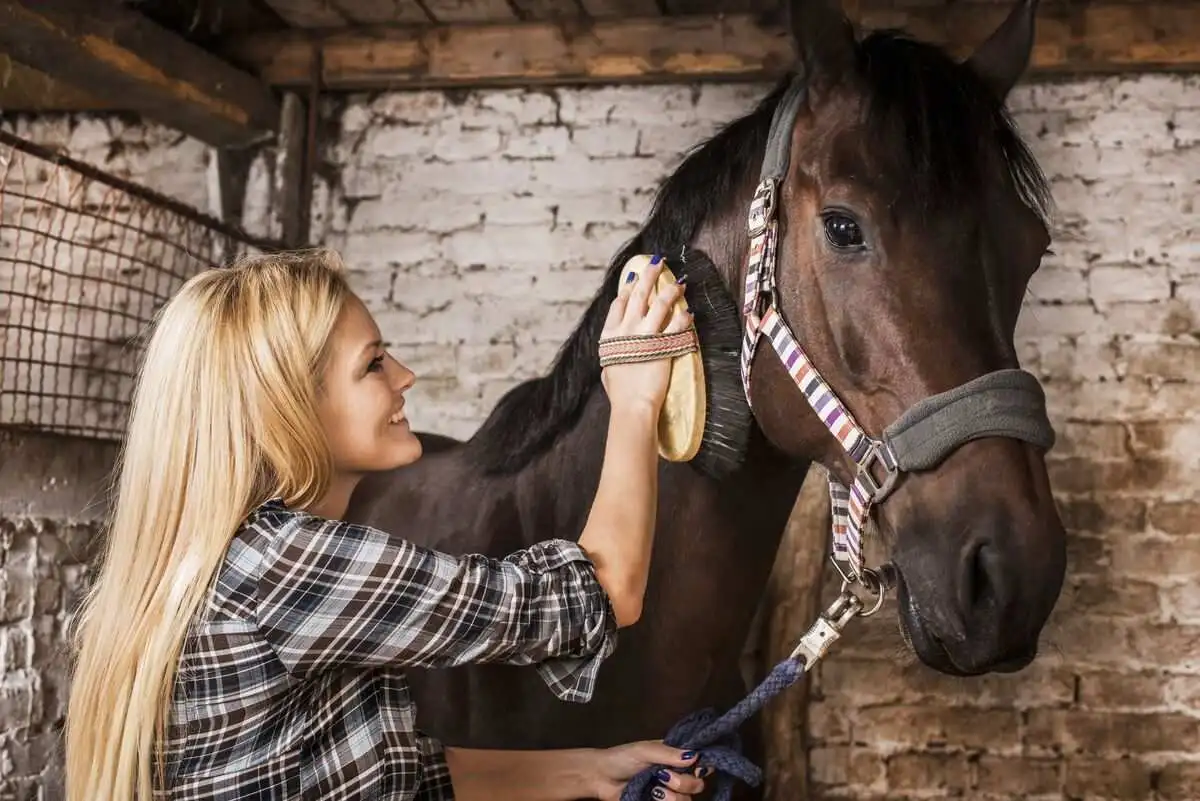
The best horse brushes are not one brush. A useful grooming kit is a small team: a rubber curry comb to loosen dirt, a stiff dandy brush to flick it away, a soft body brush to lift dust and grease, and a gentle face brush for the head. Buy the right type for each job and you will groom faster, and your horse will be more comfortable.
This guide is written for horse owners, not for shoppers being steered towards a commission. There are no affiliate links on this page, and no brand paid to be included. We explain exactly how we ranked each brush, what we checked, and what we could not check, so you can judge the list for yourself.
Every pick below is sold by UK retailers, with prices shown as approximate GBP ranges. If you have just taken on a rescue horse or pony, this is also a sensible starter shopping list.
Key Takeaways
- A basic horse grooming kit needs a curry comb, a dandy brush, a body brush, a face brush, a mane comb or detangler and a hoof pick.
- Dandy brushes have stiff bristles for dried mud and sweat, while body brushes have soft bristles for dust and grease.
- Rubber curry combs suit fleshy areas such as the neck and quarters, and should be kept off the face and bony lower legs.
- A complete, good quality UK grooming kit of individual brushes costs roughly £30 to £60, depending on brands and bristle type.
- Ringworm spores can survive on grooming brushes for weeks or months, so giving each horse its own kit is the simplest way to limit spread.
- Clean brushes regularly in warm soapy water, rinse well and dry them fully, and disinfect them after grooming a horse with a skin infection.
- Antibacterial or antimicrobial brushes are not a replacement for separate kits and regular cleaning.
Quick Answer: The Best Horse Brushes at a Glance
| Category | Recommendation | Approx. UK Price |
|---|---|---|
| Best Overall (body brush) | LeMieux Flexi Soft Body Brush | £6 to £10 |
| Best Budget | Shires Ezi-Groom Grip Dandy Brush | £4 to £6 |
| Best for Sensitive Faces | Kincade Wooden Deluxe Face Brush | £6 to £8 |
| Best Premium | HAAS Diva Finishing Brush | £23 to £35 |
How We Ranked These Horse Brushes
We ranked each horse brush against six published factors, weighted by how much each one matters to the horse and the person grooming. We did not test these brushes hands-on in a yard. Instead, we compared manufacturer specifications, UK retailer listings, independent reviews by equestrian professionals, and grooming guidance from UK equestrian publications.
| Ranking Factor | Weight | What We Looked For |
|---|---|---|
| Fit for the grooming job | 30% | Bristle stiffness, length and material matched to the task (mud, dust, face, mane) |
| Comfort for the horse | 20% | Soft or flexible bristles where the skin is thin, no sharp edges, suitability for clipped or sensitive horses |
| Ease of use for the handler | 15% | Grip, hand strap, weight and wrist comfort over a long grooming session |
| Hygiene and cleaning | 15% | How easily the brush can be washed, dried and disinfected |
| UK availability and value | 10% | Sold by more than one UK retailer, sensible price for what the brush does |
| Independent evidence | 10% | Reviews by equestrian professionals or established UK titles, rather than manufacturer claims alone |
What this ranking cannot tell you: how a brush feels on your particular horse. Horses differ in skin sensitivity and coat type, and brushes of the same type feel different between manufacturers, a point Your Horse makes in its horse brush buying guide. Treat this list as a shortlist, then watch your horse’s reaction.
How we make money: Pet Rescue Blog is funded by display advertising. No product on this page earns us a commission, and retailer links are included only so you can check specifications and prices.
What to Look For in a Horse Brush
- The right brush type: Match the brush to the job. A dandy brush removes dried mud, a body brush removes dust and grease, and a face brush is soft enough for the head.
- Bristle material: Natural bristles (horse hair, pig bristle, goat hair) are prized for a finishing shine, while synthetic bristles are cheaper, tougher and easier to wash.
- Bristle stiffness: Stiff bristles suit unclipped, muddy horses. Clipped, fine-coated or thin-skinned horses need softer bristles.
- Grip and strap: A hand strap and a soft-grip back reduce wrist strain, which matters if you groom several horses a day.
- Size for your hand: Small brushes suit children and smaller hands, while large brushes cover a big horse faster.
- Easy cleaning: Brushes that can be soaked and dried quickly make good hygiene realistic, especially on shared yards.
Top Picks: The Best Horse Brushes by Grooming Job
1. LeMieux Flexi Soft Body Brush (Best Overall)
The LeMieux Flexi Soft Body Brush is our top pick because its flexible, three-part back bends to follow the horse’s shape, so the soft bristles stay in contact with the coat over the shoulder, belly and legs. It removes dust and dirt well, suits clipped horses and is one of the more affordable branded body brushes in the UK.
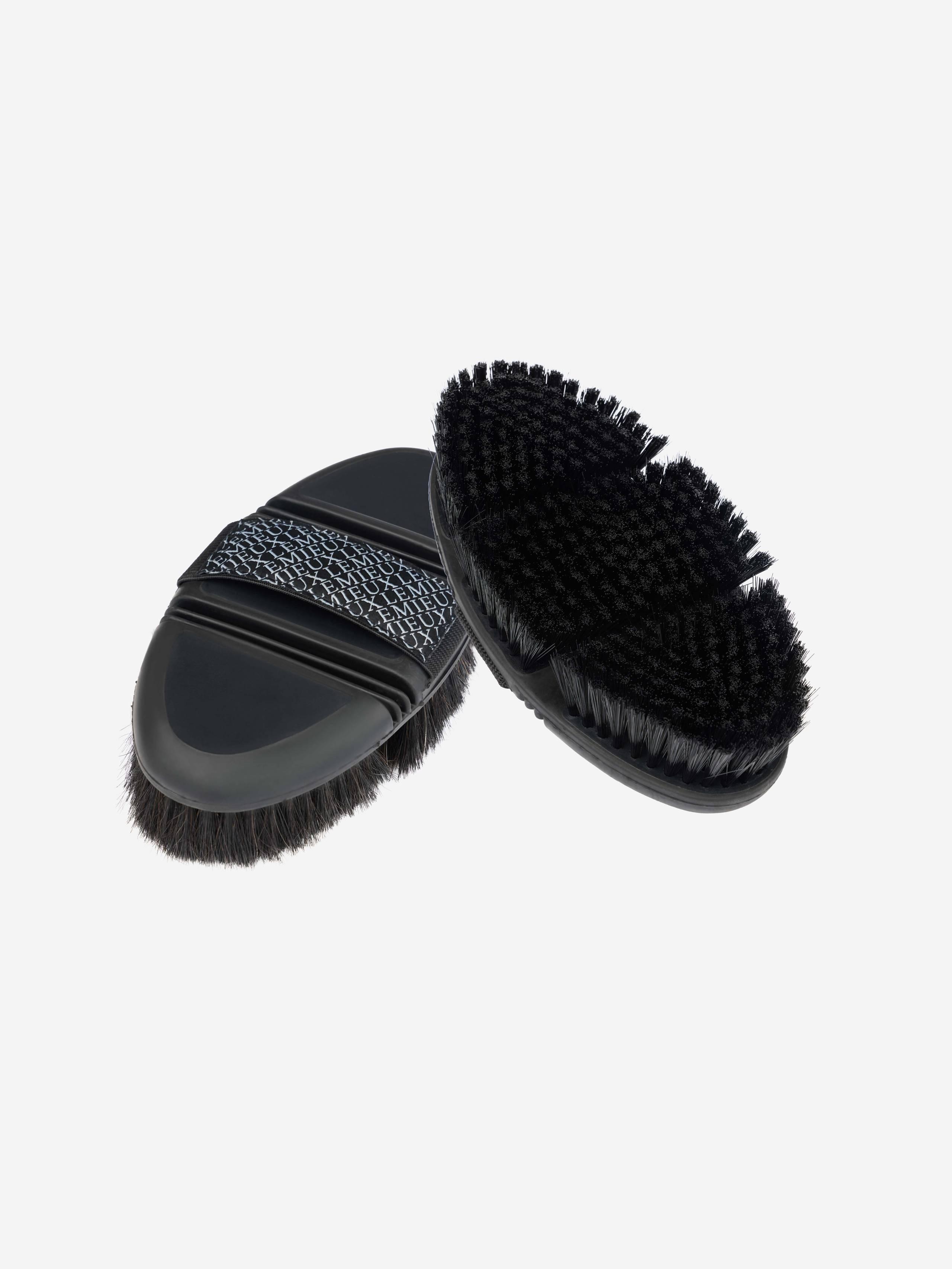
Best For: Everyday body brushing on clipped, fine-coated or sensitive horses.
Key Features:
- Soft synthetic bristles designed to lift dust and dirt
- Three-plate back that flexes to around 90 degrees to follow the horse’s contours
- Elasticated hand strap for control
- Ergonomic shape intended to reduce wrist strain (product details at Charlies)
Pros:
- Reaches awkward areas better than a flat-backed brush
- Synthetic bristles are easy to wash and dry
Cons:
- Synthetic bristles will not give quite the same finishing shine as natural bristle
- Popular colours sell out at some retailers
Price Range: £6 to £10 (prices vary by retailer and colour)
2. Shires Ezi-Groom Grip Dandy Brush (Best Budget)
The Shires Ezi-Groom Grip Dandy Brush is the best budget horse brush because it does the hardest job in the kit, shifting dried mud and sweat, for around a fiver. Its stiff synthetic bristles are designed for unclipped horses and ponies, and the soft-hold back makes it comfortable to grip with cold or wet hands.

Best For: Unclipped horses and ponies that live out and come in muddy.
Key Features:
- Stiff synthetic bristles for mud and dried sweat
- Soft-grip back
- Designed to clean without stripping the coat’s natural oils (product details at GO Outdoors)
- Wide UK availability in several colours
Pros:
- Very low cost, so it is easy to buy one per horse
- Tough enough for winter mud
Cons:
- Too stiff for the face, clipped areas or thin-skinned horses
Price Range: £4 to £6 (prices vary by retailer and size)
3. Shires Ezi-Groom Rubber Curry Comb (Best Curry Comb)
The Shires Ezi-Groom Rubber Curry Comb is the best value curry comb because a simple rubber curry is all most owners need to loosen mud, scurf and moulting hair before using a dandy brush. Used in small circles on fleshy areas, a rubber curry also acts as a massage that many horses enjoy.
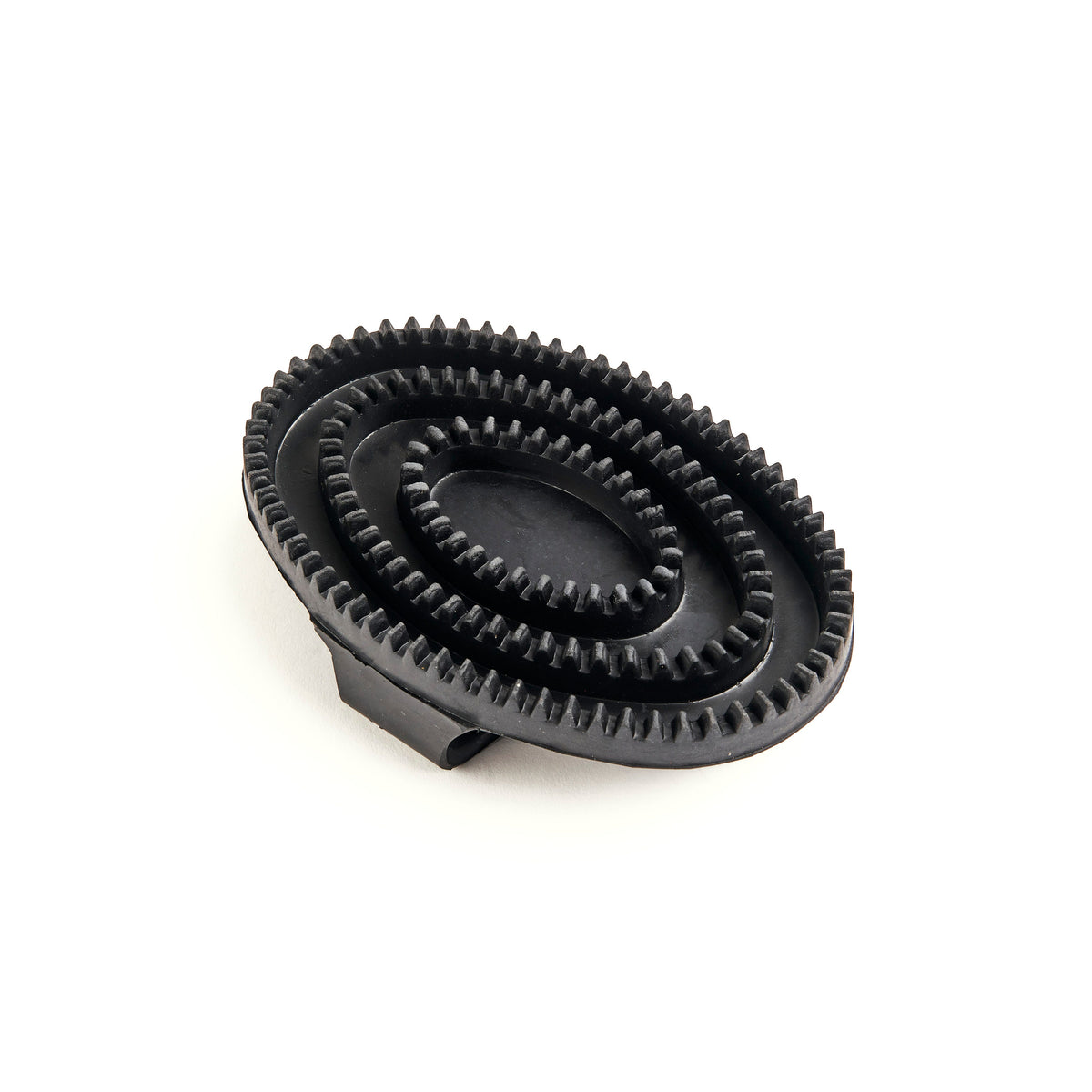
Best For: Loosening dirt and winter coat on the neck, body and quarters before brushing.
Key Features:
- Flexible rubber teeth
- Fits in the palm for circular strokes
- Easy to rinse under a tap (product listing at Country and Stable)
Pros:
- One of the cheapest and most useful items in any grooming kit
- Very effective during spring and autumn moults
Cons:
- Not suitable for the face or bony lower legs
- Rubber can perish if left in strong sunlight for long periods
Price Range: £2 to £5 (prices vary by retailer and size)
4. HySHINE Deluxe Body Brush (Best Natural-Bristle Body Brush)
The HySHINE Deluxe Body Brush is the best natural-bristle choice because its pig bristles are dense enough to lift grease and dust from the coat, which is the job a body brush exists to do. Natural bristle is the traditional option for owners who want a deeper, longer-lasting shine on a stabled or show horse.

Best For: Stabled horses and show preparation, where removing grease matters.
Key Features:
- Natural pig bristles
- Designed to remove grease and dust from the coat (product listing at Country and Stable)
- Pairs with a metal curry comb, which is used to clean the body brush every few strokes
Pros:
- Natural bristle polishes the coat well
- Good choice for horses that dislike stiff synthetic brushes
Cons:
- Costs around three times as much as a synthetic body brush
- Natural bristles take longer to dry after washing
Price Range: £18 to £23 (prices vary by retailer)
5. Kincade Wooden Deluxe Face Brush (Best Face Brush)
The Kincade Wooden Deluxe Face Brush is the best face brush in this list because its small head and soft natural bristles, a mix of pig and horse hair, let you clean around the eyes, cheeks and muzzle without scratching. A dedicated face brush also keeps the dirt from a muddy dandy brush well away from the horse’s eyes.

Best For: Faces, ears and other sensitive areas, and head-shy horses.
Key Features:
- Soft mixed pig and horse hair bristles
- Wooden handle
- Compact size for working around the eyes and muzzle (product listing at GO Outdoors)
Pros:
- Gentle enough for nervous or head-shy horses
- Inexpensive
Cons:
- Wooden backs should not be left soaking, so cleaning takes more care
Price Range: £6 to £8 (prices vary by retailer)
6. Shires Ezi-Groom Mane and Tail Brush (Best for Manes and Tails)
The Shires Ezi-Groom Mane and Tail Brush is the best low-cost option for manes and tails because it is built for detangling, with a soft-touch handle and a durable plastic body around 22cm long. Brushing tails sparingly and from the bottom up limits breakage, so a purpose-made detangler is kinder than a dandy brush.
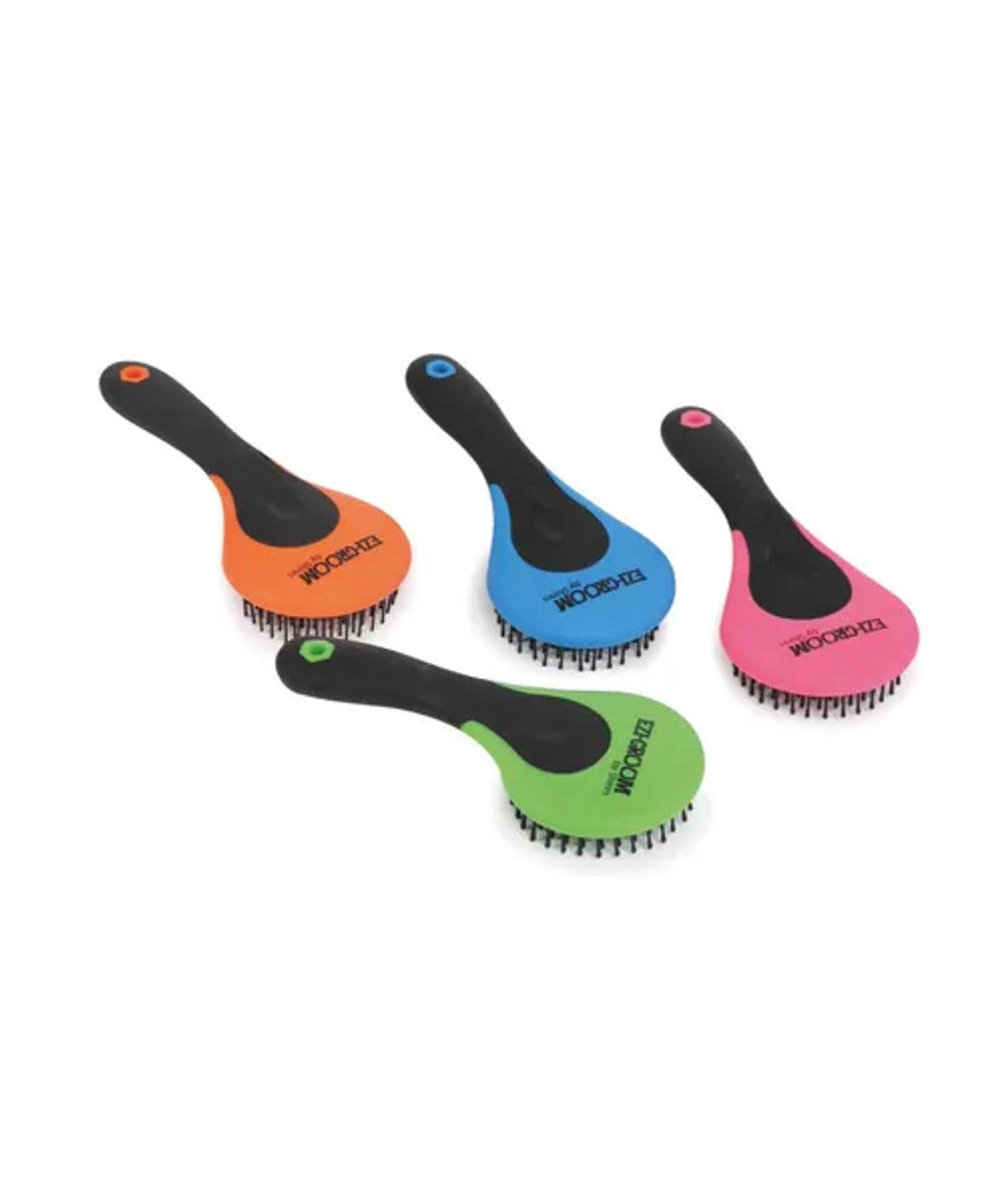
Best For: Detangling manes and tails, ideally after a detangling spray.
Key Features:
- Designed for detangling manes and tails
- Soft-touch handle
- Durable plastic construction, around 22cm long (product listing at GO Outdoors)
Pros:
- Cheap and widely stocked
- Easy to wash
Cons:
- Any brush pulls some tail hairs, so use it sparingly and finger-pick bad knots first
Price Range: £5 to £7 (prices vary by retailer and colour)
7. LeMieux Hands On Glove (Best Grooming Glove)
The LeMieux Hands On Glove is the best option for owners who want to groom with both hands, because the textured nodules on the fingers and palm loosen dirt and moulting hair while you feel for heat, lumps or sore spots. It also works on legs, faces and ears, where a stiff brush would be uncomfortable.
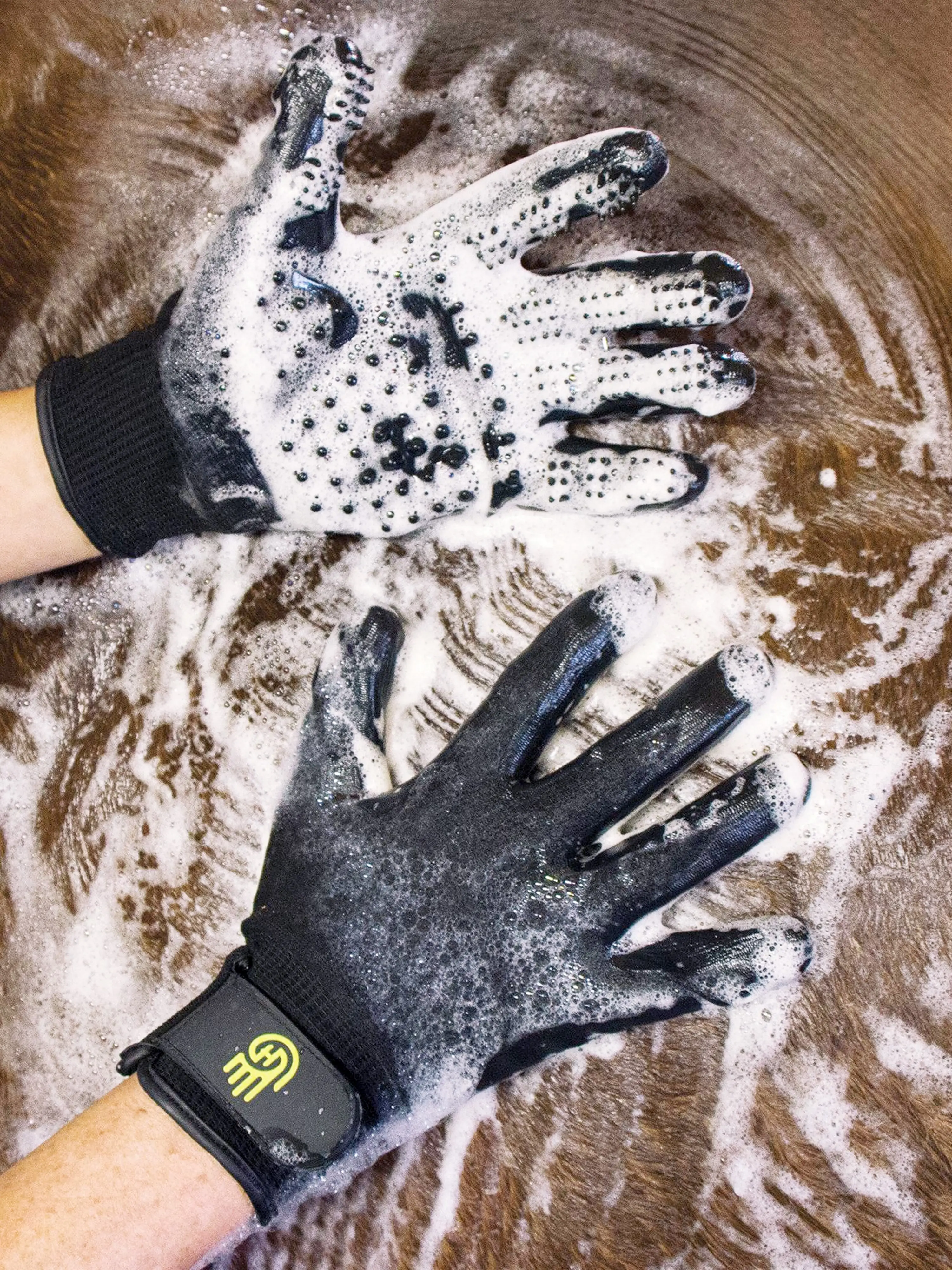
Best For: Moulting season, sensitive horses, bathing and owners who find brushes hard to grip.
Key Features:
- Scrubbing nodules on fingers and palm
- Doubles as a deshedding tool
- Available in XS, S, M and L (product details at Horze)
Pros:
- Lets you check the horse’s body by touch while grooming
- Keeps hands cleaner and helps with grip on hoses and ropes
Cons:
- Expensive compared with a rubber curry comb that does a similar job
- Will not remove dried mud as well as a dandy brush
Price Range: Around £28 to £35 (UK prices vary; it is also sold in euros by European retailers that deliver to the UK)
8. HAAS Diva Finishing Brush (Best Premium Brush)
The HAAS Diva is the best premium horse brush for owners who want a finishing brush, because its soft lambskin centre ringed with horse hair is designed to polish the coat after the dirt has gone. It is soft enough for sensitive areas, including the face, but it is a luxury rather than an essential.

Best For: Final polishing before competitions or for dull coats.
Key Features:
- Lambskin centre surrounded by a rim of horse hair
- Marketed as a finishing brush for shine
- Measures around 200 x 85mm (product details at Supplement Solutions)
Pros:
- Very soft, suitable for sensitive horses and faces
- Gives a polished finish after normal grooming
Cons:
- Several times the price of a standard body brush
- Will not clean a dirty horse on its own
Price Range: £23 to £35 (prices vary by retailer and colour)
Comparison Table
| Product | Best For | Key Feature | Price Range |
|---|---|---|---|
| LeMieux Flexi Soft Body Brush | Best overall, everyday body brushing | Flexible three-part back | £6 to £10 |
| Shires Ezi-Groom Grip Dandy Brush | Best budget, muddy unclipped horses | Stiff synthetic bristles | £4 to £6 |
| Shires Ezi-Groom Rubber Curry Comb | Loosening dirt and moulting hair | Flexible rubber teeth | £2 to £5 |
| HySHINE Deluxe Body Brush | Natural-bristle shine | Pig bristles | £18 to £23 |
| Kincade Wooden Deluxe Face Brush | Faces and head-shy horses | Soft pig and horse hair | £6 to £8 |
| Shires Ezi-Groom Mane and Tail Brush | Detangling manes and tails | Soft-touch handle | £5 to £7 |
| LeMieux Hands On Glove | Two-handed grooming and moulting | Textured nodules | £28 to £35 |
| HAAS Diva Finishing Brush | Premium finishing shine | Lambskin and horse hair | £23 to £35 |
Buying Guide: Choosing Horse Grooming Brushes
What Brushes Do You Need in a Horse Grooming Kit?
A horse grooming kit needs one brush for each grooming job: a rubber curry comb, a dandy brush, a body brush, a metal curry comb to clean the body brush, a face brush, a mane comb or detangler, a hoof pick and a sponge or cloth. Your Horse’s guide lists the same core items and adds a hoof brush if you use hoof oil.
If budget is tight, start with a rubber curry comb, a dandy brush, a soft body brush and a hoof pick. Add a face brush and a detangler next. Finishing brushes and gloves are optional extras.
Dandy Brush vs Body Brush: What Is the Difference?
A dandy brush has long, stiff bristles for flicking away dried mud and sweat, while a body brush has short, dense, soft bristles for removing dust and grease close to the skin. Dandy brushes are best on unclipped horses, and body brushes suit every horse, including clipped and sensitive ones.
Using a dandy brush on a clipped horse can be uncomfortable, and using only a body brush on a very muddy horse is slow. That is why most kits contain both.
Natural or Synthetic Bristles?
Natural bristles are best for finishing and shine, and synthetic bristles are best for durability, mud and easy cleaning. Natural fibres such as horse hair, pig bristle and goat hair are softer and help spread the coat’s natural oils, but they cost more and take longer to dry.
Traditional British brush making still exists. Vale Brothers of Walsall, a West Midlands company founded in 1786, makes horse grooming brushes, and its Equerry brand has held a Royal Warrant since 1992, according to the Royal Warrant Holders Association.
Do Antibacterial Horse Brushes Work?
Antibacterial horse brushes may reduce germs on the bristles, but there is little independent evidence that they prevent skin infections in practice. When a BHS-qualified event rider reviewed the KBF99 anti-bacterial body brush for Horse & Hound, she rated it 7/10 as a brush and said she could not identify any benefit from the antibacterial treatment (read the Horse & Hound review).
Separate kits for each horse and regular cleaning do more than any bristle coating. If you like an antimicrobial brush, treat it as an extra layer, not a shortcut.
Why Each Horse Should Have Its Own Grooming Kit
Each horse should have its own grooming kit because skin infections such as ringworm spread on shared brushes, tack and rugs. Your Horse’s vet advice notes that ringworm spores can survive on surfaces including grooming brushes for weeks or months, and that horses can carry the infection for up to three weeks before signs show.
For contagious diseases such as strangles, the equine charity Redwings advises that isolated horses have their own labelled equipment, kept in the quarantine area and disinfected before it leaves (Redwings strangles guidance, PDF). On livery yards, a named grooming box per horse is a cheap, effective habit.
How to Brush a Horse: A Simple Grooming Order
Groom a horse from the top down and from the dirtiest job to the finest: curry comb first, then dandy brush, then body brush, then face brush, mane and tail, and finally the hooves. Always brush in the direction the hair grows.
- Tie the horse up safely and pick out the hooves, checking for stones and thrush.
- Use the rubber curry comb in small circles on the neck, body and quarters to loosen dirt.
- Flick the loosened dirt away with the dandy brush, following the hair.
- Use the body brush in long strokes, cleaning it on a metal curry comb every few strokes.
- Clean the face gently with the face brush, then wipe the eyes and nostrils with a clean, damp sponge.
- Detangle the mane and tail, starting at the ends and working up.
- Finish with a soft cloth or finishing brush if you want extra shine.
Grooming is also a daily health check. Feel for heat, swelling, cuts, scabs or flinching, and call your vet if anything is new or worsening. For more everyday routines, see our horse care tips for beginners.
How to Clean Horse Brushes
Clean horse brushes by removing loose hair, washing them in warm water with a little detergent, rinsing thoroughly and drying them fully, bristles down, in a well-ventilated or sunny spot. Your Horse recommends warm soapy water and a thorough rinse, following the manufacturer’s care advice.
After grooming a horse with a skin infection, add a disinfecting step. Equus magazine suggests soaking brushes in a suitable disinfectant for at least 10 minutes or as your vet recommends, then drying them in bright sunlight (Equus guide to disinfecting brushes). Avoid long soaks for wooden-backed brushes, which can crack or swell.
FAQs
What are the best horse brushes for beginners?
The best horse brushes for beginners are a rubber curry comb, a stiff dandy brush, a soft body brush, a face brush and a hoof pick. Inexpensive synthetic brushes from established brands such as Shires and LeMieux are ideal for a first kit, because they are durable and easy to clean.
How many brushes does a horse need?
Most horses need four to six brushes: a curry comb, a dandy brush, a body brush, a face brush and a mane comb or detangler, plus a hoof pick. Horses that are clipped or stabled may not need a stiff dandy brush, while horses living out in winter rely on it heavily.
What is the difference between a dandy brush and a body brush?
A dandy brush has long, stiff bristles for removing dried mud and sweat, while a body brush has short, soft, dense bristles for removing dust and grease. Use the dandy brush first on a muddy horse and the body brush afterwards.
Can you use a dandy brush on a horse’s face?
You should not use a dandy brush on a horse’s face, because its stiff bristles can scratch the skin and irritate the eyes. Use a small, soft face brush or a clean damp sponge instead.
How do you clean horse brushes?
Clean horse brushes by removing loose hair, washing them in warm water with a little detergent, rinsing well and leaving them to dry fully with the bristles facing down. Disinfect them as well after grooming a horse with a skin infection, following your vet’s advice.
Should each horse have its own grooming kit?
Yes, each horse should ideally have its own grooming kit, because ringworm spores and other infections can survive on brushes and spread between horses. If brushes must be shared, clean and disinfect them between horses.
Are natural or synthetic horse brushes better?
Neither is better for every job. Natural bristle brushes give a better finishing shine and feel softer, while synthetic brushes are cheaper, tougher, better for mud and quicker to wash and dry.
Can you use a horse brush on a dog?
You can use a soft horse body brush on a short-coated dog, but stiff dandy brushes and curry combs are usually too harsh for a dog’s skin. Keep separate brushes for each animal for hygiene, and use dog-specific tools for long or double coats.
Related Articles
- 4 Horse Care Tips for Beginners
- Best Horse Clippers for Body Clipping
- Keeping Horses Healthy and Protected from Summer Flies
- Tips for Feeding Your Horse with Hay Pellets
- Horse Names for Male and Female Horses
Conclusion
The best horse brushes are the ones matched to each job: a rubber curry comb to loosen dirt, a dandy brush for mud, a body brush for dust and grease, and a soft face brush for the head. You can build a solid kit for around £30, and spend more only where it helps your horse, such as natural bristles for a sensitive coat.
Keep one kit per horse, clean it regularly, and use grooming time to check your horse’s body for anything new. It is the simplest daily routine for a healthier, more comfortable horse.
If you are thinking of offering a home to a horse or pony, consider a rescue. Redwings Horse Sanctuary rehomed rescued horses and ponies through its Guardianship Scheme, and a new grooming kit is one of the first things your new companion will need.