
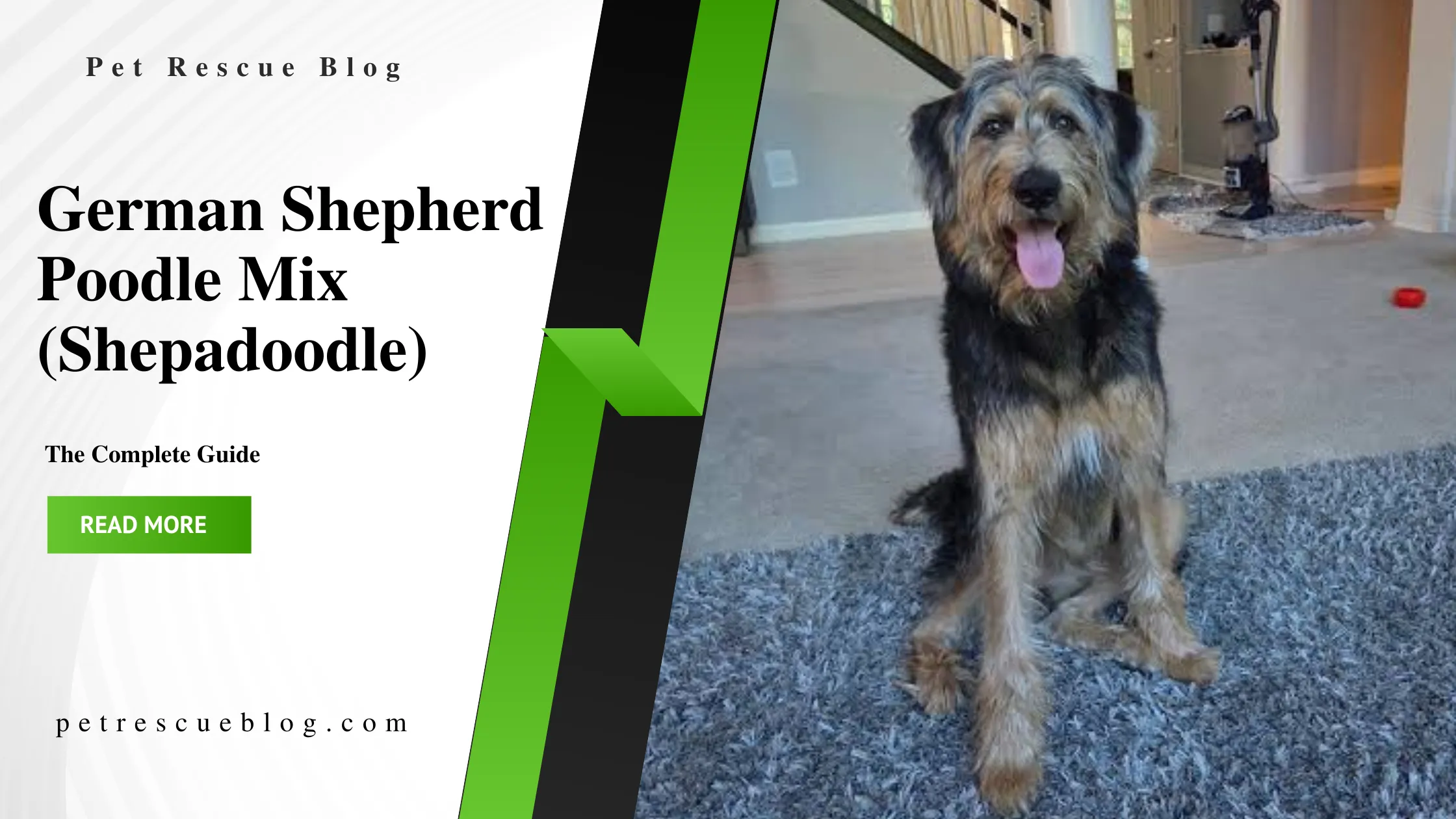
A German Shepherd Poodle mix, usually called a Shepadoodle, is a crossbreed with one German Shepherd parent and one Poodle parent. It is a big, clever, high-energy dog that can make a loyal family companion in the right home. It is also a dog that is easy to get wrong, because the name gets mixed up with other crosses and the coat is often oversold as allergy-friendly.
This guide is written for UK readers. It explains what a Shepadoodle really is, how it differs from a Sheepadoodle, how big it gets, what health tests the parents need, what puppies cost in pounds, and how to find one through a breeder or a rescue.
Key Takeaways
- A Shepadoodle is a German Shepherd crossed with a Poodle, most often a Standard Poodle.
- A Sheepadoodle is a different crossbreed: an Old English Sheepdog crossed with a Poodle.
- Most Shepadoodles are large dogs, roughly 56 to 71 cm (22 to 28 inches) tall and 23 to 41 kg (50 to 90 lb), but size varies a lot.
- No dog is truly hypoallergenic, and a Shepadoodle can shed like a German Shepherd if it inherits that coat.
- The Kennel Club does not recognise the Shepadoodle as a breed, so health-tested parents matter more than paperwork.
- Both parent breeds carry inherited conditions, including hip and elbow dysplasia, degenerative myelopathy, progressive retinal atrophy and bloat.
- Shepadoodles need around 1 to 2 hours of exercise a day plus training and company, so they suit active, experienced households.
German Shepherd Poodle Mix at a Glance
The German Shepherd Poodle mix is a large, intelligent crossbreed with a coat that can be curly, wavy or straight. The table below gives typical ranges. Because this is a crossbreed, an individual puppy can sit anywhere between its two parents.
| Feature | Shepadoodle (German Shepherd x Poodle) |
|---|---|
| Other names | German Shepherd Poodle mix, German Doodle, Shepherd Doodle, Shepapoo, Sherdoodle, Alsatian cross Poodle |
| Parent breeds | German Shepherd Dog (Pastoral group) and Poodle (Utility group) |
| Size | Medium to large, usually large |
| Height | About 56 to 71 cm (22 to 28 inches) |
| Weight | About 23 to 41 kg (50 to 90 lb) |
| Lifespan | Around 10 to 14 years (sources vary) |
| Coat | Curly, wavy or straight; low to moderate shedding |
| Common colours | Black, black and tan, sable, grey, cream, brown, white |
| Temperament | Intelligent, loyal, alert, energetic, can be wary of strangers |
| Exercise | Roughly 1 to 2 hours a day |
| Grooming | Brushing several times a week; clipping every 6 to 8 weeks for curly coats |
| Good with children | Usually, with training, socialisation and supervision |
| UK puppy price | Roughly £800 to £2,500 (rarely advertised; see cost section) |
| Kennel Club status | Not a recognised breed; can join the Activity Register as a crossbreed |
Size and lifespan ranges come from breed profiles by Hepper and Dogster, checked against the parent breed figures from The Kennel Club and PDSA.
What Is a German Shepherd Poodle Mix Called?
A German Shepherd Poodle mix is most often called a Shepadoodle. You will also see German Doodle, Shepherd Doodle, Shepapoo and Sherdoodle. In the UK, some people say Alsatian cross Poodle, because Alsatian is the older British name for the German Shepherd. All of these names describe the same first-generation cross.
These names are nicknames, not official breed names. The Royal Kennel Club explains that crossbreeds with blended names, such as the Labradoodle, are often sold as “designer dogs”. No registry controls what goes into a dog sold under the Shepadoodle name, so always ask exactly which breeds the parents are.
Is There Really a German Shepherd Poodle Mix?
Yes, the German Shepherd Poodle mix is a real crossbreed, but it is much rarer than the Labradoodle, Cockapoo or Sheepadoodle. In the UK, puppies are seldom advertised under the Shepadoodle name. Many dogs sold as “Shepherd mixes” in rescue are also crosses with unknown parentage, so a DNA breed test is the only way to be sure.
Shepadoodle vs Sheepadoodle: Are They the Same Dog?
No, a Shepadoodle and a Sheepadoodle are two different crossbreeds. A Shepadoodle is a German Shepherd crossed with a Poodle. A Sheepadoodle is an Old English Sheepdog crossed with a Poodle. The names differ by one letter, which is why they are so often confused in searches and adverts.
| Feature | Shepadoodle | Sheepadoodle |
|---|---|---|
| Parents | German Shepherd x Poodle | Old English Sheepdog x Poodle |
| Typical colours | Black, black and tan, sable, grey, cream | Black and white, grey and white, solid black |
| Typical height | About 56 to 71 cm | About 33 to 61 cm (mini and standard types) |
| Typical weight | About 23 to 41 kg | About 20 to 36 kg |
| Temperament | Alert, protective, very trainable, can be reserved with strangers | Playful, sociable, rarely a guard dog |
| Inherited health risks | Hip and elbow dysplasia, degenerative myelopathy, anal furunculosis, PRA, bloat | Hip dysplasia, eye conditions, bloat, sensitive digestion |
| Availability in the UK | Rare | Widely advertised |
| Typical UK puppy price | Roughly £800 to £2,500 | Roughly £750 to £3,000 |
Sheepadoodle size and colour figures come from A-Z Animals, and UK prices come from adverts on Pets4Homes. The Old English Sheepdog is a large, long-coated British herding breed, which gives the Sheepadoodle its shaggy, often black and white look.
What Is a “German Sheepadoodle”?
“German Sheepadoodle” is not a recognised crossbreed name. People usually type it when they mean a Shepadoodle (German Shepherd x Poodle) and mix up the spelling. If a seller uses this name, ask for the breed of each parent and photos of both dogs before going any further.
Is a German Shepherd Goldendoodle Mix a Shepadoodle?
A German Shepherd crossed with a Goldendoodle is sometimes sold as a Shepadoodle, but it is a three-breed mix: German Shepherd, Golden Retriever and Poodle. It may be lighter in colour and softer in temperament than a true Shepadoodle. The name alone tells you nothing, so always confirm the parents.
Where Does the Shepadoodle Come From?
The Shepadoodle’s origins are poorly documented. Many breed websites, including OodleLife, say the cross was first developed by the US Army in the 1960s as a low-shedding working dog. We could not find any military or published record to confirm this, and the same story is told about other doodle crosses, so treat it as a popular claim rather than fact.
What is clear is the history of the two parent breeds. The Kennel Club records that the German Shepherd was developed in Germany by Max von Stephanitz as a herding dog, with the first breed club formed in the late nineteenth century. It later became a police, military and guide dog. The Poodle was also bred in Germany, as a water retriever for duck hunters.
German Shepherd vs Poodle: How the Parents Compare
A Shepadoodle inherits a mix of traits from two quite different breeds. The German Shepherd brings guarding instinct, a double coat and heavy shedding. The Poodle brings a low-shedding curly coat and a more playful, people-focused nature. Both are among the most trainable breeds.
| Trait | German Shepherd | Standard Poodle |
|---|---|---|
| Kennel Club group | Pastoral | Utility |
| Height | 58 to 63 cm | Over 38 cm |
| Weight | 35 to 43 kg | Not set in the breed standard |
| Lifespan | Over 10 years | Over 12 years |
| Sheds | Yes, heavily | No (minimal) |
| Exercise | 2 hours or more a day | Up to 1 hour a day |
| Grooming | More than once a week | Every day, plus regular clipping |
German Shepherd figures are from PDSA and The Kennel Club. Standard Poodle height, lifespan, shedding and exercise are from The Kennel Club breed page. If you want to know more about the German Shepherd side, read our guide on whether German Shepherds are good family dogs, and our explainer on why Poodles are so expensive.
What Does a German Shepherd Poodle Mix Look Like?
A German Shepherd Poodle mix usually has a long, athletic body, a long muzzle and a coat that can be curly, wavy or almost straight. Some look like a shaggy German Shepherd with upright or semi-erect ears. Others look like a large, dark Poodle with floppy ears. Most fall somewhere in between.
The coat is the most variable feature. A Poodle-type coat is tight and curly and sheds very little. A Shepherd-type coat is a straighter double coat that sheds in seasons. A wavy “fleece” coat sits between the two. You cannot reliably tell which coat a young puppy will keep until it is several months old.
Shepadoodle Colours
Shepadoodle colours depend on which parent’s genes show. Solid colours such as black, grey, cream, brown or silver come from the Poodle side. Black and tan or sable patterns come from the German Shepherd side. Black and tan dogs often look like a curly-coated German Shepherd. White Shepadoodles are possible because both parent breeds can be white.
How Big Does a German Shepherd Poodle Mix Get?
A German Shepherd crossed with a Standard Poodle usually grows to about 56 to 71 cm (22 to 28 inches) at the shoulder and 23 to 41 kg (50 to 90 lb). Males are usually bigger than females. Like most large dogs, they keep filling out after they reach their adult height.
German Shepherd Miniature and Toy Poodle Mixes
German Shepherd crosses with a Miniature or Toy Poodle do exist but are uncommon, and the size gap between parents is huge. Puppies are usually medium sized, roughly 30 to 50 cm, but size is hard to predict. “Mini Shepadoodles” are often multi-generation crosses. Ask the breeder which dog was the mother, how the litter was produced, and to see both parents.

Shepadoodle Personality and Temperament
The Shepadoodle is intelligent, loyal and energetic, and usually bonds closely with its family. Many are alert watchdogs that bark at visitors. Some inherit the German Shepherd’s guarding instinct and are reserved with strangers, while others are friendlier like the Poodle. Early socialisation shapes which side shows.
Are Shepadoodles Easy to Train?
Shepadoodles are usually very easy to train because both parent breeds learn fast and enjoy working with people. They respond best to short, reward-based sessions. A clever dog also learns bad habits quickly, so consistency from every family member matters. Our dog training guide covers the basics.
Do Shepadoodles Make Good Guard Dogs?
Shepadoodles often make good watchdogs because they notice and announce visitors. Some are also protective of their family. This is not something to encourage without professional help. PDSA advises that German Shepherds need careful training and socialisation to prevent guarding or aggressive behaviour, and the same applies to their crosses.
Can a Shepadoodle Be Left Alone?
Shepadoodles do not cope well with long periods alone. They are social, busy dogs that can become bored, noisy or destructive without company. PDSA advises never leaving any dog alone for more than four hours, so a Shepadoodle suits households where someone is home for much of the day or a dog walker can visit.
Is a German Shepherd Poodle Mix a Good Family Dog?
A German Shepherd Poodle mix can be a good family dog for active, experienced owners with time to train and exercise it. It is loyal and affectionate with its own people. It is less suited to first-time owners, small flats, households out all day, or homes with very young children who could be knocked over by a big, bouncy dog.
| Suits | Less suited to |
|---|---|
| Active families who walk, run or hike daily | People out at work all day |
| Owners with dog training experience | First-time owners wanting an easy dog |
| Homes with a secure garden | Small flats with no outdoor space |
| Older children who understand dog manners | Homes with toddlers and no time for supervision |
| People interested in dog sports such as agility or obedience | Owners wanting a low-energy companion |
Shepadoodles can live with cats and other dogs if raised with them, but some inherit a chase instinct. Introduce them slowly and supervise early meetings. If you are weighing up other crossbreeds, our guide to finding the right mixed-breed dog for your lifestyle may help.
How to Care for a Shepadoodle
Caring for a Shepadoodle means daily exercise, regular grooming, a diet suited to a large breed and plenty of mental work. Most owners find the time commitment, rather than the cost, is the biggest challenge.
How Much Exercise Does a Shepadoodle Need?
A Shepadoodle needs roughly 1 to 2 hours of exercise a day. That sits between the Standard Poodle, which needs up to an hour, and the German Shepherd, which needs 2 hours or more according to The Kennel Club. Mix walks with off-lead running, scent games, fetch and training. Puppies need shorter, gentler sessions while their joints grow.
Grooming a German Shepherd Poodle Mix
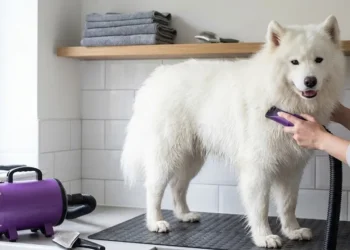
Grooming depends on coat type. Curly coats need brushing several times a week and a professional clip every 6 to 8 weeks to stop matting. Straighter Shepherd-type coats need weekly brushing and more during seasonal moults. Thick coats can hide fleas and ticks, so check the skin often. See our dog grooming guide and our pick of flea and tick collars for dogs.
What Should a Shepadoodle Eat?
A Shepadoodle does best on a complete food made for large-breed dogs, fed by weight and life stage. Large-breed puppy food controls growth, which helps protect developing hips and elbows. Avoid free-feeding and do not let puppies get overweight. Ask your vet how much to feed, and adjust as your dog grows.
Because both parent breeds are deep-chested, they are at risk of bloat (gastric dilatation volvulus), which PDSA describes as an emergency. Splitting food into two meals and avoiding hard exercise straight after eating are common precautions.
Shepadoodle Health Problems and Lifespan
A Shepadoodle can inherit health conditions from either parent. Crossbreeding does not cancel out inherited disease, so the best protection is buying from parents that have been health tested. Most Shepadoodles live around 10 to 14 years, in line with German Shepherds (over 10 years) and Standard Poodles (over 12 years).
Conditions From the German Shepherd Side
PDSA lists several conditions linked to German Shepherds:
- Hip and elbow dysplasia: joints that do not form properly, leading to pain and arthritis. Read more in our guide on preventing hip dysplasia in dogs.
- Degenerative myelopathy (DM): a spinal cord disease that causes back-leg weakness and paralysis, usually starting between 7 and 14 years of age.
- Anal furunculosis: painful ulcers around the bottom.
- Haemophilia A and B: bleeding disorders that stop blood clotting properly.
- Epilepsy, eye disease and pituitary dwarfism: less common but serious.
Conditions From the Poodle Side
PDSA lists several conditions linked to Poodles:
- Progressive retinal atrophy (PRA): gradual loss of sight that can end in blindness.
- Bloat (GDV): a twisted stomach that needs emergency surgery.
- Addison’s disease and hypothyroidism: hormone disorders that need lifelong treatment.
- Von Willebrand’s disease: a bleeding disorder.
- Epilepsy, hip dysplasia and skin problems.
Health Tests to Ask the Breeder For
Ask to see written results for both parents before you put down a deposit. Useful tests include:
- Hip and elbow scores from the BVA/Kennel Club Hip Dysplasia Scheme and the matching elbow scheme.
- DM DNA test for the German Shepherd parent. The Kennel Club notes this test shows risk rather than a definite result.
- PRA DNA tests (prcd-PRA and rcd4) for the Poodle parent, both official Kennel Club schemes for Standard Poodles.
- A current eye examination under the BVA/KC/ISDS Eye Scheme.
Is a German Shepherd Poodle Mix Hypoallergenic?
No, a German Shepherd Poodle mix is not hypoallergenic, and no dog breed truly is. Dog allergies are triggered by proteins in saliva, skin and dander, not by hair length. A Dutch study of dog allergen levels found no evidence for classing any breed as hypoallergenic, and so-called hypoallergenic breeds had higher allergen levels in their coats.
Does a German Shepherd Poodle Mix Shed?
Yes, most German Shepherd Poodle mixes shed to some degree. Dogs with a tight Poodle-type coat shed very little. Dogs with a straighter Shepherd-type double coat can shed heavily, especially in spring and autumn. Because coat type is hard to predict in a young puppy, never buy a Shepadoodle on a promise that it will not shed.
How Much Does a Shepadoodle Cost in the UK?
A Shepadoodle puppy in the UK typically costs roughly £800 to £2,500, but very few are advertised, so prices vary widely. This range is based on UK prices for the parent breeds and similar Poodle crosses. Ongoing costs for a large dog start at roughly £105 a month, before insurance excess or emergency vet bills.
| Cost | Approximate UK range |
|---|---|
| Shepadoodle puppy from a breeder | £800 to £2,500 |
| German Shepherd puppy (for comparison) | £800 to £3,000 |
| Standard Poodle puppy (for comparison) | £1,000 to £2,000 |
| Adoption fee from a large rescue | Around £300 |
| Monthly running costs (food, insurance, preventive care) | From about £105 |
Comparison prices come from German Shepherd and Poodle adverts on Pets4Homes. The monthly figure is PDSA’s minimum for a German Shepherd, and the adoption fee is from Dogs Trust. For a full breakdown, see how much a dog costs per year.
Shepadoodle Insurance
Insurance is worth considering for a Shepadoodle because both parent breeds carry costly inherited conditions such as hip dysplasia and bloat. Insurers usually price a crossbreed by its size and the breeds in its mix, so expect premiums closer to a large breed than a small crossbreed.
A lifetime policy is usually the best fit for a dog at risk of long-term joint or hormone conditions, because it renews cover for ongoing problems each year. Check for exclusions on hip and elbow dysplasia and on “bilateral” conditions. Our guides on lifetime pet insurance and whether pet insurance is worth it explain the policy types.
Shepadoodle Puppies: Buying or Adopting in the UK
Shepadoodle puppies are rare in the UK, so take your time and expect to join a waiting list or look at rescue. Under Lucy’s Law, puppies under six months must be bought directly from the breeder or a rehoming centre, not through a pet shop or dealer.
How to Find Reputable Shepadoodle Breeders
Because the Kennel Club does not register Shepadoodles as a breed, there is no official list of Shepadoodle breeders. A good breeder will:
- Show you the puppy with its mother, in the home where it was raised.
- Give you written health test results for both parents.
- Hold a council breeding licence if they breed regularly or as a business.
- Only let puppies go from 8 weeks old, microchipped and registered to them first.
- Ask you questions about your home and offer to take the dog back at any age.
- Use a written agreement such as The Puppy Contract.
Red Flags When Buying Shepadoodle Puppies
Walk away if the seller will not let you see the mother, offers to meet you in a car park, pushes for a quick deposit, has several breeds for sale, or promises a “non-shedding” or “hypoallergenic” puppy. These are common signs of puppy farming or misleading adverts.
Adopting a German Shepherd Poodle Mix
Adopting is a good route to a German Shepherd Poodle mix. Shepherd crosses regularly come into UK rescues, often with unknown parentage. Try general rescues such as Dogs Trust, German Shepherd breed rescues and Poodle rescues. Our guides on adopting a German Shepherd and taking on a rescue pet will help you prepare.

German Shepherd Poodle Mix Pros and Cons
The German Shepherd Poodle mix has clear strengths and real drawbacks. Weigh both honestly before you commit.
| Pros | Cons |
|---|---|
| Highly intelligent and quick to train | Needs 1 to 2 hours of exercise every day |
| Loyal and affectionate with family | Can be wary of strangers or protective |
| Alert watchdog | May bark a lot without training |
| Can have a low-shedding coat | Shedding is unpredictable; not hypoallergenic |
| Excels at dog sports and canine jobs | Gets bored and destructive if left alone |
| Usually good with older children | Large size can overwhelm toddlers |
| Medium to long lifespan for a big dog | Inherited health risks from both parents |
FAQs
What is a German Shepherd Poodle mix called?
A German Shepherd Poodle mix is usually called a Shepadoodle. Other names include German Doodle, Shepherd Doodle, Shepapoo and Sherdoodle. These are nicknames rather than official breed names.
Is a Shepadoodle the same as a Sheepadoodle?
No, they are different crossbreeds. A Shepadoodle is a German Shepherd crossed with a Poodle. A Sheepadoodle is an Old English Sheepdog crossed with a Poodle.
Is the Shepadoodle a recognised dog breed?
No, the Shepadoodle is not a recognised breed with The Kennel Club. It is a crossbreed, so it has no breed standard. Crossbreeds can join the Kennel Club Activity Register to take part in sports such as agility.
How big does a German Shepherd Poodle mix get?
A German Shepherd Poodle mix usually grows to about 56 to 71 cm (22 to 28 inches) tall and 23 to 41 kg (50 to 90 lb). Crosses with a Miniature or Toy Poodle are smaller but less predictable.
Does a German Shepherd Poodle mix shed?
Yes, most shed to some degree. Dogs with a curly Poodle-type coat shed very little, while dogs with a straighter Shepherd-type coat can shed heavily.
Are Shepadoodles hypoallergenic?
No, Shepadoodles are not hypoallergenic, and research has found no evidence that any dog breed is. People with dog allergies should spend time with the dog before committing.
How long do Shepadoodles live?
Shepadoodles usually live around 10 to 14 years. Sources vary, and lifespan depends on genetics, weight, exercise and vet care.
How much are Shepadoodle puppies in the UK?
Shepadoodle puppies in the UK typically cost roughly £800 to £2,500. Very few are advertised, so prices vary. Adopting a Shepherd cross from a rescue usually costs around £300.
Are Shepadoodles good with children?
Shepadoodles are usually good with children when well trained and socialised. Their size and energy mean they suit older children best, and all play should be supervised.
Related Articles
- Doberman Poodle Mix: The Doberdoodle
- Looking to Adopt a German Shepherd Dog?
- Are German Shepherds Good Family Dogs?
- How to Find the Right Mixed-Breed Dog for Your Lifestyle
- How to Prevent Hip Dysplasia in Dogs
Conclusion
The German Shepherd Poodle mix, or Shepadoodle, is a clever, loyal and energetic crossbreed. It is not the same dog as the Sheepadoodle, it is not hypoallergenic, and it needs an owner with real time for exercise, training and company. In the right home, it rewards that effort with a devoted, capable companion.
If a Shepadoodle sounds right for you, start by looking at rescue. Many Shepherd and Poodle crosses wait for homes at UK centres such as Dogs Trust. If you buy a puppy, choose a breeder who shows you the mother and health test results for both parents.
Medical Disclaimer: This article is general information and is not a substitute for advice from a veterinary surgeon. Speak to your vet about your own dog’s health, diet and exercise needs.
Insurance Disclaimer: This article is general information, not financial advice. Policy prices and cover vary by provider, pet, and postcode. Compare policies and read the terms carefully, or speak to an FCA-regulated adviser.