


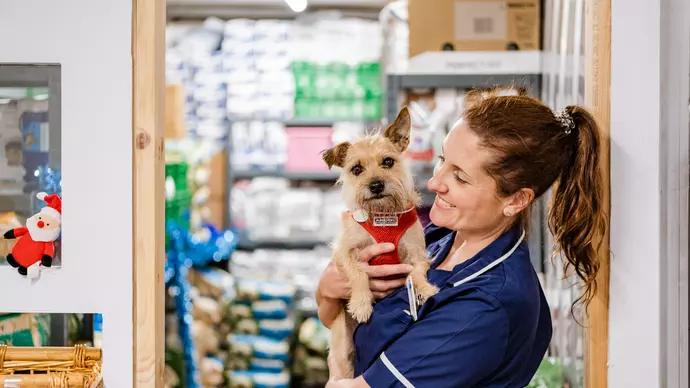
Blue Cross is a national UK pet charity that rehomes dogs, cats, small pets and horses. It also runs animal hospitals for owners who cannot afford private vet fees. Founded in 1897, it is one of the oldest animal charities in the country.
Adoption fees at Blue Cross depend on the animal’s age, and applications are reviewed in the order they arrive. This guide explains the process, fees and centre locations. It also covers giving up a pet and the wider help Blue Cross offers owners.
Independence note: Pet Rescue Blog is not affiliated with Blue Cross. Fees and policies are set by the charity and can change, so always confirm details on the official Blue Cross website before you apply.
Key Takeaways
- Blue Cross is registered with the Charity Commission for England and Wales under charity number 224392.
- Blue Cross rehomes from 11 rehoming centres and rehoming, advice and behaviour units in England and Wales.
- Blue Cross sets adoption fees by species and age, from £200 to £400 for dogs and £100 to £150 for cats.
- Blue Cross does not offer walk-in visits, so you meet a pet by arrangement once you are a potential match.
- Blue Cross reviews applications in the order it receives them and emails you three times about progress.
- Owners giving up a pet can use Home Direct, which rehomes the pet straight from its current home.
- Blue Cross animal hospitals give free or subsidised vet care to owners on means-tested benefits.
Blue Cross at a Glance
Blue Cross is a national pet charity founded in London in 1897 and registered in Burford, Oxfordshire. The table below summarises the key facts.
| Detail | Information |
|---|---|
| Official name | Blue Cross |
| Original name | Our Dumb Friends’ League |
| Founded | 10 May 1897, in London |
| Registered address | Shilton Road, Burford, Oxfordshire, OX18 4PF |
| Charity number | 224392 |
| Rehoming sites | 11 centres and units in England and Wales |
| Animals rehomed | Dogs, cats, rabbits, small pets and horses |
| Dog adoption fee | £200 to £400, depending on age |
| Cat adoption fee | £100 to £150, depending on age |
| Visiting | No walk-ins; meetings by arrangement |
| Giving up a pet | 0300 777 1960 |
What Is Blue Cross?
Blue Cross is a UK charity that helps sick, injured and homeless pets. It rehomes animals, provides low-cost vet care, supports owners who are struggling and offers pet bereavement support. In a single year, its homepage reports helping 8,138 pets through rehoming and fostering and 25,414 pets through its veterinary services.

The history of Blue Cross, from 1897 onwards
Blue Cross began on 10 May 1897 as Our Dumb Friends’ League, set up to care for working horses on London’s streets. Its first animal hospital opened in Victoria in 1906. In 1912, the league launched the Blue Cross Fund to care for horses in the Balkan War.
During the First World War, the fund treated more than 50,000 horses in Blue Cross hospitals in France, according to its Wikipedia entry. The fund’s name became better known than the league’s, so the charity formally adopted “The Blue Cross” in 1950. It dropped “The” in 2011.
Is Blue Cross the same as Our Dumb Friends’ League?
Yes. Blue Cross is the same charity that was founded as Our Dumb Friends’ League in 1897. It is not connected to the US health insurer with a similar name.
Where Are the Blue Cross Rehoming Centres?
Blue Cross has 11 rehoming centres and rehoming, advice and behaviour units, listed on its find us page. Ten are in England and one is in Wales.
| Region | Blue Cross site |
|---|---|
| Devon | Exeter rehoming, advice and behaviour unit |
| Hampshire | Southampton rehoming centre |
| Hertfordshire | Kimpton rehoming centre |
| Greater Manchester | Manchester rehoming, advice and behaviour unit |
| Oxfordshire | Burford rehoming centre |
| Suffolk | Suffolk rehoming centre |
| West Midlands | Bromsgrove rehoming centre, Rolleston rehoming centre |
| Yorkshire | Thirsk rehoming centre, Sheffield rehoming, advice and behaviour unit |
| South Wales | Newport rehoming, advice and behaviour unit |
Can you visit Blue Cross?
Not on a walk-in basis. Blue Cross says it is not open for walk-in appointments. Centres such as Thirsk welcome visitors, but you need an appointment to see pets face to face. Check your nearest centre’s page for reception and phone hours.
How to Adopt a Pet From Blue Cross
To adopt from Blue Cross, you apply online for a specific pet and wait for the rehoming team’s decision. Applications are reviewed in the order received. The full process is on its adoption process page.
The Blue Cross adoption process, step by step
- Start your search: browse the pets looking for homes and read their profiles.
- Apply for a pet: click “Rehome me” on the profile to start an application.
- Receive three emails: one confirms your application, one gives a decision date, and one tells you whether you are a potential match.
- Take a call: if you are a match and the pet is still available, the team calls to discuss its needs.
- Meet the pet: Blue Cross may arrange a virtual meeting, invite you to the centre or bring the pet to you.
- Take your pet home: pay the fee by card or bank transfer, then collect your pet or have it brought to you.
Some applications fail simply because suitable matches were ahead in the queue. If you are new to rescue pets, read our checklist of things to know before adopting a dog or basic cat rescue checklist first.
How much does it cost to adopt from Blue Cross?
Blue Cross sets fees by species and age. The fee goes towards the pet’s care, such as food, vet checks, vaccinations and neutering. These are the fees listed on its adoption page.
| Dog’s age | Fee |
|---|---|
| Under six months | £400 |
| Six to 12 months | £300 |
| One to five years | £250 |
| Five years and older | £200 |
| Cat’s age | Fee |
|---|---|
| Under 12 months | £150 |
| One to five years | £125 |
| Five years and older | £100 |
Older pets cost less to adopt, which makes Blue Cross good value if you are open to a mature dog or cat. Rabbits, guinea pigs and other small pets have their own lower fees. Confirm the fee for your chosen pet when the team calls, as fees can change.
Rehoming a horse from Blue Cross
Blue Cross rehomes horses on a loan agreement rather than a sale. The process is separate from dog and cat adoption, so contact the horse team directly.
Support after you adopt
Blue Cross offers a Behaviour and Training Service and free pet advice pages to help pets settle. Our guide to adopting a dog in the UK explains what to expect in the first weeks at home.
Giving Up a Pet to Blue Cross
If you need to give up a dog, cat, rabbit or small pet, call the pet admissions team on 0300 777 1960. You can also complete the online request to rehome. Blue Cross’s giving up a pet page explains the steps.
- The team reviews your form and books a call back if it thinks it can help.
- On the call, it decides whether rehoming or Home Direct suits your pet.
- Some pets need a face-to-face assessment, videos or vet records.
- Your pet is rehomed through Home Direct or cared for by a foster carer.
Home Direct is the quickest route, because your pet goes straight from your home to its new one. Kennel and cattery space is limited and prioritised for pets most in need. Never leave an animal outside a Blue Cross site, especially when it is closed.
Other Blue Cross Services for Owners
Blue Cross does much more than rehoming. Its services include:
- Animal hospitals and pet care clinics: vet care for owners on means-tested benefits, with sites in London and Grimsby.
- Veterinary Care Fund: awards of up to £300 towards essential treatment at private vets for owners who cannot afford it.
- Pet food banks: help for owners struggling to afford pet food.
- Pet Loss Support: bereavement support, which helped 29,338 people in a single year.
- Pet Peace of Mind: a way to arrange your pet’s future care if you can no longer look after it.
Blue Cross told the Competition and Markets Authority that 70% of those using its hospitals are eligible for free treatment after a £10 consultation fee. The rest receive subsidised care. This is set out in its response to the CMA vet market review.
How Is Blue Cross Funded?
Blue Cross is funded mainly by donations, legacies and its charity shops. These figures come from OpenCharities, which republishes Charity Commission data.
| Financial year ending | 31 December 2023 | 31 December 2024 |
|---|---|---|
| Total income | £43.98m | £50.64m |
| Total expenditure | £44.58m | £50.72m |
| Employees | 798 | 893 |
Blue Cross spent slightly more than it received in both years. The full annual report on the Charity Commission register gives the complete picture.
Blue Cross vs Other UK Rehoming Charities
Blue Cross is the only charity in this series that combines rehoming with animal hospitals and horse rehoming. Its age-based fees make older pets especially affordable. Compare the main options below.
| Charity | Animals | Where | Adult dog fee | Adult cat fee | How you apply |
|---|---|---|---|---|---|
| Woodgreen Pets Charity | Dogs, cats, small pets | One centre, Godmanchester, Cambridgeshire | £285 | £115 | Apply for a specific pet; no general visiting |
| Dogs Trust | Dogs only | 23 rehoming centres across the UK | £300 (£287.50 in Northern Ireland) | Not applicable | Apply once and be matched; most centres open to visitors |
| Battersea Dogs and Cats Home | Dogs and cats | London, Old Windsor and Brands Hatch | £230 | £100 | Register interest and be matched within three months |
| Cats Protection | Cats only | Over 30 centres plus volunteer-run branches | Not applicable | Typically £80 to £120, set locally | Enquire about a specific cat through Find a Cat |
| Blue Cross | Dogs, cats, small pets, horses | 11 rehoming centres and units in England and Wales | £200 to £300 by age (puppies £400) | £100 to £125 by age (kittens £150) | Apply online for a specific pet; no walk-ins |
| Mayhew | Dogs and cats | One centre, Kensal Green, London | £195 | £90 | Apply for a specific animal; virtual interview, then a meeting |
| National Animal Welfare Trust | Dogs, cats, rabbits, guinea pigs, farm animals | Four centres: Hertfordshire, Berkshire, Bedfordshire, Cornwall | £250 | £120 | Register interest in a specific pet; contacted only if matched |
| Scottish SPCA | Dogs, cats, small pets, exotics, equines | Five rehoming centres across Scotland | £300 under 8 years, £250 over 8 (puppies £400) | £150 under 8 years, £100 over 8 (kittens £200) | One application, open for 12 months; the team matches you |
| Raystede | Dogs, cats, small pets, farm animals, horses | One 43-acre centre, Ringmer, East Sussex | £300 | £100 | One application on file; contact them about a specific animal |
Which charity suits you best?
- You want an older dog or cat: Blue Cross’s age-based fees make mature pets the cheapest to adopt.
- You want a horse or pony: Blue Cross rehomed horses on loan, which few charities in this series do.
- You want to browse dogs in person first: most Dogs Trust centres allow walk-in visits, which Blue Cross does not.
- You live in Scotland or Northern Ireland: Blue Cross centres are in England and Wales only.
Is Blue Cross a Good Charity to Adopt From?
Blue Cross is a long-established charity with a clear online process, several regional centres and services that support owners far beyond adoption. These strengths and limitations come from its published policies.
| Strengths | Limitations |
|---|---|
| Clear three-email update process | No walk-in visits |
| Lower fees for older pets | Puppy fee of £400 is among the highest |
| Rehomes dogs, cats, small pets and horses | Applications can fail simply on queue position |
| Home Direct avoids kennels for surrendered pets | Limited kennel space for pets being given up |
| Low-cost vet care and pet loss support | No centres in Scotland or Northern Ireland |
How to Support Blue Cross
- Foster: give a pet a temporary home while it waits.
- Volunteer: help at a centre, hospital or charity shop.
- Sponsor a pet: fund ongoing care for an animal.
- Donate to a food bank: centres accept unopened pet food and bedding.

FAQs
How much does it cost to adopt a dog from Blue Cross?
Blue Cross sets dog fees by age. Puppies under six months cost £400, dogs aged six to 12 months £300, dogs aged one to five £250 and dogs aged five and over £200.
How much does it cost to adopt a cat from Blue Cross?
Blue Cross charges £150 for a cat under 12 months and £125 for a cat aged one to five. Cats aged five or over cost £100.
Can I visit a Blue Cross rehoming centre without an appointment?
No. Blue Cross is not open for walk-in appointments. You meet a pet by arrangement once the rehoming team decides you are a potential match.
How many rehoming centres does Blue Cross have?
Blue Cross has 11 rehoming centres and rehoming, advice and behaviour units, ten in England and one in Newport, South Wales.
How long does Blue Cross take to reply to an application?
Blue Cross emails you to confirm your application, then emails a date by which it will decide. By that date, it tells you whether you are a potential match.
How do I give up a pet to Blue Cross?
Call the pet admissions team on 0300 777 1960 or complete the online request to rehome. The team books a call back if it can help and may use Home Direct or foster care.
What is Blue Cross Home Direct?
Home Direct rehomes a pet straight from its current home to its new one, without a stay in kennels. Blue Cross describes it as the quickest way to find a pet a new home.
Does Blue Cross offer free vet treatment?
Blue Cross animal hospitals treat pets of owners on means-tested benefits. Most eligible owners receive free treatment after a £10 consultation fee, and the rest pay subsidised prices.
What was Blue Cross originally called?
Blue Cross was founded on 10 May 1897 as Our Dumb Friends’ League. It formally adopted the name The Blue Cross in 1950 and dropped The in 2011.
Is Blue Cross a registered charity?
Yes. Blue Cross is registered with the Charity Commission for England and Wales under charity number 224392.
Related Articles
- Woodgreen Pets Charity: An Independent Guide
- Dogs Trust: An Independent Guide
- Battersea Dogs and Cats Home: An Independent Guide
- Cats Protection: An Independent Guide
- Mayhew Animal Welfare Charity: An Independent Guide
- Raystede Centre for Animal Welfare: An Independent Guide
- National Animal Welfare Trust: An Independent Guide
- Scottish SPCA: An Independent Guide
- How to Adopt a Dog in the UK: Your Complete Step-by-Step Guide
- How to Prepare Your Home for a New Cat
- RSPCA Adoption Requirements UK Explained
Conclusion
Blue Cross suits adopters in England and Wales who want a clear online process and are open to an older pet. Its support for struggling owners, from food banks to low-cost vet care, sets it apart from rehoming-only charities.
If you want to meet animals first, or you live in Scotland or Northern Ireland, compare Blue Cross with the other charities in this series. Whichever you choose, an older rescue pet is often the calmest and best-value match.
Insurance Disclaimer: This article is general information, not financial advice. Policy prices and cover vary by provider, pet, and postcode. Compare policies and read the terms carefully, or speak to an FCA-regulated adviser.