

Thinking about welcoming a four-legged friend into your life? You’re in the right place. As someone who’s helped rehome hundreds of dogs across the UK from energetic terriers in Glasgow to gentle greyhounds in London, I know firsthand how transformative adoption can be. Not just for the dog, but for you too.
Step 0: Are You Really Ready to Adopt a Dog?
Before we dive into the process, let’s be honest: adoption is a 10-15 year commitment. Rescue centres like RSPCA and Dogs Trust take this seriously and so should you. Here’s what to consider:
UK Dog Ownership Reality Check (2025 Data)
- Cost: 51% of UK pet owners worry about vet bills (PDSA PAW Report 2025)
- Time: Dogs need 2-3 hours of attention daily (walks, play, training)
- Lifespan: Average dog lives 10-13 years (some breeds 15+)
- Space: 24% of UK dog owners have multiple dogs do you have room?
- Lifestyle: Can you provide walks in all weathers? Who cares for them if you’re ill?
Ask Yourself:
- Can you afford it? Beyond the adoption fee (£150-£350), budget £1,000-£2,000/year for food, insurance, vet bills, and accessories.
Pro tip: Many rescues offer 4-6 weeks free insurance with adoption.
- Is your home suitable? Most UK rescues require a secure garden or nearby green space. Renting? Check your tenancy agreement only 7% of UK rental properties allow pets (Shelter, 2025).
- What’s your lifestyle? A high-energy border collie needs 2+ hours exercise daily; a senior greyhound might be happy with 30 minutes. Be realistic.
- Who’s in your household? Some rescues have age restrictions for children. Puppies need near-constant supervision.
- Have you considered other pets? Not all rescue dogs are cat-friendly. A careful introduction process is essential.
💡 Insight: I’ve seen adoptions fail when families underestimate the adjustment period. The first 3 months are critical; dogs can take weeks to show their true personality. That shy dog in the kennel might be a confident explorer once settled!
The Complete UK Dog Adoption Process: 7 Essential Steps
Based on the processes from RSPCA, Dogs Trust, Battersea, Blue Cross, and NAWT, here’s your roadmap to adopting a dog in the UK:
Step 1: Research & Choose Your Rescue Organisation
Not all rescues are the same. Here’s how to find the best match:
- National charities: Largest selection, standardised processes
- RSPCA (England & Wales) – 140+ branches
- Dogs Trust – 20 rehoming centres UK-wide
- Battersea (London & surrounding areas)
- Blue Cross – Nationwide
- NAWT (National Animal Welfare Trust)
- Local rescues: Often smaller, more personal service. Search “[your town] dog rescue” or use Rescue Dogs Matter.
- Breed-specific rescues: If you have your heart set on a particular breed, try:
- Lurcher & Greyhound Rescue (many ex-racing dogs need homes)
- Terrier Rescue UK
- Oldies Club (for senior dogs)

Reading Sugestion: Why Senior Dogs Make the Best Pets (And Where to Find Them)
🔍 Pro Tip: Check if the rescue is a registered charity (look for the charity number on their website). Avoid any organisation that won’t let you visit the dog first or pressures you into a quick decision.
Step 2: Complete the Application Form
Most UK rescues now use online application forms. Expect questions about:
- Your home (type, garden, nearby parks)
- Your lifestyle (work hours, holidays, exercise routine)
- Your experience with dogs
- Other pets and family members
- Your preferences (age, size, breed, temperament)
- Veterinary history (if you’ve had pets before)
Dogs Trust’s approach: You apply once, then they match you with suitable dogs. RSPCA: You apply for specific dogs, but they may suggest alternatives.
Timeframe: Allow 2-7 days for processing. Be honest, rescues can verify details, and misleading information will disqualify you.
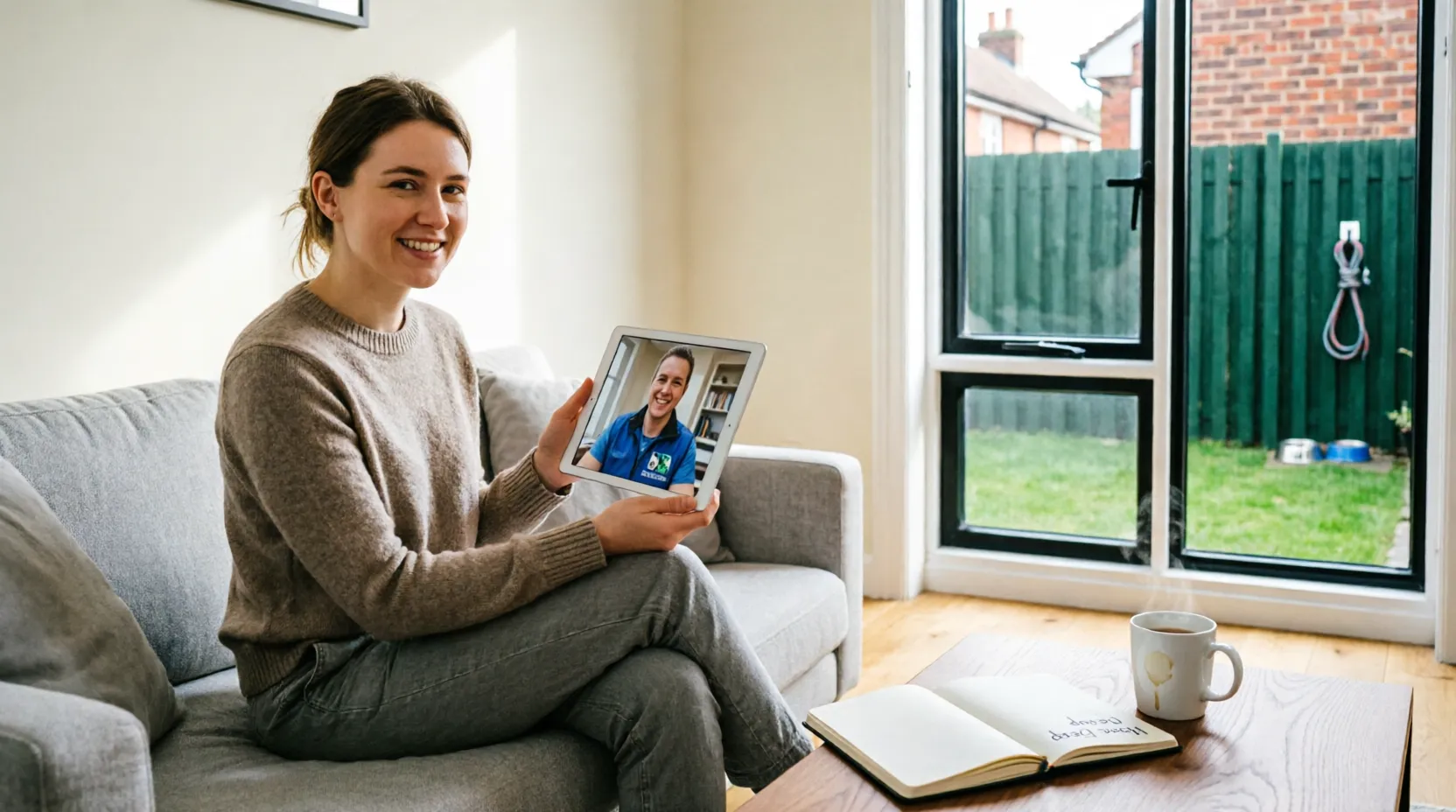
Step 3: The Home Check (Virtual or In-Person)
This is standard practice for most UK rescues. Here’s what they’re looking for:
- Secure fencing: No gaps a dog could escape through. Check your garden boundary, many rescues require 6ft fencing for larger breeds.
- Safe environment: No hazards like uncovered ponds, toxic plants (e.g., lilies, foxglove), or accessible rubbish bins.
- Suitable space: Enough room for the dog to move comfortably. They’ll consider the dog’s size and energy level.
- Home setup: Where will the dog sleep? Where will they eat? Do you have appropriate toys?
COVID-19 Update: Many rescues still offer virtual home checks via video call. Dogs Trust reports 60% of their home checks are now conducted virtually (2025 data).
💡 Insight: I’ve done hundreds of home checks. The most common reason for failure? Unsecure gardens. A simple £20 roll of chicken wire to block a gap can make the difference between approval and rejection. Also, renters—get written permission from your landlord before applying.
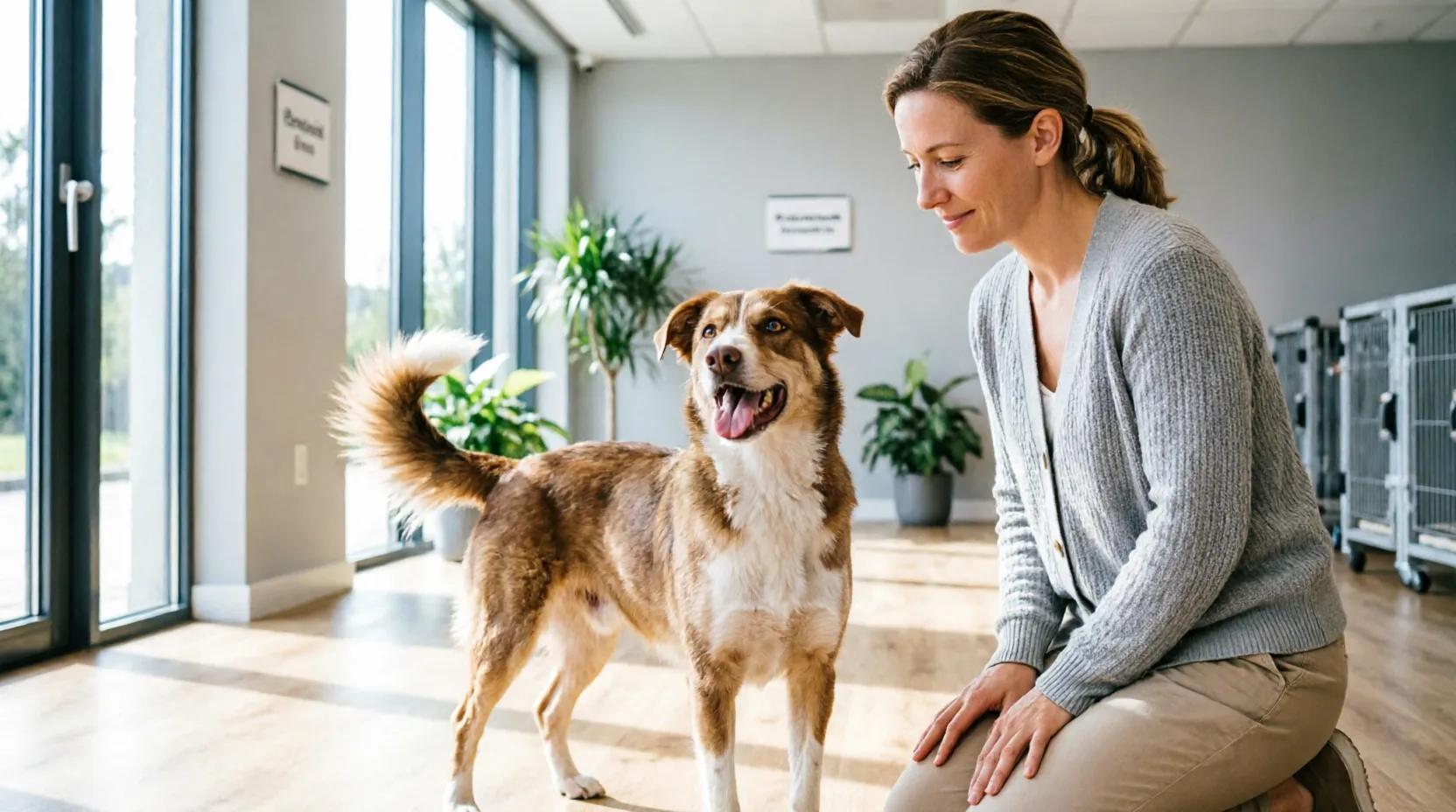
Step 4: Meet Potential Dogs
This is the exciting part! Once approved, you’ll be invited to meet suitable dogs. Here’s what to expect:
- First meeting: Usually at the rescue centre. Staff will introduce you to dogs that match your lifestyle.
- Multiple visits: Most rescues require 2-3 meetings before adoption. This helps the dog get to know you and lets you see their personality in different situations.
- On-lead walks: You’ll typically walk the dog on-lead around the centre to assess compatibility.
- Off-lead assessment: For some dogs, you may be allowed to see them off-lead in a secure area.
- Foster-to-adopt: Some rescues (like Many Tears Animal Rescue) offer trial periods. This is great for nervous dogs or first-time adopters.
What to bring: Comfortable shoes, a notepad to record impressions, and any family members who’ll live with the dog.
⚠️ Warning: It’s easy to fall in love with the first dog you meet. But trust the process—rescue staff know these dogs intimately and can match you with a better fit than you might choose yourself.
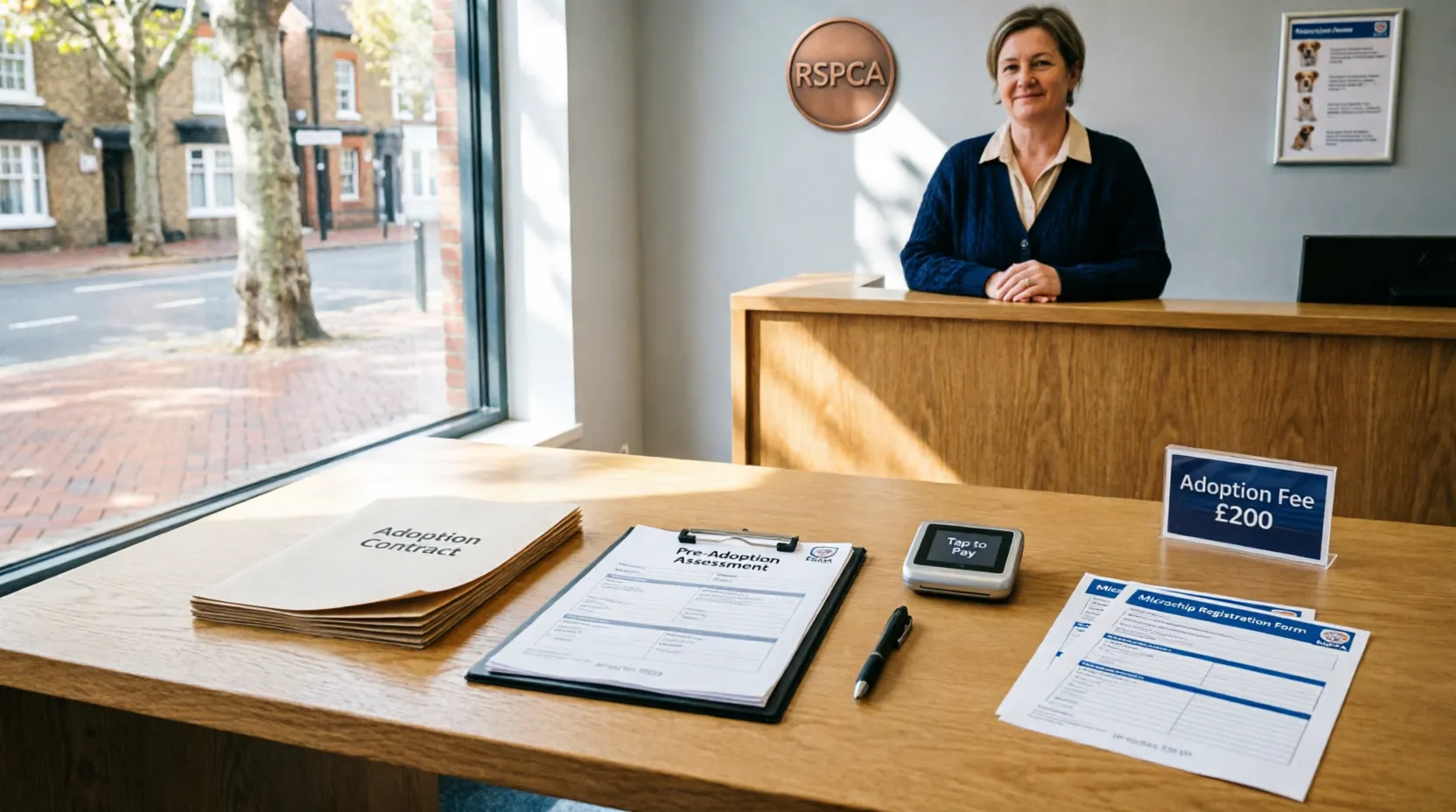
Step 5: Pre-Adoption Paperwork & Fee Payment
Once you’ve found your match, there’s some admin to complete:
- Adoption contract: Legally binding agreement outlining your responsibilities. This typically includes:
- Commitment to provide proper care
- Agreement to return the dog to the rescue if you can no longer keep them
- Permission for follow-up visits (some rescues check in after 3-6 months)
- Adoption fee: Payable before or on adoption day. See our cost comparison table.
- Microchipping: By UK law, all dogs must be microchipped. Most rescues do this before adoption and register the chip to you.
- Veterinary records: You’ll receive a health history, vaccination records, and neutering status.
What’s included in the fee? Typically:
- Neutering/spaying (or voucher if too young)
- Initial vaccinations
- Microchipping
- Flea and worming treatment
- Basic health check
- 4-6 weeks free pet insurance (varies by rescue)
Step 6: Adoption Day – Bringing Your Dog Home
The big day! Here’s how to make it smooth:
- Prepare your home:
- Set up a quiet space with a bed, water bowl, and toys
- Dog-proof your home: secure bins, hide cables, remove toxic plants
- Buy essentials: food, lead, collar, ID tag (legal requirement), poop bags
- The journey home:
- Bring a familiar-smelling blanket or toy from the rescue
- Use a secure crate or harness in the car
- Have someone sit with the dog if possible
- First 24 hours:
- Keep things calm. Avoid overwhelming the dog with too many new people.
- Show them where to toilet. Take them out frequently (every 2-3 hours).
- Feed them the same food the rescue used, at the same times.
- Don’t force interaction. Let the dog come to you.
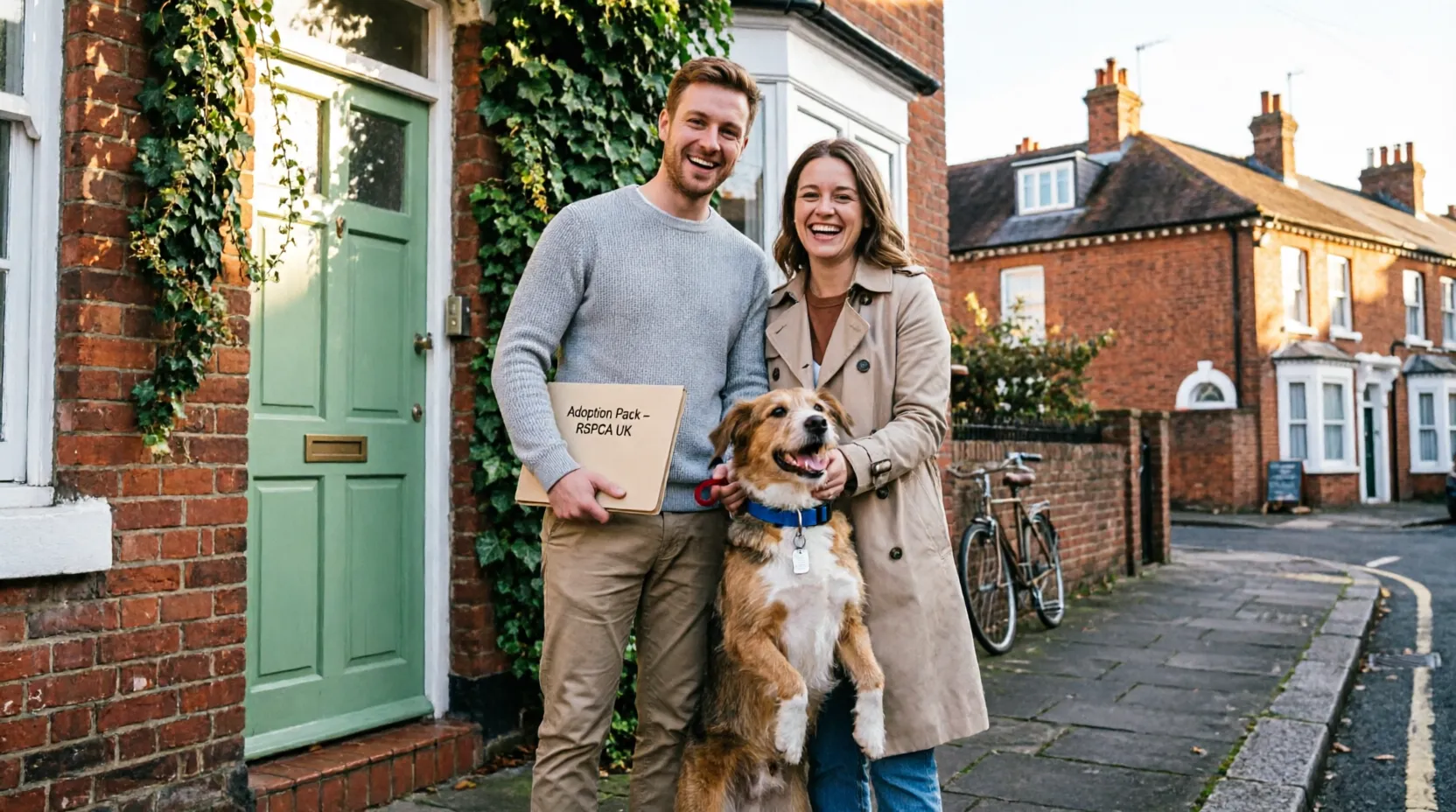
💡 Insight: The first night can be tough. Many rescue dogs experience “kennel stress” and may pace, whine, or seem disoriented. This is normal. Keep a routine, be patient, and avoid punishing any accidents. Most dogs settle within 2-4 weeks.
Step 7: Settling In & Post-Adoption Support
Your rescue’s support doesn’t end on adoption day. Here’s what to expect:
- Follow-up calls: Most rescues check in after 24 hours, 1 week, and 1 month.
- Behaviour support: Many offer free or discounted training sessions. Dogs Trust provides a free behaviour helpline for adopters.
- Veterinary care: If health issues arise within a set period (often 2-4 weeks), some rescues cover the costs.
- Return policy: If the adoption doesn’t work out, you must return the dog to the rescue—not rehome them yourself. This is usually stipulated in your contract.
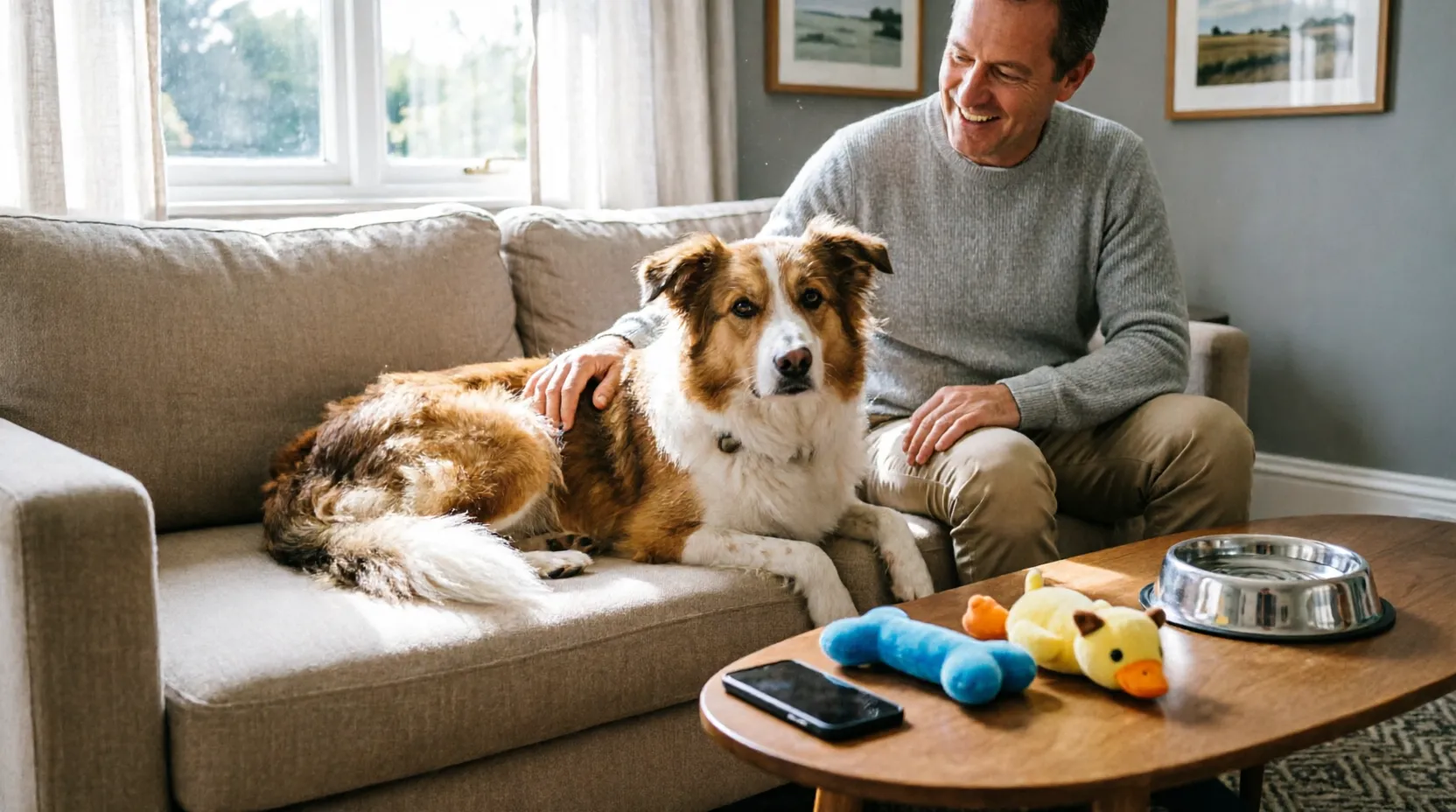
The settling-in timeline:
| Timeframe | What to Expect |
|---|---|
| First 24 hours | Overwhelmed, may not eat, tests boundaries |
| First week | Starts to relax, learns routine, may still be nervous |
| 2-4 weeks | True personality emerges, bonds with family |
| 3-6 months | Fully settled, secure in new home |
UK Dog Adoption Costs
One of the biggest advantages of adoption is the cost. Here’s a breakdown of fees from major UK rescues:
| Rescue Organisation | Adult Dog Fee | Puppy Fee | What's Included | Coverage |
|---|---|---|---|---|
| Dogs Trust | £300 | £300 | Vaccinations, microchipping, neutering, flea/worm treatment, 4 weeks insurance | England, Wales, Scotland (£287.50 in NI) |
| RSPCA | £150-£250 | £150-£250 | Varies by centre. Typically includes vaccinations, microchipping, neutering | England & Wales |
| Battersea | £200 | £250 | Vaccinations, microchipping, neutering, flea/worm treatment, 4 weeks insurance | London & surrounding areas |
| Blue Cross | £200-£350 | £250-£400 | Vaccinations, microchipping, neutering, health check | UK-wide |
| NAWT | £180-£250 | £200-£300 | Vaccinations, microchipping, neutering, flea/worm treatment | England |
| Local rescues | £100-£300 | £150-£400 | Varies. Always confirm what's included. | Varies |
Ongoing Costs to Budget For:
| Expense | Estimated Annual Cost |
|---|---|
| Food (medium dog) | £400-£800 |
| Pet insurance | £300-£600 |
| Routine vet care (vaccinations, flea treatment) | £200-£400 |
| Toys, bed, lead, etc. | £150-£300 |
| Dog walker/day care (if needed) | £1,000-£3,000 |
| Total (first year) | £1,500-£3,000+ |
💰 Financial Support: Struggling with costs? Some charities offer assistance:
- PDSA – Free vet care for eligible pet owners
- Blue Cross – Low-cost vet clinics
- RSPCA – Financial aid for emergency vet treatment
Best Places to Adopt a Dog in the UK (By Region)
With hundreds of rescues across the UK, here are our top picks by region:
England
London & South East
- Battersea Dogs & Cats Home (London) – One of the UK’s most famous rescues. Adoption fee: £200-£250. Specialises in: All breeds, including many ex-racing greyhounds.
- Dogs Trust (Harefield, West London) – Large centre with 100+ dogs. Fee: £300.
- Blue Cross (Burford, Oxfordshire) – Beautiful countryside location. Fee: £200-£350.
North West
- Dogs Trust Manchester – State-of-the-art rehoming centre. Fee: £300.
- RSPCA Manchester & Salford – Busy city centre with high adoption rates.
- Freshfields Animal Rescue (Liverpool) – Great for first-time adopters.
Yorkshire & North East
- Dogs Trust Leeds – Large centre with family-friendly dogs.
- Yorkshire Animal Rescue – Specialises in smaller breeds.
Midlands
- Dogs Trust Birmingham – Central location, easy access.
- Birmingham Dogs Home – One of the oldest rescues in the UK.
South West
- Dogs Trust Bristol – Beautiful facility with outdoor areas.
- Many Tears Animal Rescue (Carmarthenshire) – Specialises in ex-breeding dogs. Note: Often has long waiting lists.
Scotland
- Dogs Trust Glasgow – Scotland’s largest dog rescue. Fee: £300.
- Scottish SPCA – Scotland’s equivalent of the RSPCA. Fee: £150-£250.
- Glasgow Dog and Cat Home – City centre location, great for urban adopters.
- Pro Dogs Direct (Edinburgh) – Specialises in larger breeds.
Wales
- RSPCA Wales – Multiple branches across Wales.
- Dogs Trust Cardiff – Modern facility with excellent support.
- Hope Rescue (Pontyclun) – Family-run rescue with a great reputation.
Northern Ireland
- Dogs Trust Belfast – Fee: £287.50 (slightly lower than mainland UK).
- USPCA (Ulster Society for the Prevention of Cruelty to Animals) – NI’s largest animal welfare charity.
- Assisi Animal Sanctuary (Downpatrick) – No-kill shelter with a focus on rehabilitation.
💡 Regional Tip: If you’re in a city with limited rescues (like Edinburgh or Cardiff), consider virtual adoption. Many rescues now offer video meet-and-greets, and some will transport dogs to approved adopters. Dogs Trust, for example, has a Foster Plus scheme that can help.
UK Dog Adoption Requirements: Are You Eligible?
While each rescue has its own criteria, here are the standard requirements across the UK:
Mandatory Requirements
- Age: You must be 18 years or older to adopt a dog.
- ID: Proof of address (utility bill, bank statement) and photo ID (passport, driving licence).
- Home: Secure, suitable accommodation. Most rescues require:
- Adequate space for the dog’s size and breed
- Secure fencing (minimum 5-6ft for most breeds)
- No hazards (e.g., uncovered ponds, toxic plants)
- Landlord permission: If you rent, you’ll need written consent from your landlord. Some rescues (like Battersea) will contact your landlord directly to verify.
- Time: Ability to provide daily exercise and attention. Most rescues ask for:
- Minimum 1-2 hours of exercise per day
- No more than 4-6 hours alone per day (less for puppies)
Common Reasons for Rejection
Rescues turn down applications for valid reasons. Here are the most common:
| Reason | Why It Matters | Solution |
|---|---|---|
| Unsecure garden | Risk of escape/injury | Fix fencing before applying |
| No landlord permission | Legal issues if pet not allowed | Get written consent |
| Work hours too long | Dog would be left alone too long | Consider dog walker/day care |
| Previous pet history | Concern about responsibility | Be transparent, show improvement |
| Unsuitable home for breed | Mismatch between dog and environment | Consider a different type of dog |
| Children too young | Safety concerns | Wait until children are older |
Breed-Specific Considerations
Some breeds have additional requirements:
- Greyhounds/Lurchers: Many rescues require a secure garden with 6ft+ fencing due to their high prey drive and speed.
- Terriers: May need extra supervision around small pets (cats, rabbits).
- Working breeds (Border Collies, Spaniels): Require 2+ hours exercise daily and mental stimulation.
- Banned breeds: In the UK, it’s illegal to own certain types without a court exemption, including Pit Bull Terriers, Japanese Tosa, Dogo Argentino, and Fila Brasileiro. Do not attempt to adopt these breeds.
Related: Best Dog Breeds for First-Time Owners in the UK
Legal Requirements in the UK
As a dog owner in the UK, you must comply with these laws:
- Microchipping: All dogs in the UK must be microchipped by law (The Microchipping of Dogs (England) Regulations 2015, similar laws in Scotland, Wales, and NI). Your rescue will usually do this before adoption and register the chip to you. You must keep your contact details up to date.
- Dog ID Tag: When in a public place, your dog must wear a collar with an ID tag showing your name and address (Control of Dogs Order 1992). Fines up to £5,000 for non-compliance.
- Animal Welfare Act 2006: You have a legal duty to provide for your dog’s five welfare needs:
- Need for a suitable environment
- Need for a suitable diet
- Need to be able to exhibit normal behaviour patterns
- Need to be housed with, or apart from, other animals
- Need to be protected from pain, suffering, injury, and disease
- Lucy’s Law: Since April 2020, it’s illegal to buy a puppy or kitten from a third-party seller (e.g., pet shop or dealer) in England. You must buy or adopt directly from the breeder or a rescue centre. Scotland and Wales have similar laws.
- Dangerous Dogs Act 1991: Prohibits certain breeds (see above) and makes it illegal for your dog to be dangerously out of control in a public place.
- Public Spaces Protection Orders (PSPOs): Many local councils have PSPOs requiring dogs to be on a lead in certain areas. Check your local council’s website for rules in your area.
⚠️ Important: If you’re adopting in Scotland, be aware that the Animal Health and Welfare (Scotland) Act 2006 has slightly different provisions. In Northern Ireland, you’ll need a dog licence (£12.50/year) in addition to the adoption fee.
Your Questions Answered
Can you adopt a dog for free in the UK?
Short answer: Rarely. Most reputable rescues charge an adoption fee to cover their costs (vaccinations, neutering, microchipping, etc.). However:
- Some private rehomers (not rescues) may rehome dogs for free, but be extremely cautious—this can be a red flag for puppy farming or illegal breeding.
- Occasionally, rescues waive fees for long-term residents (dogs in care for 6+ months) or senior dogs.
- Always verify the organisation is legitimate. Check they’re a registered charity and ask for references.
How long does it take to adopt a dog in the UK?
The timeline varies, but here’s a typical breakdown:
| Step | Timeframe |
|---|---|
| Research & choose rescue | 1-7 days |
| Complete application | 1 day |
| Home check | 3-10 days |
| Meet dogs & decide | 1-4 weeks |
| Paperwork & preparation | 1-3 days |
| Total | 2-6 weeks |
Note: Popular rescues like Battersea or Dogs Trust may have waiting lists. Be patient—the right dog is worth the wait!
Can I adopt a dog if I work full-time?
Yes, but… Most rescues require that dogs aren’t left alone for more than 4-6 hours per day. If you work full-time:
- Consider a dog walker (£10-£15 per walk) or doggy day care (£15-£25/day).
- Adopt an older, lower-energy dog that can cope with longer periods alone.
- Look for rescues with flexible policies. Some (like Dogs Trust) may approve full-time workers if you have a solid plan for the dog’s care.
- Avoid puppies—they need near-constant supervision and frequent toilet breaks.
Pro tip: If you’re in London, BorrowMyDoggy connects dog owners with local borrowers for free walks and companionship.
Can I adopt a dog if I have a small flat?
Absolutely! Size isn’t everything—exercise and mental stimulation matter more. However:
- Choose a smaller breed or a low-energy dog (e.g., greyhound, bulldog, shih tzu).
- Ensure you have nearby green spaces for walks and toilet breaks.
- Check your tenancy agreement—many rental properties have breed or size restrictions.
- Avoid high-energy breeds like border collies, huskies, or kelpies—they need space to run.
Success story: I helped a couple in a 1-bed flat in Manchester adopt a 10-year-old greyhound. He was happy with two 30-minute walks a day and spent the rest of the time snoozing on their sofa!
Can I adopt a puppy from a UK rescue?
Yes, but they’re in high demand and often have longer waiting lists. Here’s what to know:
- Puppies are rare in rescues—most dogs are adults or seniors.
- Higher fees: Puppy adoption fees are often £50-£100 more than adult dogs (e.g., £250-£400).
- Stricter requirements: Rescues may require:
- Someone home most of the day
- Previous dog experience
- Secure garden
- Commitment to puppy training classes
- Consider an adult dog: Puppies are a lot of work! An adult dog is often already house-trained and has a more predictable personality.
Where to find rescue puppies:
- RSPCA (occasionally has puppies)
- Blue Cross
- Many Tears Animal Rescue (often has puppies from ex-breeding situations)
What’s the best age dog to adopt?
This depends on your lifestyle. Here’s a quick guide:
| v | Pros | Cons | Best For |
|---|---|---|---|
| Puppy (0-1 year) | Blank slate, bond closely, long lifespan | High energy, need training, destructive if bored | Experienced owners, those home most of the day |
| Young adult (1-3 years) | Still playful, often already trained | May still have puppy energy, some behavioural issues | Active individuals/families |
| Adult (3-7 years) | Calmer, known personality, often house-trained | May have ingrained habits, shorter time with you | First-time adopters, busy households |
| Senior (7+ years) | Low energy, grateful, often already trained | Shorter lifespan, may have health issues | Retirees, those wanting a relaxed companion |
Rosie’s recommendation: For first-time adopters, I always suggest starting with an adult dog (3-7 years). You get a clearer picture of their personality, and they’re often already house-trained and socialised.
Can I adopt a dog if I have children?
Yes, but age and temperament matter. Most rescues have age restrictions:
- Under 5s: Some rescues won’t rehome dogs to families with very young children.
- 5-10 years: Usually fine, but the dog will need to be child-friendly and patient.
- 10+ years: Most rescues have no restrictions for older children.
Tips for adopting with kids:
- Involve children in the process (but let adults make the final decision).
- Teach children how to interact with dogs safely (no pulling tails/ears, no disturbing while eating/sleeping).
- Supervise all interactions until you’re confident the dog and child are comfortable together.
- Consider a dog that’s already lived with children.
Breeds to consider: Labrador Retriever, Golden Retriever, Cavalier King Charles Spaniel, Beagle, Pug. Breeds to be cautious with: Chihuahuas (can be nippy), Terriers (high prey drive), Husky (strong, may knock over small children).
Can I adopt a dog if I have other pets?
Yes, but introductions must be careful. Here’s how rescues handle it:
- Dogs: Most rescues will assess how the new dog reacts to others. Some may require a meet-and-greet with your current dog.
- Cats: Many rescue dogs have a prey drive and may chase cats. Look for dogs marked as “cat-friendly” or “lived with cats.”
- Small pets (rabbits, guinea pigs): Terriers and other breeds with high prey drive may not be suitable.
Tips for multi-pet households:
- Introduce dogs on neutral territory (e.g., a park) before bringing them home.
- Keep cats and dogs separated initially, using a baby gate or separate rooms.
- Feed pets separately to avoid food aggression.
- Give each pet their own space (beds, toys, food bowls).
Success story: I helped a family in Birmingham adopt a rescue greyhound to live with their two cats. After a slow introduction (3 weeks of controlled meetings), all three now nap together on the sofa!
What if the adoption doesn’t work out?
Contact the rescue immediately. Most adoption contracts require you to return the dog to the rescue if you can no longer keep them. Never rehome the dog yourself—this can void your contract and put the dog at risk.
Rescues understand that sometimes things don’t work out. Common reasons for returns include:
- Allergies in the family
- Compatibility issues with other pets
- Unexpected health or behavioural issues
- Change in personal circumstances (e.g., job loss, moving house)
What happens next:
- The rescue will take the dog back without judgment.
- They’ll assess the dog’s needs and find a more suitable home.
- Some rescues offer behaviour support to help resolve issues before rehoming.
- You may be eligible for a partial refund of the adoption fee, depending on the rescue’s policy.
Note: Dogs Trust reports that 95% of their adoptions are successful long-term, with only 5% of dogs being returned.
Ready to Take the Next Step?
Adopting a dog is one of the most rewarding experiences you’ll ever have. That moment when your rescue dog finally relaxes on your sofa, or looks at you with those “you’re my person” eyes—it’s priceless.
But remember: adoption is a lifetime commitment. These dogs have already been through enough—many have been abandoned, neglected, or surrendered through no fault of their own. They deserve a forever home, not just a temporary stop.
🐾 Start your adoption journey today: 🐾
- Browse dogs: RSPCA Find a Pet | Dogs Trust | Battersea
- Check your eligibility: Review the requirements in this guide
- Prepare your home: Dog-proof your space and gather supplies
- Apply: Complete an application with your chosen rescue
And if you’re not quite ready to adopt, there are other ways to help:
- Foster: Provide a temporary home for a dog in need (rescues cover all costs)
- Volunteer: Walk dogs, help at events, or assist with admin
- Donate: Every £1 helps rescues care for more dogs
- Spread the word: Share this guide with anyone considering adoption!
“Saving one dog will not change the world, but surely for that one dog, the world will change forever.”