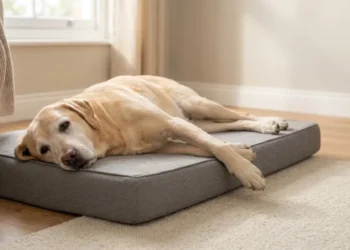



A micro bully is a very short, heavily muscled American Bully type, bred to stand below the official Pocket Bully height. You will also see it sold as a micro American bully, micro pocket bully, micro exotic bully, mini bully or “microbully”. All of these names describe the same idea: a dog that looks like a full-sized bully squeezed into a much smaller frame.
That look is popular, and it is also the reason vets and UK welfare charities are worried about it. Micro bullies are not a recognised breed or size class, so there is no agreed standard for their height, weight or health. Some are sturdy, happy companions. Others struggle to breathe, walk or give birth.
This guide explains what a micro bully really is, how it is made, how big it gets, the colours you will see, how long it lives and the health problems to watch for. We also cover UK law, fair prices and what to check before you buy or adopt one.
Quick Answer
| Question | Short Answer |
|---|---|
| What is a micro bully? | An American Bully type bred shorter than the Pocket variety, usually under about 14 inches (36 cm) for males and 13 inches (33 cm) for females. |
| Is it a recognised breed? | No. The ABKC and UKC recognise Pocket, Standard, Classic and XL varieties only, so "micro" is a marketing label. |
| How much does it weigh? | There is no official weight; adults are commonly advertised at roughly 9 to 20 kg (20 to 45 lb) depending on sex, bone and condition. |
| How long does it live? | No study measures micro bullies directly; a realistic expectation is around 8 to 12 years, shorter for very flat-faced or short-legged dogs. |
| How much does one cost in the UK? | Pocket and micro puppies are commonly advertised at roughly £1,000 to £3,500, with merle and "rare" colours priced highest. |
| Is it legal in the UK? | Yes, a true micro bully is far below the XL Bully height threshold, but any dog can still be assessed as a banned type by its appearance. |
Key Takeaways
- A micro bully is not an official breed or variety; it is a sales term for American Bully type dogs bred shorter than the Pocket Bully standard.
- Micro bullies are usually made by breeding the smallest Pocket Bullies together and adding short, flat-faced breeds such as the French Bulldog, English Bulldog and Shorty Bull.
- Many very short-legged bullies carry dwarfism genes, one of which (CDDY) is linked to a high risk of painful spinal disc disease.
- The World Veterinary Association and the UK Brachycephalic Working Group have both named Exotic and Micro Bully types as a welfare concern because of extreme body shape.
- Flat-faced dogs in a large UK study lived about 1.5 years less than other dogs, so expect a shorter lifespan in more extreme micro bullies.
- Merle and blue or lilac coats can carry extra health risks, so a “rare colour” should never be a reason to pay more.
- The healthiest micro bully is the least extreme one: open nostrils, a visible muzzle, straight legs, a normal tail and quiet breathing.
What Is a Micro Bully?
A micro bully is a small, compact dog of American Bully type. It has the broad head, deep chest and heavy muscle of a standard bully, but it stands much closer to the ground.
The key fact is this: “micro” is not an official size. The American Bully Kennel Club (ABKC) breed standard lists four varieties only: Pocket, Standard, Classic and XL. The United Kennel Club standard groups the breed into Pocket, Standard/Classic and XL. Neither includes a micro class. The UK Kennel Club does not recognise the American Bully at all.
Because there is no standard, every breeder can define “micro” differently. One seller may use it for a dog under 13 inches. Another may use it for a very wide Pocket Bully. This is why the same search can show dogs that look completely different.
Other Names for the Micro Bully
- Micro American bully or American bully micro: the same dog, using the parent breed name.
- Micro pocket bully: a Pocket Bully bred down below the Pocket height range.
- Micro exotic bully: a micro bully with more extreme “exotic” features, such as a very short face, heavy wrinkles and very short legs.
- Mini bully or miniature bully: an informal name, often used for the same dogs.
- Teacup micro bully: a sales term for the smallest dogs (covered below).
- Micro pitbull or micro mini pitbull: a misleading name, because a micro bully is not a Pit Bull Terrier.
Is a Micro Bully a Pitbull?
No. The American Bully was developed from the American Pit Bull Terrier and American Staffordshire Terrier, then crossed with bulldog breeds. A micro bully is a further step away again. The names “micro pitbull” and “micro mini pitbull” are search terms, not real breeds.
This matters in the UK. The GOV.UK banned dogs guidance lists the Pit Bull Terrier and the XL Bully among the types it is illegal to own without an exemption. It also states that whether a dog is a banned type depends on what it looks like, not its breed name or paperwork. Calling a dog a “micro pitbull” in an advert is unwise for that reason alone.
Micro Bullies and the XL Bully Ban
The XL Bully ban in England and Wales starts with height. Under the GOV.UK XL Bully guidance, an adult male must measure at least 20 inches (51 cm) at the withers and an adult female at least 19 inches (48 cm) before the rest of the definition is even considered. The RSPCA confirms that a dog below the minimum height is not considered an XL Bully.
A micro bully is around 6 to 7 inches below that threshold, so it is not caught by the XL ban. The official XL Bully conformation standard even names “Micro” and “Pocket” as separate, smaller American Bully types. Scotland and Northern Ireland have their own XL Bully rules, so check local guidance if you live there.
What Is a Micro Bully Mixed With?
There is no single recipe, because micro bullies are not bred to one standard. Breeders commonly describe using these dogs:
- Pocket American Bully: the foundation of almost every micro line.
- French Bulldog: adds a shorter face, smaller frame and colours such as lilac and merle.
- English Bulldog: adds wrinkles, a wide chest and a heavy head.
- Shorty Bull: a short, stocky bulldog type recognised by the ABKC, used to reduce height.
- Olde English Bulldogge: used in some lines for bone and muscle.
- Exotic Bully lines: already short and extreme, often bred back into micro dogs.
You may read online that a micro bully is “an American Bully crossed with a Patterdale Terrier”. We found no evidence for this. A Patterdale is a lean, long-legged working terrier, which is the opposite of the micro bully look. Treat this claim as a myth.
How Is a Micro Bully Made?
A micro bully is made through selective breeding for small size and exaggerated shape. The process usually follows three steps.
- Breeding the smallest Pocket Bullies together: breeders pick the shortest, widest dogs from each litter and pair them, generation after generation.
- Adding bulldog breeds: French Bulldog, English Bulldog and Shorty Bull blood brings the height down quickly and shortens the face.
- Selecting for dwarfism: many of the shortest dogs carry genes that shorten the legs.
The Dwarfism Genes Behind Short Legs
Two known genetic changes cause short legs in dogs. According to the UC Davis Veterinary Genetics Laboratory, chondrodysplasia (CDPA) gives the short-legged look, while chondrodystrophy (CDDY) shortens the legs and also causes early wear of the spinal discs. One copy of CDDY is enough to raise the risk of intervertebral disc disease (IVDD), which can cause severe pain or paralysis.
Genetic labs such as Genomia include the American Bully on their CDDY and CDPA test lists. A responsible breeder of micro bullies should be able to show these results for both parents. If they cannot, assume the risk is unknown.
Breeding for extreme shape has a cost. The World Veterinary Association brachycephaly factsheet names the Exotic Bully as a new type bred with extreme flat-faced features. The UK Brachycephalic Working Group position statement names both Exotic Bully and Micro-Bully dogs in its warning about extreme body shapes.
A Short History of the Micro Bully
The American Bully was developed in the United States in the late twentieth century as a calmer, bulkier companion dog than the American Pit Bull Terrier. The ABKC was the first registry to standardise the breed, and the UKC recognised it later, according to the American Bully overview on Wikipedia.
The Pocket variety became popular because people wanted the bully look in a smaller dog. Some breeders then pushed further, creating “exotic” and “micro” dogs that fall outside every official standard. The ABKC once had an “Extreme” class for very exaggerated dogs but no longer lists it, which tells you the direction even breed clubs have taken on extreme shapes.
Micro Bully vs Pocket Bully vs Other Bully Sizes
The simplest way to understand a micro bully is to compare it with the official varieties. All heights are measured at the withers, the top of the shoulder blades.
| Type | Male Height | Female Height | Official? |
|---|---|---|---|
| Micro Bully | Usually under 14 in (36 cm) | Usually under 13 in (33 cm) | No, marketing term only |
| Pocket Bully | 14 to under 17 in (36 to 43 cm) | 13 to under 16 in (33 to 40 cm) | Yes (ABKC and UKC) |
| Standard Bully | 17 to 20 in (43 to 51 cm) | 16 to 19 in (40 to 48 cm) | Yes (ABKC and UKC) |
| Classic Bully | 17 to 20 in (43 to 51 cm) | 16 to 19 in (40 to 48 cm) | Yes, lighter build than Standard |
| XL Bully | Over 20 to 23 in (51 to 57 cm) | Over 19 to 22 in (48 to 54 cm) | Yes (ABKC); banned type in Great Britain |
Source: Pocket, Standard, Classic and XL heights from the ABKC American Bully standard. Micro figures reflect how sellers commonly use the term, not a standard.
Some older guides list “micro” versions of the Standard, Classic, Extreme and XL varieties. These categories do not exist. A dog cannot be both micro and XL.

Micro Bully vs Pocket Bully: The Real Difference
A Pocket Bully has a published height range and is expected to move normally and breathe freely. A micro bully has no published range and is often bred for a shorter face and shorter legs. The ABKC standard even lists a muzzle “so short as to interfere with normal breathing” and bowed front legs as faults. In other words, the features that make some micro bullies look “extreme” are the same features the parent breed standard penalises.
How Big Does a Micro Bully Get?
A full-size micro bully usually stands around 11 to 14 inches (28 to 36 cm) at the shoulder when fully grown. Most reach their adult height by around 12 months, then fill out with muscle until they are about 2 years old.
Puppy size is a poor guide to adult size. Height is controlled by many genes, so littermates can end up very different. Be wary of any seller who “guarantees” an exact adult height.
How Much Does a Micro Bully Weigh?
The ABKC standard states there is no particular weight for the breed and that dogs should never be obese. Micro bullies are dense for their height, so they weigh more than you might expect.
| Micro Bully | Typical Height | Commonly Advertised Adult Weight |
|---|---|---|
| Male micro bully | 12 to 14 in (30 to 36 cm) | Roughly 11 to 20 kg (25 to 45 lb) |
| Female micro bully | 11 to 13 in (28 to 33 cm) | Roughly 9 to 16 kg (20 to 35 lb) |
These ranges reflect breeder and owner reports, not a breed standard. A healthy weight depends on your dog’s frame, so ask your vet to assess body condition.
A heavier dog is not a better dog. Extra weight puts more strain on short legs, the spine and an already narrow airway. You should be able to feel your micro bully’s ribs easily under a thin layer of fat. Our guide to dog health covers body condition scoring in more detail.
Male Micro Bully vs Female
Male micro bullies are usually slightly taller, broader in the head and heavier than females. Behaviour differences are small and depend far more on training, socialisation and neutering than on sex. Unneutered males may be more likely to mark territory and react to other entire males.
Teacup Micro Bully
“Teacup” is a sales word for the very smallest micro bullies, often advertised at under 10 inches tall. There is no breed standard behind it. The UK Brachycephalic Working Group has publicly listed “teacup” dogs and “exotic” bullies among examples of harmful extreme breeding, as reported by VetClick.
The smaller and more exaggerated the dog, the higher the risk of breathing, spinal and joint problems. If you see “teacup” in an advert, treat it as a warning sign, not a selling point.
Micro Bully Colours
The ABKC allows all colours and patterns, so micro bullies come in a wide range of coats. Some colours are linked to extra health risks, which is worth knowing before you choose.
| Colour or Pattern | What It Looks Like | Health Note |
|---|---|---|
| Black, chocolate, fawn, brindle | Solid or striped coats, often with white markings | No colour-specific health concerns known |
| Tri colour | A base colour with tan points and white | No colour-specific health concerns known |
| Blue (grey) and lilac | Diluted black or chocolate | Linked to colour dilution alopecia (hair loss) in some dogs |
| Champagne and "lilac tri" | Diluted combinations of the above | Same dilution risk as blue and lilac |
| Merle | Patchy, marbled coat, sometimes with blue eyes | Linked to deafness and eye defects, especially in "double merles" |
Tri Colour Micro Bully
A tri colour micro bully has three colours: a base colour, tan points on the face, legs and chest, and white markings. The tan points come from a variant of the agouti gene, which the UC Davis agouti test can identify. Tri colour is cosmetic and is not linked to any known health problem.
Blue and Lilac Micro Bullies
Blue and lilac coats come from a “dilute” gene that lightens black to blue and brown to lilac. According to veterinary laboratory Laboklin, these colours are often associated with colour dilution alopecia, a condition causing progressive thinning hair and flaky skin. Not every dilute dog is affected, and no test can predict which ones will be.
Merle Micro Bullies
Merle is not a traditional bully colour. It was most likely introduced through crosses with other breeds. One copy of the merle gene gives the marbled coat. Two copies, called “double merle”, greatly increase the risk of deafness and eye defects. The UK Kennel Club stopped registering puppies from merle-to-merle matings in any breed because of these risks, as reported by MRCVSonline.
Merle micro bullies are often the most expensive in a litter. Never pay a premium for colour, and never buy from a breeder who mates two merles together.
Micro Bully Lifespan
No published study has measured the lifespan of micro bullies, exotic bullies or pocket bullies directly. Figures of “10 to 12 years” or more come from breeders, not research. We can, however, make a fair estimate from UK data on dogs with similar body shapes.
A Dogs Trust-led study of more than 580,000 UK dogs found that flat-faced pure breeds had a median lifespan of 11.2 years, compared with 12.8 years for breeds with medium-length faces, as reported by Vet Times. English and French Bulldogs, both common in micro bully lines, each had a median of just 9.8 years.
| Type | Realistic Lifespan Estimate | Why |
|---|---|---|
| Moderate micro bully (visible muzzle, straight legs) | About 10 to 12 years | Similar to other compact, muscular breeds |
| Exotic micro bully (very flat face, very short legs) | About 8 to 10 years | Closer to English and French Bulldog figures |
| Pocket bully (within standard) | About 10 to 12 years | Less extreme body shape on average |
These are informed estimates based on related breeds, not measured figures for micro bullies.
What you can control: keep your dog lean, avoid heat, book regular vet checks and act early on breathing, skin and back problems. These steps make a real difference to both length and quality of life.
Exotic Micro Bully Health Problems
Health problems in micro bullies come mostly from body shape. The more extreme the dog, the higher the risk. The PDSA guide to extreme breeding explains that flat faces and short legs each bring their own set of problems.
1. Breathing Problems (BOAS)
Brachycephalic obstructive airway syndrome (BOAS) happens when a short skull leaves too much soft tissue packed into too small a space. Signs include loud breathing, snoring, gagging, struggling after short walks and overheating easily. In the UK, the University of Cambridge and Kennel Club Respiratory Function Grading Scheme grades dogs from 0 (no signs) to 3 (severe). Ask your vet whether a breathing assessment is right for your dog.
Emergency signs: blue or grey gums, collapse, or struggling to breathe. Move your dog somewhere cool and call your vet or nearest emergency clinic straight away.
2. Spinal Problems (IVDD)
Short-legged micro bullies carrying the CDDY gene are at higher risk of intervertebral disc disease, where a spinal disc bulges or bursts. Signs include a hunched back, crying when picked up, wobbly back legs or sudden weakness. IVDD can need costly surgery. Use ramps instead of letting your dog jump on and off furniture.
3. Joint Problems
Heavy, short-legged dogs put extra strain on their joints. Common problems include slipping kneecaps (patellar luxation), hip and elbow dysplasia and early arthritis. Bowed front legs are a fault in the ABKC standard for a reason: they change how weight passes through the joints.
4. Skin Problems
Deep facial and body wrinkles trap moisture, which can lead to skin fold infections. Bully breeds can also suffer from allergies, and American Bully lines can carry the gene for ichthyosis, which causes dry, scaly skin. Blue and lilac dogs may develop colour dilution alopecia, as explained above.
5. Eye Problems
Short-faced dogs often have more exposed eyes. Watch for cherry eye, dry eye, ulcers on the surface of the eye and eyelids rolling inwards (entropion). Squinting, cloudiness or holding an eye shut needs a vet visit the same day.
6. Heat Intolerance
Dogs cool down by panting. A narrow airway and a heavy, muscular body make this much harder, so micro bullies can overheat quickly. Walk early in the morning or late in the evening on warm days, and never leave them in a car.
7. Birthing Problems
Large-headed puppies and small, narrow mothers often lead to difficult births. Royal Veterinary College research found that French Bulldogs were 15.9 times more likely to have a difficult birth than crossbreeds, as reported by VetSurgeon.org. Many micro bully litters are born by planned caesarean section. Ask any breeder whether the mother gave birth naturally.
8. Anaesthetic Risk
Flat-faced dogs face extra risk under sedation and general anaesthetic because of their airways. Always tell your vet about any breathing noise before a procedure.
Health Tests to Ask For
- CDDY and CDPA: shows dwarfism genes and IVDD risk.
- Ichthyosis: a skin condition found in American Bully lines.
- Merle status: to rule out merle-to-merle matings.
- Hip and elbow scoring: X-ray screening of the parents.
- Breathing assessment: a vet check of how the parents breathe at rest and after exercise.
Pet insurance is worth arranging before any symptoms appear, because most policies exclude pre-existing conditions. Our pet insurance guides explain what to compare.
Micro Bully Puppy: Buying, Price and Red Flags
Micro bully puppies are expensive, but a high price tells you nothing about health. Many buyers are surprised to learn that the most “extreme” puppies are often the ones most likely to need surgery later.

How Much Is a Micro Bully Puppy in the UK?
Pets4Homes states that the average American Bully puppy in the UK costs about £755. Pocket and “pocket/micro” litters on the Pets4Homes American Bully listings are commonly advertised at roughly £1,000 to £3,500, with merle and lilac puppies priced highest.
Claims of micro bullies selling for tens of thousands, or famous bloodlines worth millions, come from the US show and stud market and are not a realistic guide to UK prices. Prices vary by seller and region and change over time.
The Real Cost of Ownership
The purchase price is often the smallest cost. Budget for insurance, which is usually higher for flat-faced breeds, plus quality food, vaccinations, neutering and possible treatment for breathing, skin, eye or spinal problems.
Use the Innate Health Assessment
The Innate Health Assessment is a free 10-point checklist developed with the Royal Veterinary College and the All-Party Parliamentary Group for Animal Welfare. It scores traits such as muzzle length, skin folds, eye shape, merle colouring and leg length. Battersea supports it as a way for buyers to spot harmful traits. Use it on the puppy and, more importantly, on both parents.
Questions to Ask a Breeder
- Can I see the mother with her puppies? Watch how she breathes, walks and behaves.
- Did she give birth naturally? Repeated caesareans suggest an extreme body shape.
- What health tests have both parents had? Ask for written results, not verbal promises.
- How tall and heavy are the parents as adults? This is a better size guide than the puppy.
- Will you take the dog back at any age? Responsible breeders say yes.
Red Flags to Walk Away From
- “Guaranteed micro” or “teacup” size promises.
- Puppies that snore or breathe noisily while resting.
- Bowed or very short front legs, or a screwed or missing tail.
- Higher prices for merle, lilac or “rare” colours.
- No mother present, or a meeting in a car park or service station.
- Pressure to pay a deposit before you have seen health records.
Consider Adoption First
Bully types regularly end up in UK rescue centres, often because owners were not prepared for vet bills or behaviour needs. Adopting an adult means you can see the dog’s real size, breathing and temperament before you commit. Our step-by-step guide on how to adopt a dog in the UK explains how rehoming works.
How to Care for a Micro Bully
Exercise
Most micro bullies need two short walks a day of about 15 to 30 minutes, plus gentle play. Let your dog’s breathing set the pace. Stop if they lag behind, pant heavily or lie down. Swap long hikes for sniff walks, scent games and short training sessions, which tire them out without overheating.
Diet
Feed a complete, balanced dog food suited to your dog’s age and size, and weigh out portions. Count treats as part of the daily total. Avoid “bulking” diets or muscle supplements, which can harm growing joints. Ask your vet before making any big change to your dog’s diet.
Grooming
- Coat: brush once a week with a rubber brush; micro bullies shed and are not hypoallergenic.
- Skin folds: wipe and dry wrinkles several times a week, more often if they look red or smell.
- Teeth: brush daily with dog toothpaste, as short jaws often lead to crowded teeth.
- Nails and ears: trim nails every few weeks and check ears weekly.
Temperament and Training
Micro bullies are usually affectionate, people-focused and playful. The ABKC standard describes the breed as a gentle companion and treats aggression as a disqualification. Like any strong dog, they still need early socialisation and reward-based training. Our guide to basic training for bully-type puppies is a good starting point.
Are Micro Bullies Good With Children?
Many micro bullies are gentle with children, and their small size makes them easier to manage than larger bullies. Always supervise young children with any dog, and teach children not to lift a micro bully by the middle, which can strain its back.
Is a Micro Bully Right for You?
A micro bully can suit you if you live in a flat or smaller home, want a calm companion rather than a running partner, and can afford insurance and possible vet treatment. It is not a good choice if you want a very active dog, live somewhere hot without cooling, or are mainly drawn to the most extreme look.
If you love the bully look but want lower health risks, consider a moderately built Pocket Bully from fully health-tested parents, or a bully cross from a rescue centre. You can also read about other mixed dog breeds to compare options.
FAQs
What is a micro bully mixed with?
A micro bully is usually a small Pocket American Bully mixed with short bulldog breeds such as the French Bulldog, English Bulldog and Shorty Bull. Some lines also include Olde English Bulldogge and Exotic Bully blood. There is no fixed recipe because micro bullies are not a recognised breed.
How much does a micro bully weigh?
There is no official weight. Adult male micro bullies are commonly advertised at roughly 11 to 20 kg (25 to 45 lb) and females at roughly 9 to 16 kg (20 to 35 lb). Your vet can tell you the healthy weight for your dog’s frame.
How tall is a full size micro bully?
A fully grown micro bully usually stands around 11 to 14 inches (28 to 36 cm) at the shoulder. That is below the official Pocket Bully range of 14 to under 17 inches for males and 13 to under 16 inches for females.
How long do micro bullies live?
No study has measured micro bully lifespan directly. Based on UK data for similar flat-faced breeds, a realistic estimate is around 8 to 12 years, with more extreme dogs at the lower end.
What is the exotic bully lifespan?
Exotic bullies have very flat faces and short legs, so their lifespan is likely closer to English and French Bulldogs, which each have a median lifespan of 9.8 years in UK research. A realistic estimate is about 8 to 10 years.
What is the difference between a micro bully and a pocket bully?
A Pocket Bully is an official American Bully variety with a set height range, while a micro bully is an unofficial label for dogs bred shorter than that range. Micro bullies also tend to have shorter faces and legs, which raises their health risks.
Is a micro bully legal in the UK?
Yes. A micro bully is well below the XL Bully minimum height of 20 inches for males and 19 inches for females, so it is not covered by the XL ban. However, UK law judges banned types by appearance, so any dog closely resembling a Pit Bull Terrier type could still be assessed.
Related Articles
- Pitbull Bulldog Mix: Complete Facts
- Pitbull Dachshund Mix
- Pitbull Chihuahua Mix: Personality, Puppies and Weight
- How to Teach Basic Training to Your Pitbull Puppy
- How to Adopt a Dog in the UK
Conclusion
The micro bully is a small, affectionate dog with a big personality, but it is not an official breed and its health depends heavily on how extreme it has been bred. The safest micro bully is the least exaggerated one: a visible muzzle, open nostrils, straight legs, a normal tail and quiet breathing, from health-tested parents.
Ignore “teacup” promises and rare-colour price tags, and judge every dog on how well it breathes, moves and lives. Whether you buy from a careful breeder or give a bully-type dog a second chance, plan for insurance and regular vet checks from day one.
If your heart is set on a bully, consider adopting from a UK rescue centre first. Many wonderful compact bullies are waiting for homes, and our guide to RSPCA adoption requirements can help you get started.
Medical Disclaimer: This article is for informational purposes only and does not replace professional veterinary advice. Always consult your veterinary surgeon before changing your pet’s diet, medication, or care routine.