


UK rescue centres regularly take in dogs whose problems started long before they reached a family home: puppies bred in poor conditions, sold too young, or bought from a seller who simply vanished. Many of those owners did nothing wrong except trust the wrong person, and that is exactly why knowing the right questions to ask a dog breeder matters so much.
This guide gives you every question worth asking, grouped by stage: before you call, on the phone, at the visit, about health tests, about paperwork and on collection day. For each one you will see what a good answer sounds like and what should make you walk away.
Everything here is based on UK law and guidance from the Royal Kennel Club, Dogs Trust, the BVA, Defra and Citizens Advice, so it works whether you live in England, Scotland, Wales or Northern Ireland.
Key Takeaways
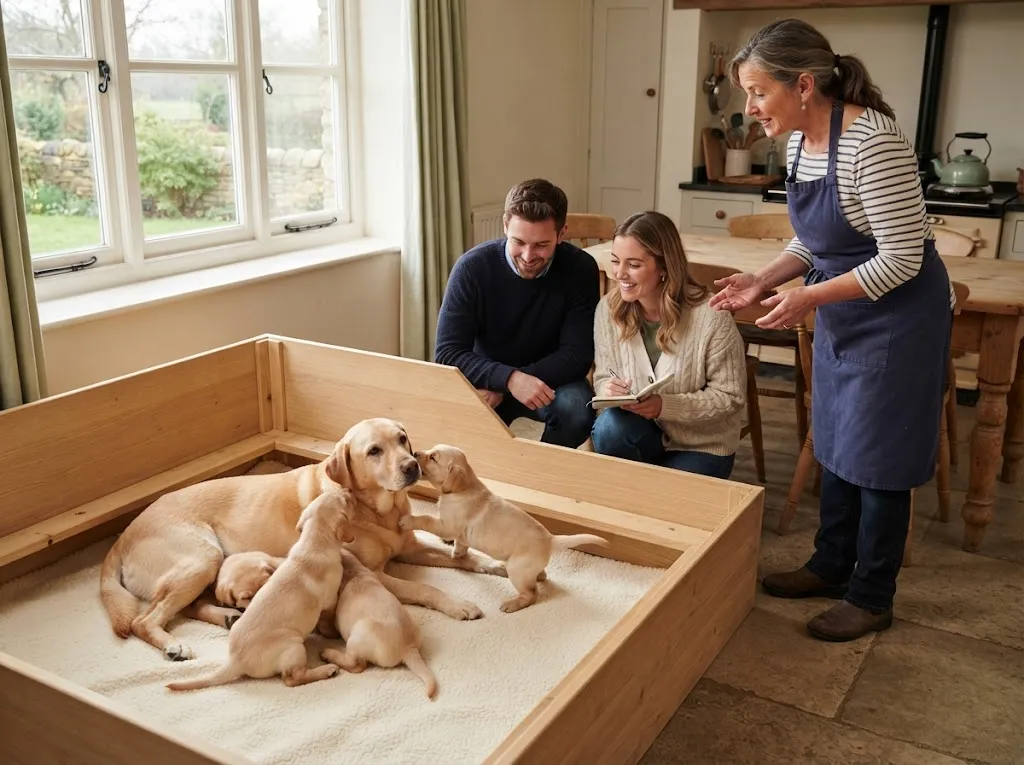
- A responsible UK breeder will always show you the puppy with its biological mother, in the home where it was born, and licensed breeders in England must do this by law.
- Puppies must be microchipped and registered to the breeder before sale, and no puppy should leave its mother before 8 weeks old.
- Ask for health test results for both parents and check them yourself on the Royal Kennel Club Health Test Results Finder, rather than accepting “vet checked” as proof.
- If the breeder needs a licence, their licence number and issuing council should appear in the advert, and you can verify it with that council.
- Never pay a deposit for a puppy you have not seen with its mother, and never agree to meet in a car park or service station.
- Use the free Puppy Contract from the RSPCA and the Animal Welfare Foundation, because it puts the breeder’s promises in writing.
- A good breeder asks you as many questions as you ask them, and will take the dog back at any age if things do not work out.
Quick Answer
The most important questions to ask a dog breeder in the UK are: Did you breed this puppy yourself? Can I see the puppy with its mother where it was born? Do you have a council licence, and what is the number? What health tests have both parents had, and can I see the results? How old is the mother and how many litters has she had? Will the puppy be microchipped, vaccinated and wormed? Will you sign a Puppy Contract and take the dog back if needed? If the breeder dodges any of these, walk away.
Why Do the Questions You Ask a Dog Breeder Matter So Much?
The questions you ask are your main protection against puppy farms, illegal imports and scams, because a cute puppy tells you almost nothing about how it was bred. Defra warns that the illegal and low-welfare pet trade misleads buyers and raises the risk of future health and behaviour problems, as set out in its official guidance on buying a cat or dog.
Many buyers skip the basic checks. In PDSA’s PAW Report, only 42% of dog owners who bought from a breeder said they had checked the breeder was licensed, and 15% said they did not know how to check.
Questions also work in your favour legally. Under Lucy’s Law in England, you must deal directly with the breeder or a reputable rehoming centre, so any seller who cannot answer questions about the mother and the birth is a serious warning sign.
What Should You Check Before You Contact a Dog Breeder?
Before you pick up the phone, check the advert, the licence and the breeder’s online footprint, because many problem sellers can be spotted from their listing alone. These checks are quick and can save you months of heartache.
- Read the advert properly. The Pet Advertising Advisory Group (PAAG) standards say a good advert shows a recognisable photo of the puppies with their mother, the breed, age and sex, microchip status and the type of sale (licensed, unlicensed private, or rescue).
- Look for a licence number. Under England’s dog breeding licensing rules, a licensed breeder’s advert must include the licence number, the council that issued it, a recognisable photo of the puppy and its age.
- Verify the licence with the council. Defra advises you to check the licence number with the local council; you can find the right one using the gov.uk council finder. Many councils publish a public register showing each breeder’s star rating.
- Be wary of social media sales. Dogs Trust notes that PAAG advises against buying pets directly through social media, because adverts there are hard to police.
- Search the phone number and photos. Paste the seller’s number into a search engine and run a reverse image search on the puppy photos. The same number advertising several breeds, or photos that appear on other listings, are classic signs of a dealer.
Not every good breeder needs a licence. In England, a licence is required for anyone breeding three or more litters in 12 months or running a business selling dogs, so a hobby breeder with one litter may legitimately have no licence number. In that case, the questions below matter even more.
What Questions Should You Ask a Dog Breeder on the Phone?
Ask your most important questions on the phone, before you visit, because once you are holding a puppy it is very hard to walk away. The Royal Kennel Club recommends covering the basics by phone for exactly this reason.
| Question to ask | A good answer sounds like | A red flag answer sounds like |
|---|---|---|
| Did you breed this puppy yourself? | “Yes, the mother lives with us and the puppies were born here.” | “I’m selling them for a friend” or “they came from my cousin’s farm.” |
| Can I see the puppy with its mother where it was born? | “Of course, Mum will be with them when you visit.” | “Mum is at the vet” or “she gets stressed with visitors.” |
| Do you hold a council breeding licence? What is the number? | A licence number and council name, or a clear explanation that they bred one litter and do not need one. | Vague answers, or “licences are only for big kennels.” |
| How many puppies are in the litter and how old are they? | Specific numbers that match what you see at the visit. | Numbers that change, or several litters of different breeds for sale at once. |
| When can the puppy come home? | “At 8 weeks or older.” | “You can take him at 6 weeks” with no vet letter explaining why. |
| What health tests have both parents had? | Named schemes and results you can check, such as hip scores or DNA results. | “They’re vet checked” or “they’ve never been ill.” |
| Can I have the registration details of both parents? | Registered names or numbers you can look up. | “The dad isn’t registered” with no other information. |
| Will you use a Puppy Contract? | “Yes, I’ll fill in the information pack before you collect.” | “I don’t do paperwork” or “it’s not needed.” |
| Will you take the dog back if something goes wrong? | “Yes, at any age, I’d always want to know.” | “All sales are final.” |
| What is the price and how does the deposit work? | A clear price, a deposit only after you have visited, and a receipt. | Pressure to pay a deposit before you have seen the puppy. |
Dogs Trust also suggests asking about the puppies’ vaccination status, worming, microchipping by 8 weeks and what food they are eating. Write the answers down so you can compare them with what you see on the day.
What Health Questions Should You Ask a Dog Breeder?
Ask which health tests are relevant to the breed, whether both parents have been tested, and ask to see the actual certificates or results. The BVA Canine Health Schemes advise puppy buyers to always ask to see relevant health test results for both parents, and the schemes are open to crossbreeds as well as pedigree dogs.
Useful health questions include:
- Which tests are recommended for this breed, and have both parents had them? The Royal Kennel Club Health Standard lists the relevant tests for each breed in one place.
- Can I see the results? For Kennel Club registered dogs, you can look results up yourself on the Health Test Results Finder.
- What is the puppy’s inbreeding coefficient (COI)? The Royal Kennel Club explains that highly inbred puppies can be more likely to inherit genetic diseases, and you can check figures with its genetic diversity calculator.
- Have the puppies had any health problems, and has a vet examined each one? Under England’s higher licensing standards, a vet must check each puppy before sale and the proof must be available to the buyer.
- Which vaccinations and worming treatments has the puppy had? The Royal Kennel Club notes puppies are usually wormed at 2, 5 and 8 weeks of age.
- Are there any breed-related conformation issues I should know about? Licensed breeders in England must give buyers written guidance on relevant conformation issues, such as breathing problems in flat-faced breeds.
How Do You Read the Health Test Results?
Health certificates can look confusing, but the main schemes are simple once you know what each one measures. This table covers the schemes UK buyers meet most often.
| Scheme or test | What it checks | What to look for |
|---|---|---|
| BVA/KC Hip Dysplasia Scheme | X-rays of the hip joints, scored by expert vets | Lower scores are better. BVA publishes a breed median so you can see how each parent compares. |
| BVA/KC Elbow Dysplasia Scheme | X-rays of both elbows, graded 0 to 3 | Grade 0 means no sign of elbow dysplasia was found. Results for registered dogs appear on the Health Test Results Finder. |
| BVA/KC/ISDS Eye Scheme | Clinical eye examination by a specialist panellist | A current certificate, since many eye conditions need repeat checks. |
| Respiratory Function Grading (BOAS) | Breathing in Pugs, French Bulldogs and Bulldogs | Grades run from 0 to 3. The University of Cambridge scheme advises that grade 3 dogs should not be bred from. |
| DNA tests | Specific inherited diseases known in the breed | For most recessive conditions, at least one parent should be “clear” so no puppy can be affected. Ask the breeder to explain each pairing. |
| Inbreeding coefficient (COI) | How closely related the parents are | England’s higher licensing standard says puppies’ COI should not exceed the breed average, or 12.5% where no average exists. |
If the parents’ results are poor, or the breeder cannot explain them, that tells you more about the breeder than any reassurance on the phone. If you are buying a crossbreed, ask about tests for both parent breeds, because inherited conditions do not disappear just because two breeds are mixed. Our guide to hip dysplasia in dogs explains why hip scores matter.
What Questions Should You Ask About the Puppy’s Mother?
Ask how old the mother is, how many litters she has had, whether she has had caesarean sections, and watch how she behaves with her puppies and with you. The mother’s age and breeding history are some of the clearest signs of whether you are dealing with a responsible breeder or a puppy farm.
The table below compares the legal minimum for licensed breeders in England, the stricter “higher standard” that earns a better star rating, and Royal Kennel Club guidance for buyers.
| Mother’s breeding history | Legal minimum (licensed breeders, England) | Higher licensing standard | Royal Kennel Club guidance |
|---|---|---|---|
| Minimum age at mating | 12 months | 18 months | Not mated before 12 months |
| Maximum age | No set limit | Not mated at 8 years or older | No older than 8 years |
| Litters in total | No more than 6 | No more than 4 | No more than 4, including this litter |
| Litters per year | No more than 1 in 12 months | No more than 1 in 12 months | Not specified |
| Caesarean sections | Not mated after 2 | Not bred after 1 | No more than 2 |
Sources: Defra dog breeding licensing statutory guidance and Royal Kennel Club questions for the breeder.
When you meet her, the mother should look healthy and relaxed with visitors, and she should clearly be interacting with the puppies. Dogs Trust advises that mum and pups should be active, alert and engaging with each other. A “mother” who ignores the litter, or shows no sign of having fed puppies, may not be the real mother.
What Should You Ask and Look For When You Visit the Puppies?
At the visit, ask about socialisation and daily routine, meet every puppy, and check that the home and the dogs look healthy. Try not to be distracted by the puppies; bring your written list and work through it.
Questions to ask during the visit:
- How have the puppies been socialised? In England, licensed breeders must follow a documented socialisation programme, with puppies introduced to household sights, sounds and different people from 3 weeks old. Ask to see it.
- Have they met children, other dogs or cats? This matters if your home has any of these.
- What are the parents’ temperaments like? The Royal Kennel Club notes this helps predict your puppy’s temperament.
- Has toilet training started? Licensed breeders must start it before sale.
- What food are they eating, and will you send some home? Under the higher standard, at least a week’s supply of the current diet goes home with each puppy.
- Can I visit again before collection? A good breeder will welcome a second visit.
What to look for, based on Dogs Trust’s visiting checklist:
- A clean, warm, dry and quiet area with fresh water.
- A house that feels lived in, not a rented property used only for sales.
- Puppies with clear eyes and noses, clean ears, healthy skin and no limping.
- Curious, confident puppies that are relaxed when handled.
- A breeder who encourages you to interact with the dogs.
Early socialisation shapes a dog’s whole life, which is why it deserves its own question. Our guide on the importance of socialising your puppy explains what should happen next once your puppy is home.
What Paperwork Should a UK Dog Breeder Give You?
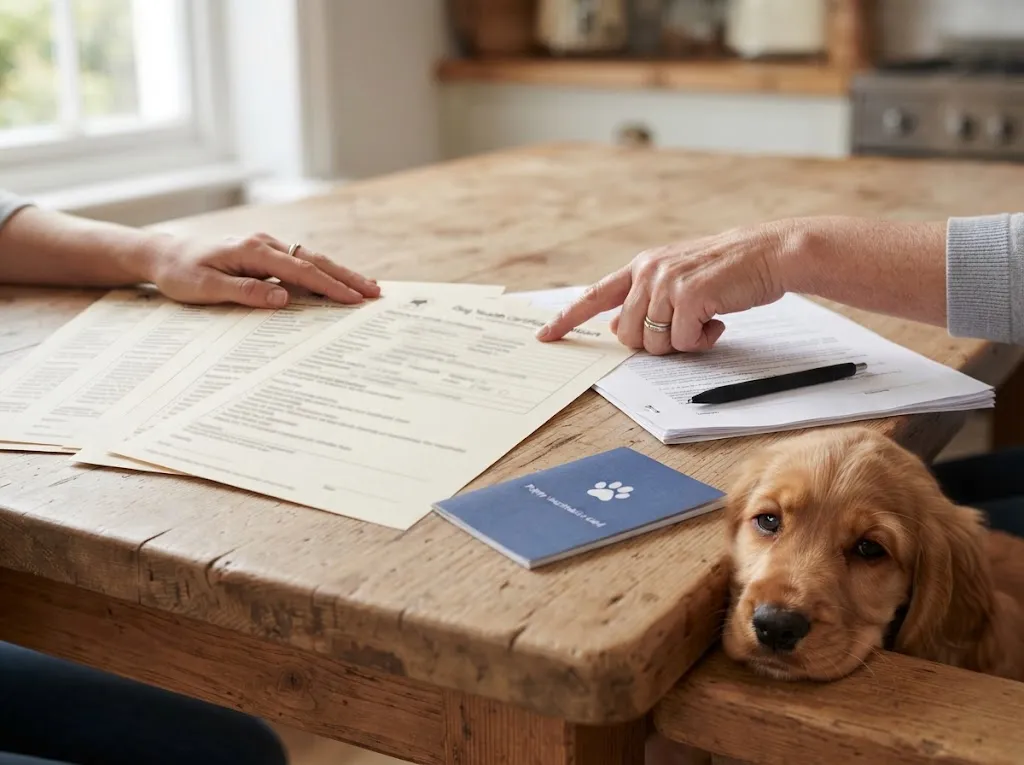
A responsible breeder should give you a health record, microchip paperwork, the parents’ health certificates, a contract of sale and written care advice. Ask what you will receive before collection day so nothing is “forgotten.”
- Microchip documents: puppies must be microchipped and registered to the breeder as first keeper before sale, according to Defra’s licensing guidance. You then update the database with your details.
- Vet health record: vaccinations, worming and flea treatments, as listed by Dogs Trust.
- Parents’ health certificates: originals or copies you can verify.
- Registration and pedigree: if the puppy is sold as a registered pedigree, ask whether there are endorsements, such as a breeding restriction.
- Insurance details: many breeders include a few weeks of cover. Compare it with a full policy using our guide Is pet insurance worth it?
- The Puppy Contract: the free Puppy Contract, developed by the RSPCA and the Animal Welfare Foundation, includes an information pack the breeder completes and a contract both of you sign.
- Written care advice: covering feeding, training, exercise, worming and vaccinations.
Paperwork also protects you if something goes wrong. Citizens Advice explains that you have fewer consumer rights when buying from a private seller, but a signed Puppy Contract gives you a written description of the puppy, so you may be able to claim a refund if the puppy does not match it.
What Questions Should You Ask About Payment, Deposits and Collection?
Ask how payment works, when the deposit is due, and where you will collect the puppy, because this is where most puppy scams happen. Action Fraud warns that fraudsters post adverts for animals that do not exist, and advises buyers to see the puppy with its mother and littermates where it was bred, and to visit more than once.
- “Can I pay the deposit after I’ve visited?” The safe answer is yes. Be very cautious about paying anything for a puppy you have only seen in photos or a video call.
- “How do you take payment?” Paying by bank transfer to a stranger gives you very little protection. Ask for a written receipt for any deposit.
- “Where will I collect the puppy?” It should be from the home where it was born. Never agree to meet in a car park or service station, or to have the puppy delivered.
- “Has this puppy been imported?” If a puppy comes with a pet passport, Defra warns it may be imported, and it must be at least 15 weeks old from the EU and listed countries, or 7 months from other countries.
- “Will you mind if I book a vet check straight away?” Dogs Trust recommends a vet health check within 48 hours of collection. A good breeder will encourage it.
Ask about the total price, too. The purchase price is only the start, so read our guide to what a dog really costs to own in the UK before you commit.
What Questions Should a Good Breeder Ask You?
A responsible breeder will question you just as carefully, and a breeder who asks you nothing is a red flag. Defra notes that a responsible seller will not rush you and should be assessing your suitability as an owner.
Expect questions like these:
- Who lives in your home, including children and other pets?
- How long will the dog be left alone each day?
- Do you rent, and does your landlord allow dogs?
- Have you owned this breed, or any dog, before?
- How will you meet the breed’s exercise and grooming needs?
- Are you prepared for vet bills and insurance costs?
Answer honestly. If a breeder decides their puppy is not the right fit for your life, that is a sign they care where their dogs end up.
How Do the Rules Differ Across England, Scotland, Wales and Northern Ireland?
All four UK nations license larger-scale dog breeders, but the details differ, so check the rules where the breeder lives. This table summarises the main points to know before you ask about licences.
| Nation | When a breeder needs a licence | Third-party sales | Where to report concerns |
|---|---|---|---|
| England | Breeding 3 or more litters in 12 months, or running a business selling dogs (Defra) | Banned under Lucy’s Law; buy direct from the breeder or a rescue | RSPCA, local council, or Trading Standards |
| Scotland | Breeding 3 or more litters in 12 months, whether or not puppies are sold (Scottish Government) | Third-party sale of young puppies by pet sellers ended under Scottish licensing rules | Scottish SPCA or local council |
| Wales | Keeping 3 or more breeding bitches and breeding, advertising or supplying 3 or more litters in 12 months (Royal Kennel Club summary) | An offence to sell a puppy you did not breed (Welsh Government) | RSPCA, local council or Trading Standards |
| Northern Ireland | Keeping 3 or more breeding bitches and breeding, advertising or supplying 3 or more litters in 12 months (DAERA) | Check with your district council | District council, or USPCA for suspected puppy farms |
Scotland also has the Welfare of Dogs (Scotland) Act, which requires a code of practice for anyone acquiring a dog, so Scottish buyers should read that code alongside this checklist.
Two more legal points apply in England and Wales. Defra confirms that tail docking and ear cropping are illegal unless specifically exempted for medical or welfare reasons, and it is an offence to sell, give away or breed from an XL Bully. Any seller offering either is breaking the law.
What Are the Red Flags That Mean You Should Walk Away?
Walk away if the breeder will not show you the mother, rushes you, avoids paperwork or offers to meet you somewhere other than their home. The Puppy Contract sums this up as P.A.W.S.: prepare ahead, ask questions, and walk away if you are suspicious.
- The mother is “out”, “at the vet” or kept in another room.
- Several breeds or litters are for sale at once.
- Puppies are offered younger than 8 weeks without a vet’s written reason.
- No microchip, or a microchip registered abroad.
- The puppy has a pet passport but is said to be UK-bred.
- Pressure to pay a deposit before you have visited.
- An offer to deliver the puppy or meet halfway.
- The price drops suddenly or seems too good to be true.
- Docked tails or cropped ears.
- No interest in you, your home or your experience.
If you are worried about a puppy’s welfare, Dogs Trust advises contacting the RSPCA in England and Wales or the Scottish SPCA in Scotland, and reporting suspicious sellers or suspected illegal imports to Trading Standards. Walking away can feel hard, but buying a puppy “to rescue it” only funds the next litter.
Common Myths About Buying From a Dog Breeder
Several popular beliefs about breeders give buyers false confidence, so it is worth separating fact from assumption. As someone who shares her home with a rescued Samoyed, I know how much a dog’s start in life shapes everything after it, which is why these myths are worth busting.
Myth: “Kennel Club registered” means a healthy, well-bred puppy. Registration records a puppy’s pedigree; it is not an inspection of the breeder or their premises. Assured Breeders are different: the Kennel Club says they are inspected before joining and routinely every three years, under UKAS accreditation. Even so, ask every question on this list.
Myth: A licensed breeder is always a good breeder. A licence shows the breeder met minimum standards at inspection. Ask about the star rating too, because breeders meeting higher standards in England receive a 4 or 5 star rating and a longer licence.
Myth: Crossbreeds and “designer” dogs don’t need health tests. The BVA Canine Health Schemes point out that both pedigree and crossbred dogs can inherit diseases from their parents, and the schemes are open to both.
Myth: A video call is as good as a visit. Video can help with an early chat, but it cannot show you the smell of the home, how the mother reacts to strangers, or whether the puppies live there. Always visit in person before paying.
Printable Checklist: Questions to Ask a Dog Breeder
Use this short version on the phone and at the visit, and tick each answer as you go.
- Did you breed this puppy, and can I see it with its mother where it was born?
- Do you have a council licence? What is the number and which council issued it?
- How many puppies are there, and how old are they?
- How old is the mother, how many litters has she had, and has she had any caesareans?
- Can I meet the father, or have his registration details?
- Which health tests have both parents had, and can I see the results?
- What is the puppy’s inbreeding coefficient?
- Has a vet examined each puppy, and have they had any health problems?
- What vaccinations, worming and flea treatments have they had?
- When will the puppy be microchipped, and who is registered as first keeper?
- How have the puppies been socialised, and have they met children and other animals?
- What are the parents’ temperaments like?
- What food do they eat, and will you send some home?
- At what age can the puppy come home?
- Will you complete a Puppy Contract and give me written care advice?
- Are there any breeding restrictions or endorsements?
- Will you take the dog back at any age if needed?
- How do deposits and payment work, and will I get a receipt?
- Can I collect from your home and book a vet check within 48 hours?
- Will you be available for advice after I take the puppy home?
Should You Consider Adopting Instead of Buying?
Before you buy, it is worth checking UK rescues, because many have puppies and young dogs as well as adults. Defra itself suggests considering a rescue animal from a reputable UK rehoming organisation, such as a member of the Association of Dogs and Cats Homes.
Defra adds that a good rescue will check your suitability, help you choose the right dog and offer support after adoption. Our step-by-step guide on how to adopt a dog in the UK walks you through the process, and our independent guides to UK rescue charities cover organisations such as Dogs Trust and Battersea.
FAQs
What is the most important question to ask a dog breeder?
The most important question is whether you can see the puppy with its mother in the home where it was born. Licensed breeders in England must show puppies with their biological mother, and a seller who refuses or makes excuses may be a dealer or puppy farmer. If you cannot see the mother, walk away.
How do I check if a dog breeder is licensed in the UK?
Ask the breeder for their licence number and the name of the council that issued it, then contact that council or check its public register of animal activity licences. Licensed breeders in England must show their licence number on adverts and websites. Some small hobby breeders legally do not need a licence.
At what age can a puppy leave the breeder in the UK?
Puppies should be at least 8 weeks old before leaving their mother. Licensed breeders in England must not sell or permanently separate a puppy from its mother before 8 weeks, unless a vet certifies it is necessary for welfare reasons. Be wary of any seller offering younger puppies without a vet’s written explanation.
Should I pay a deposit to a dog breeder?
Many genuine breeders take a deposit, but only pay once you have visited and seen the puppy with its mother. Get a written receipt and agree what happens to the deposit if either side changes their mind. Never pay a deposit for a puppy you have only seen in photos or online.
What health tests should puppy parents have?
It depends on the breed. Common UK tests include hip and elbow scoring, eye examinations, breathing grades for flat-faced breeds and breed-specific DNA tests. Check the Royal Kennel Club Health Standard for your breed, then ask to see results for both parents and verify them on the Health Test Results Finder.
Is the Puppy Contract legally binding?
Yes. Citizens Advice explains that the Puppy Contract is legally binding and gives you a written description of the puppy’s health and history. If the puppy does not match that description, you may be able to ask for a refund, which gives you better protection than a verbal promise.
What questions will a good breeder ask me?
A responsible breeder will ask about your home, family, other pets, working hours, experience with dogs and how you will meet the breed’s exercise and grooming needs. They may also ask about your budget for vet care. A breeder who asks you nothing may simply want the sale.
Related Articles
- How to Find a Responsible Dog Breeder
- Your New Puppy Checklist: Everything You Need to Know
- How to Adopt a Dog in the UK: Your Complete Step-by-Step Guide
- Dogs Trust: An Independent Guide to Adoption, Rehoming Centres and Support
- RSPCA Adoption Requirements UK Explained
Conclusion
Asking a dog breeder the right questions is the single best way to bring home a healthy, well-socialised puppy and to avoid funding puppy farms. Focus on the essentials: the mother, the licence, both parents’ health test results, microchipping, the Puppy Contract and a promise to take the dog back if needed.
A good breeder will welcome every question on this list, answer clearly and ask plenty of their own. If the answers are vague, the paperwork is missing or you feel rushed, trust that feeling and walk away.
And if your heart is open to it, take a look at the dogs waiting in UK rescue centres before you decide. Browse our guides to UK rescue charities to find a centre near you; your new best friend might already be there.
Disclaimer: This article is for general information only and does not replace legal or veterinary advice. Licensing rules differ across the UK and can change, so check with your local council, and ask your vet about health tests relevant to your chosen breed.