

A Pomsky is a cross between a Pomeranian and a Siberian Husky, sometimes called a Pomeranian Husky or Pom Husky mix. Thanks to the Pomeranian’s small size, many Pomsky dogs look like a miniature Husky and keep their puppyish good looks well into adulthood. That look is exactly why so many people fall for one online.
But it is not a puppy forever. It grows into a clever, vocal, energetic dog with a thick coat and some very particular needs. Rescue centres across the UK see what happens when dogs are bought on looks alone.
This guide covers what this crossbreed is, how big it gets, its temperament, lifespan, health and cost, plus the UK laws that protect you when buying a puppy. Whether you are thinking of buying from a breeder or adopting, read this first.
Pomsky at a Glance
| Category | Details |
|---|---|
| What it is | A Pomeranian and Siberian Husky crossbreed, not a breed recognised by The Kennel Club. |
| Adult size | Usually about 7 to 14 kg and roughly 25 to 38 cm tall, varying widely by generation. |
| Lifespan | Typically 12 to 15 years, according to Wamiz UK. |
| Temperament | Affectionate, clever, playful and vocal, with a stubborn streak. |
| Exercise | At least one active hour every day, plus training and brain games. |
| UK puppy price | Commonly about £1,000 to £2,500 on Pets4Homes, with some breeders asking up to around £5,000. |
| Best for | Active owners with time for training, grooming and a secure garden. |
Key Takeaways
- A Pomsky is a crossbreed of a Pomeranian and a Siberian Husky, and The Kennel Club does not recognise it as a breed.
- The first documented, deliberate Pomsky litter was bred in Arizona, USA, using artificial insemination, not in Alaska as many older articles claim.
- Most adult Pomskies weigh around 7 to 14 kg, and no breeder can guarantee a puppy’s adult size.
- Pomskies usually live 12 to 15 years.
- Pomskies can inherit health problems from both parents, including hip and eye conditions from the Husky and knee, windpipe and dental problems from the Pomeranian.
- “Teacup” and “miniature” Pomskies are sales labels, not official sizes, and extreme smallness carries serious health risks.
- Pomskies shed heavily, are not hypoallergenic and are often vocal, so they suit active, prepared owners best.
What Is a Pomsky?
A Pomsky is a designer crossbreed made by mating a Pomeranian with a Siberian Husky. The name joins the first part of “Pomeranian” with the end of “Husky”, and you may also see it called a Pomeranian Husky. Because it is a cross rather than a breed, there is no official breed standard, and puppies from the same litter can look and behave quite differently.
How Are Pomskies Bred?
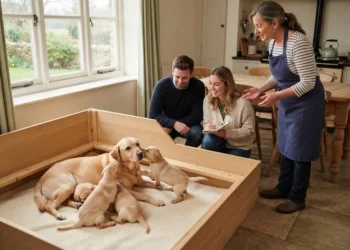
The size gap between a tiny Pomeranian and a medium-sized Husky makes natural mating impractical, so first-generation Pomskies are usually produced by artificial insemination. The pairing is a male Pomeranian and a female Husky, so the larger dog carries the puppies, as Wamiz UK explains.
In the UK, the RCVS states that canine insemination is an act of veterinary surgery to be carried out by a vet, and that surgical insemination is prohibited under animal welfare law.
Breeders describe Pomskies by generation:
- F1: A first-generation cross, with one Pomeranian parent and one Siberian Husky parent.
- F1B: A Pomsky bred back to one of the parent breeds, often a Pomeranian to keep size down.
- F2, F3 and beyond: Pomskies bred to other Pomskies, which tends to give more predictable size and looks.
Most Pomskies advertised in the UK are multi-generation dogs (F2, F3 or F4), as you can see from listings on Pets4Homes. That matters for health checks, which we cover further down.
The Real History of the Pomsky
Many older articles say the first litters were bred in Alaska. There is no evidence for that. The story actually started online. Photos of small, Husky-like puppies labelled as “Pomskies” went viral before anyone had deliberately bred one, so the demand came before the dog.
The first documented, deliberate litter was born in 2012 in Arizona, USA. According to Hepper, breeders Tressa Peterson and Joline Phillips produced it through artificial insemination.
Clubs such as the Pomsky Club of America and the International Pomsky Association formed afterwards to keep records and encourage health testing. None of them carries the weight of The Kennel Club, which does not register the Pomsky as a breed.
The Parent Breeds
To understand what your puppy might be like, you need to understand the two parent breeds. It can take after either one, or land anywhere in between.
1. Siberian Husky
The Siberian Husky was developed by the Chukchi people of north-east Siberia as a fast, light endurance sled dog. Its thick double coat keeps it warm in even the harshest weather. The Siberian Husky Club of America records that the first team arrived in Nome, Alaska in 1908, imported by a fur trader to race in the All Alaska Sweepstakes. The breed became famous in 1925, when relay teams carried diphtheria serum across hundreds of miles of frozen Alaska to save the town of Nome.
Huskies are friendly, sociable and famously independent. PDSA advises that a Husky needs at least two hours of exercise every day and suits experienced owners who can handle its demanding training needs.
Recommended viewing: A short look at the Siberian Husky, the larger parent of the Pomsky.

2. Pomeranian
The Pomeranian is named after Pomerania, a historic Baltic region shared by modern Germany and Poland. It is the smallest member of the Spitz family and sits in The Kennel Club’s Toy group. The Kennel Club breed standard gives an ideal weight of just 1.8 to 2.5 kg.
Poms were once much larger working Spitz dogs. Their British story is closely tied to the royal family. Queen Charlotte kept them at court, and her granddaughter Queen Victoria kept and showed Pomeranians at Windsor. The Royal Collection holds a portrait of Victoria’s Pomeranian, Marco. Her small dogs are widely credited with making the smaller type fashionable, although breed historians still debate how much she personally shrank the breed.
Pomeranians are bright, bold, playful and often barky. They love attention but can be fragile around rough handling.
What Does a Pomsky Look Like?
Like all crossbreeds, appearance varies according to which parent it takes after. The classic look most buyers want is a small Husky: a triangular head with pointed, upright ears, almond-shaped eyes, a facial mask and a sturdy body. The tail is long, fluffy and often curls over the back. Some look far more like a large, fluffy Pomeranian.
The coat is thick and double-layered, and it can be straight or slightly wavy. Common colours include grey and white, black and white, red, cream, brown and sable. A black Pomsky, either solid black or black with white or tan markings, is also seen, and a combination of colours is common.
Eyes can be brown, blue, or one of each. Blue eyes and strong Husky markings often push the asking price up, which is a reason to be careful rather than a sign of a better dog.

Pomsky Size: How Big Do Pomsky Dogs Get?
Size is the biggest unknown with any puppy of this cross. Wamiz UK says a fully grown Pomsky is unlikely to weigh more than about 13.5 kg (30 lb). As a rough guide, adult Pomsky size usually falls between the two parents:
| Dog | Typical adult weight | Notes |
|---|---|---|
| Pomeranian | 1.8 to 2.5 kg | Kennel Club ideal weight |
| Pomsky | About 7 to 14 kg | Roughly 25 to 38 cm at the shoulder |
| Siberian Husky | About 16 to 27 kg | Per Britannica |
First-generation (F1) dogs tend to be the least predictable, while later generations are usually more consistent. Most Pomskies reach their adult height by about a year old and may fill out a little after that.
Do Pomskies Stay Small?
They stay smaller than a Husky, but most are not toy-sized. An adult Pomsky dog is closer to a small-to-medium dog than a lapdog. Seeing both parents, or the mother and photos of the father, is the best clue to how big a puppy will get.
Miniature and Teacup Pomskies
You will see “teacup”, “toy” and “miniature” puppies advertised for high prices. There is no official miniature or teacup size. A so-called miniature Pomsky is usually just a smaller dog from a Pomeranian-heavy line, and a full grown miniature Pomsky can still end up well over 7 kg.
Your Dog magazine reports that The Kennel Club does not recognise any teacup breed and will not record dogs described as teacup. Breeding for extreme smallness raises the risk of fragile bones, low blood sugar, heart defects, dental crowding and a collapsing windpipe.

A responsibly bred dog of normal size is a far kinder choice. If you like very small dogs, read our guide to the Teacup Micro Bully to understand the wider risks of extreme-size breeding first.
Pomsky Temperament and Characteristics
They are usually friendly, affectionate, clever, playful and loyal. They tend to bond closely with their people and often pick one favourite person. So, are Pomskies good dogs? In the right home, yes. In the wrong home, their energy and noise can become a problem.
That intelligence cuts both ways. They can be stubborn and aloof when they get bored with training, and they may invent their own entertainment, such as chewing, digging or escaping. They are lively dogs and may not settle well in a very quiet, low-key home.

Are Pomskies Cuddly?
Many are. They often enjoy sitting close and following their owners from room to room, which comes from the people-focused Pomeranian side. Some Husky-like individuals are more independent and prefer company on their own terms.
Are Pomskies Loud?
Often, yes. Pomeranians are known for barking, and Huskies for howling and “talking”. Hill’s Pet Nutrition rates the Pomsky’s tendency to bark as high, especially around strangers. Do Pomskies bark a lot? Many do, so think carefully if you live in a flat or a terraced house with close neighbours.
Are Pomskies High Energy?
Yes. Even a small one has Husky energy and needs daily exercise and mental stimulation. A bored dog is usually a noisy or destructive one.
Are Pomskies Good Family Dogs?
They can be lovely family dogs with calm, older children who know how to handle a dog gently. Smaller dogs can be injured by rough play, so supervise young children closely and teach them to leave the dog alone when it is eating or resting.
Are Pomskies Good With Other Dogs and Cats?
Many get on well with other dogs if they are socialised early. Cats are less certain. The Husky side can bring a strong prey drive, so a dog raised with a cat has a much better chance of living with one peacefully. Always supervise early introductions, and take care with small pets such as rabbits and guinea pigs.
Can Pomskies Be Left Alone?
These are social dogs that do not cope well with long hours alone. The RSPCA advises that dogs should not be left alone for more than four hours at a time. Build up time alone gradually from puppyhood, and use a dog walker or daycare if you work long days.
Exercise, Training and Grooming
Exercise
Wamiz UK recommends at least one active one-hour walk every day. Dogs that take after the Husky side often need more. Add sniffing games, puzzle feeders and short training sessions to tire out the brain as well as the legs.
Because of their smaller size, they can live in flats as long as they get enough exercise. A secure garden helps, but check fences for gaps and low spots first, as many are escape artists. Keep your dog on a lead or long line in unfenced areas until recall is reliable.
Are Pomskies Easy to Train?
They learn quickly but are not always willing. Use reward-based training with food, toys and praise, keep sessions short and fun, and avoid harsh methods, which tend to backfire with independent dogs. Consider puppy training classes to build good habits around other dogs and people.
Grooming and Shedding
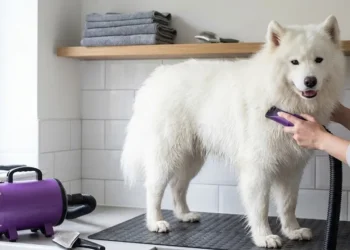
Both parents have thick double coats, so expect a lot of hair. They shed all year and drop large amounts of undercoat when they “blow” their coat once or twice a year. Brush several times a week, and daily when shedding is heavy.
Are Pomskies hypoallergenic? No. No dog is truly allergy-free, and heavy shedders like this are a poor choice for people with dog allergies. Never shave a double-coated dog, as the undercoat helps protect the skin from both heat and cold.
Can Pomskies Live in Hot Weather?
They can cope with a normal British climate, but their thick coat makes them more prone to overheating on warm days. Walk early in the morning or late in the evening, provide shade and fresh water, and check pavements with the back of your hand before walks. Heavy panting, drooling, wobbliness or collapse can signal heatstroke, which is an emergency, so contact your vet straight away.
Can Pomskies Swim?
Most can swim, but they are not natural water dogs, and whether they like water varies from dog to dog. Introduce water slowly in shallow, calm places, never force a nervous dog in, and consider a dog life jacket for smaller dogs. A thick coat takes a long time to dry, so towel off well and rinse after the sea.
Pomsky Health Problems
Crossbreeds are often marketed as healthier than pedigrees, but this cross can inherit conditions from either parent. The best protection is a reputable breeder who can provide health clearances for both parents.
Conditions Linked to the Siberian Husky
- Hip dysplasia: Abnormal development of the hip joint, which can lead to pain and arthritis.
- Inherited eye disease: Including hereditary cataracts and other conditions screened under the BVA/KC/ISDS Eye Scheme.
- Zinc-responsive dermatosis: A skin condition causing crusting and hair loss, often around the eyes. Vet Times notes it classically affects northern breeds such as the Siberian Husky.
Conditions Linked to the Pomeranian
- Luxating patella: The kneecap slips out of place, often causing a “skipping” gait.
- Collapsing trachea: A weakened windpipe that causes a honking cough. Purina UK recommends walking small dogs on a harness rather than a collar to reduce pressure on the neck.
- Dental disease: Small jaws can crowd teeth, so daily tooth brushing really helps.
- Coat loss (alopecia X): Sometimes called black skin disease, where the coat thins and the skin darkens.
- Chiari-like malformation: PDSA notes that a BVA/Kennel Club screening scheme exists for this condition in Pomeranians.
Health Tests to Ask For
The Kennel Club’s Siberian Husky page lists hip scoring under the BVA/KC Hip Dysplasia Scheme and eye testing under the BVA/KC/ISDS Eye Scheme as priority tests. For a Pomsky, ask the breeder for:
- Hip scores for any parent with Husky ancestry.
- An in-date eye test certificate for both parents.
- Evidence the parents’ knees have been checked by a vet.
- Any DNA test results the breeder holds.
If a parent is a Kennel Club registered Pomeranian or Husky, you can check its results yourself on the Kennel Club’s Health Test Results Finder. Pomsky parents of F2 generation or later are not on that register, so ask to see the original certificates instead.
Once your puppy is home, regular vet check-ups, vaccinations, routine worming and flea treatment are essential for keeping it healthy.
Pomsky Lifespan (How Long Do Pomskies Live?)
The typical Pomsky lifespan is around 12 to 15 years, according to Wamiz UK. Hill’s Pet Nutrition gives a similar range of 13 to 15 years.
Good breeding, a healthy weight, daily tooth brushing, regular exercise and yearly vet checks all help your dog reach the upper end of that range. Because these dogs can live well into their teens, budget for senior care as well as puppy costs.
What to Look For in a UK Pomsky Breeder
- Seeing mum with the puppies: Under Lucy’s Law, puppies in England must be bought directly from the breeder or a rescue centre, and GOV.UK explains buyers should see the puppy with its mother where it was born.
- A breeding licence where required: In England, anyone breeding three or more litters in a 12-month period and selling puppies, or running a dog breeding business, needs a council licence and must show the licence number in adverts, according to GOV.UK.
- Health test certificates: Ask to see hip and eye results for the parents, not just a vet check on the puppy.
- A microchip in the breeder’s name first: Puppies must be microchipped by eight weeks old, and the breeder should transfer the registration to you. GOV.UK confirms microchipping is compulsory for dogs in England.
- A written puppy contract: The free Puppy Contract, developed by the RSPCA and the Animal Welfare Foundation, records the puppy’s health, background and early experiences.
- Honesty about breeding methods: A good breeder will tell you which generation the puppy is and, for F1 litters, confirm that a vet carried out the insemination.
Walk away if a seller offers to meet you in a car park, cannot show you the mother, pushes for a quick deposit or promises an exact adult size. Report concerns to your local council or Trading Standards.
How Expensive Are Pomskies in the UK?
Puppy prices vary a lot. Listings on Pets4Homes suggest an average asking price of roughly £1,000, with health-tested litters often advertised at around £2,500. Wamiz UK reports some puppies selling for as much as £5,000. A high price is no guarantee of good breeding, and a very low price is often a warning sign.
The purchase price is only the start. Budget for food, insurance, vaccinations, flea and worm treatment, grooming tools and training classes. As a rough benchmark, PDSA estimates a Siberian Husky costs at least £105 a month after set-up costs. A smaller Pomsky eats less, but insurance and vet bills can be similar. Our UK dog ownership cost guide and pet insurance guide can help you plan.
Pomsky Adoption: Rescue Pomskies and Husky Crosses
They do turn up in rescue, often when owners discover how much energy and grooming they need. Husky-type dogs in general are frequently handed in. ITV News has reported UK rescue centres warning about rising numbers of abandoned Huskies bought by people unprepared for their needs.
If you are interested in Pomsky adoption, register with general rescues and breed-specific groups such as S.H.A.R.E. Rescue, a UK charity for Siberian Huskies. Adopting an adult Pomsky has a real advantage: rescue staff already know the dog’s size, temperament and how it behaves with children, dogs and cats, which removes much of the guesswork that comes with a crossbreed puppy.
Is a Pomsky Right for You?
| A Pomsky may suit you if | Think twice if |
|---|---|
| You enjoy at least an hour of active walking every day | You want a low-energy lapdog |
| You are happy to brush several times a week | You or a family member has dog allergies |
| Someone is home for much of the day | The dog would be alone for long working days |
| You like a chatty, characterful dog | You have close neighbours sensitive to noise |
| You can budget for insurance and vet care over 12 to 15 years | You are drawn mainly by blue eyes and puppy photos |
Still deciding between crossbreeds? Compare it with other mixes such as the Pitbull Chihuahua mix and the Pitbull Corgi mix.
FAQs
Is a Pomsky a recognised breed in the UK?
No. The Kennel Club does not recognise the Pomsky, and no major kennel club treats it as an official breed. In the UK it is classed as a crossbreed or designer dog. Its Pomeranian and Siberian Husky parents can be Kennel Club registered, which is useful because you can look up their health test results.
Is a Pom Husky the same as a Pomsky?
Yes. Pom Husky, Pomeranian Husky and Pomsky are all names for the same cross between a Pomeranian and a Siberian Husky. Some breeders also describe the generation, such as F1 or F2, which tells you how many generations of Pomsky breeding are behind the puppy.
Are Pomskies good for first-time owners?
They can be, but only for well-prepared first-time owners. Pomskies are clever, vocal and often stubborn, with a Husky streak for escaping and chasing. Someone with time for daily exercise, reward-based training and regular grooming will cope far better than someone expecting a low-maintenance lapdog.
Are Pomskies hypoallergenic?
No. Both parent breeds have thick double coats, so Pomskies shed all year and drop large amounts of undercoat once or twice a year. They are a poor choice for people with dog allergies. Brush several times a week and never shave the coat, as it helps protect the skin from both heat and cold.
Do Pomskies stay small?
Pomskies stay smaller than a Husky, but most are not toy-sized. Most adults weigh roughly 7 to 14 kg and stand about 25 to 38 cm at the shoulder. Size depends on the generation and on which parent a puppy takes after, so no breeder can guarantee an exact adult size.
How many puppies are in a Pomsky litter?
There is no reliable published average for Pomsky litters. Litter size depends mainly on the mother, so a Husky mother carrying a first-generation litter usually has more puppies than a smaller Pomsky or Pomeranian mother. Ask the breeder how many puppies were born and how many are still with the mother.
How long do Pomskies live?
Most Pomskies live around 12 to 15 years. Good breeding, a healthy weight, dental care and regular checks with your veterinary surgeon give your dog the best chance of reaching the upper end of that range.
Related Articles
Conclusion
The Pomsky is a striking, clever, sassy and loving dog, but it is not a miniature Husky that stays small and easy. Expect an energetic dog that sheds heavily, talks back and needs steady, reward-based training. Size and temperament vary, so meet the parents and judge the dog in front of you rather than the photos.
If you buy, choose a breeder who shows you the mother, holds a licence where required, shares health certificates and signs the Puppy Contract. Skip anyone selling “teacup” puppies.
And before you buy, consider adoption. Plenty of Husky crosses and fluffy Spitz types are waiting in rescue for a home that understands them. Start your search with our list of UK rescue centres, and get ready for lots of love and laughs along the way.
Medical Disclaimer: This article is for informational purposes only and does not replace professional veterinary advice. Always consult your veterinary surgeon before changing your pet’s diet, medication, or care routine.