


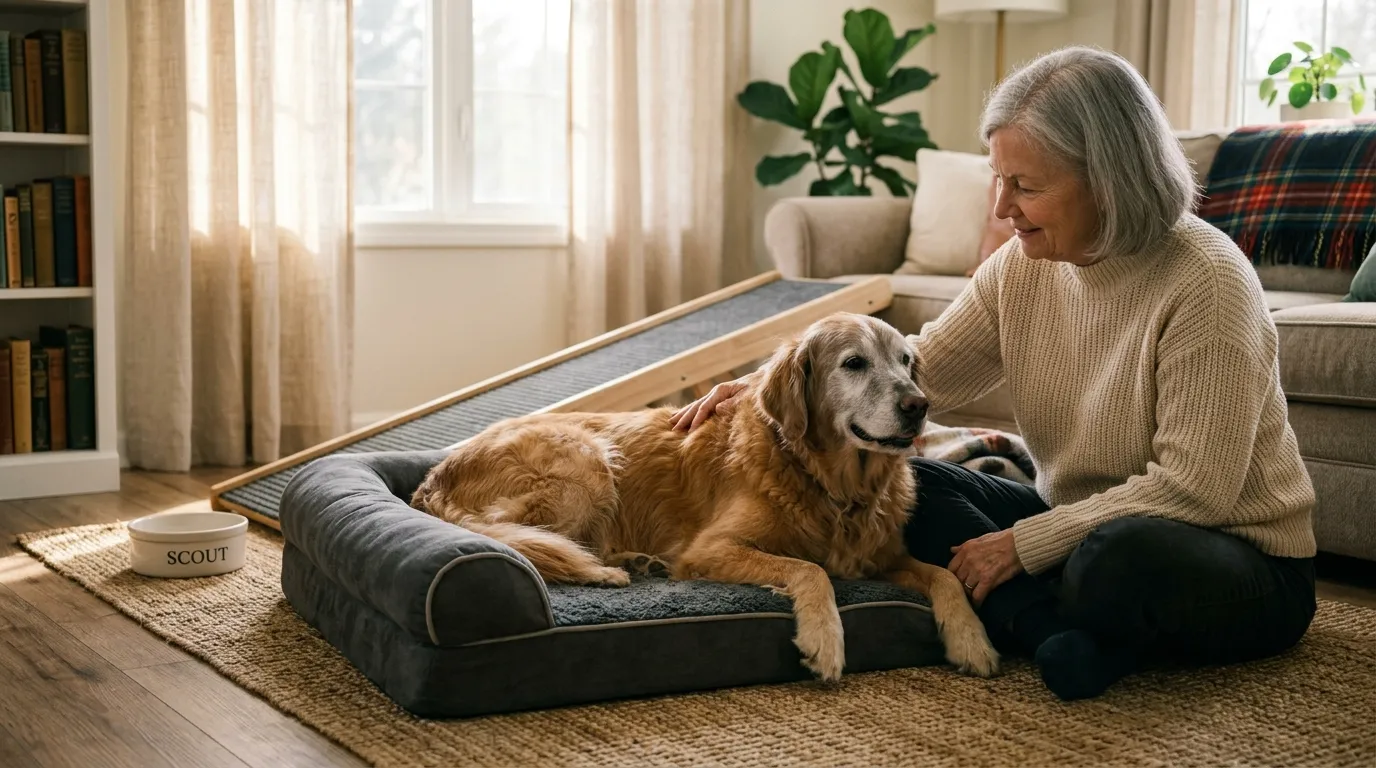
Watching a beloved dog or cat grow older can bring a mix of gratitude, tenderness, and concern. The pet who once raced to the door may now take the stairs slowly, sleep more often, or need extra help getting comfortable.
Aging is a natural part of life, but changes in behavior or ability should not automatically be dismissed as “just old age.” With thoughtful observation and support from a veterinarian, families can help senior pets feel safer, more comfortable, and connected to the people they love.
Learn what is normal for your pet
There is no single age at which every pet becomes a senior. Size, breed, species, medical history, and individual health all play a role. Instead of relying on age alone, pay attention to changes from your pet’s usual routine. You might notice that your dog hesitates before jumping into the car, your cat no longer reaches a favorite windowsill, or either pet seems less interested in play.
Changes in appetite, thirst, weight, sleep, grooming, mobility, toileting, or social behavior can have many causes. Some are manageable, while others need prompt attention. Keep notes about what you notice and when it happens, and share them with your veterinarian. Seek veterinary advice promptly for sudden or severe changes, signs of pain, difficulty breathing, collapse, or an inability to eat or drink.
Make everyday life easier and safer
Small adjustments around the home can make a meaningful difference. Provide a supportive, easy-to-reach bed in a quiet, warm area. Place food, water, and litter trays where your pet can access them without climbing or navigating slippery floors. Non-slip rugs, ramps, steps designed for pets, and gentle lighting can help reduce strain and make familiar spaces easier to navigate.
Keep routines predictable, but adapt activities to your pet’s energy and comfort. Shorter, gentler walks may suit an older dog better than one long outing. Cats may prefer low-sided litter trays or play sessions that involve less jumping. Avoid forcing movement or exercise when your pet seems uncomfortable; ask your veterinarian what level of activity is appropriate.
Support nutrition, movement, and mental well-being
Senior pets can have changing nutritional and medical needs. Your veterinarian can help you choose an appropriate diet, monitor weight, review dental health, and decide whether any supplements or treatments are suitable. Do not start human medicines or supplements without veterinary guidance, as some can be dangerous for pets.

Comfort also includes mental stimulation and companionship. Offer gentle play, sniffing opportunities, easy-to-reach favorite resting spots, and affection on your pet’s terms. For pets with hearing or vision changes, approach calmly and keep furniture and essential resources in consistent places. The goal is not to keep every routine exactly as it was, but to preserve the activities and relationships your pet enjoys.
Keep track of quality of life
When several small changes build up, it can be difficult to tell whether your pet is still having a good day-to-day experience. Consider keeping a simple journal of appetite, hydration, comfort, mobility, hygiene, interest in favorite activities, and interactions with family.
Note both difficult days and the moments when your pet seems relaxed or engaged. Looking back over several days or weeks can make patterns easier to recognize than relying on memory during an emotional appointment.
A structured pet quality-of-life assessment can also help you organize observations and prepare questions for your veterinarian. It should be used as a conversation aid, not as a diagnosis or a score that makes a decision on its own. Every animal and family situation is different, and a veterinarian can help interpret changes in the context of your pet’s health, treatment options, and comfort.
Talk with your veterinarian before a crisis
Regular checkups are especially useful as pets age. Ask what changes to watch for, which symptoms should prompt an urgent visit, how pain can be assessed, and what treatment or comfort-care options may be available. If travel to a clinic is stressful or difficult for your pet, ask whether a home visit is appropriate in your area. Families in the United States, for example, can explore local options such as in-home euthanasia services when discussing end-of-life care with a veterinarian. Availability and suitability vary by location and by the pet’s needs.
If your pet has a progressive or serious condition, it may help to discuss hospice or palliative care early. These conversations can cover symptom management, comfort, likely changes, and what support may be needed as the condition develops. Planning ahead does not mean giving up; it gives you time to understand the options and make decisions guided by your pet’s welfare.
When care needs change, compassion still leads
There may come a time when a pet’s discomfort cannot be adequately relieved or their difficult days begin to outweigh the good ones. These decisions are deeply personal and can be painful. There is no need to make them alone: ask your veterinarian to explain the likely course of illness, realistic treatment goals, and ways to assess comfort. It can also help to talk with trusted family members and write down the questions you want answered before an appointment.
For some families, in-home end-of-life care may be an option to discuss with a veterinarian. It can allow a pet to remain in familiar surroundings, but it is not available everywhere and may not be appropriate in every circumstance. A veterinary professional can explain what is possible and help you consider what best supports your pet.
Aging well means adapting with love
Senior pet care is rarely about one big change. More often, it means noticing small signals, adjusting the home, keeping up with veterinary guidance, and protecting the everyday comforts that make life meaningful. By observing your pet closely and asking for help early, you can respond to changing needs with greater confidence and give your companion the best chance to enjoy comfort, connection, and dignity throughout their later years.
If you’re interested, you can watch this video to explore this topic further. It offers helpful insights into keeping senior pets comfortable, safe, and connected in their later years.