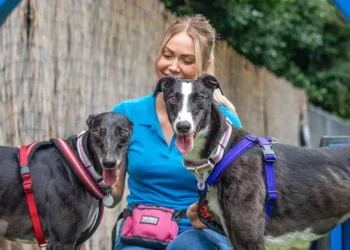



Dogs Trust is widely described as the UK’s largest dog welfare charity. It runs 23 rehoming centres across England, Scotland, Wales and Northern Ireland. Founded in 1891, it is famous for its slogan “A dog is for life, not just for Christmas”.
Adopting from Dogs Trust works differently from most UK rescues. You apply once, and the charity matches you with a dog rather than letting you reserve one. This guide explains that process and the adoption fee. It also covers giving up a dog, how the charity is funded and how it compares with other UK charities.
Independence note: Pet Rescue Blog is not affiliated with Dogs Trust. Fees and policies are set by the charity and can change, so always confirm details on the official Dogs Trust website before you apply.
Key Takeaways
- Dogs Trust is registered with the Charity Commission under number 1167663 and in Scotland under SC053144.
- Dogs Trust charges £300 to adopt a puppy or adult dog in England, Wales and Scotland, and £287.50 in Northern Ireland.
- You do not apply for a specific dog; you apply once and Dogs Trust matches you, adding up to four favourites as a guide.
- Your Dogs Trust application stays open for three months while the team looks for a match.
- Most Dogs Trust centres are open to visitors five days a week without an appointment, but four centres care for dogs in foster homes.
- Dogs Trust has never destroyed a healthy dog in its care since adopting that policy in 1964.
- Dogs Trust will always take back a dog adopted from it, however long ago the adoption happened.
Dogs Trust at a Glance
Dogs Trust is a national dog welfare charity founded in 1891, with rehoming centres in all four UK nations. The table below summarises the facts most people look for.
| Detail | Information |
|---|---|
| Official name | Dogs Trust |
| Previous name | National Canine Defence League (NCDL) |
| Founded | 1891, by Lady Gertrude Stock, at Crufts |
| Renamed Dogs Trust | 2003 |
| Charity numbers | 1167663 (England and Wales), SC053144 (Scotland) |
| Company number | 09365971 |
| Rehoming centres | 23 across the UK |
| Animals rehomed | Dogs only |
| Adoption fee | £300 (England, Wales, Scotland), £287.50 (Northern Ireland) |
| Visiting | Most centres open five days a week without an appointment |
| Giving up a dog | 0300 303 2188 |
What Is Dogs Trust?
Dogs Trust is a UK charity dedicated entirely to dogs. It rehomes dogs, campaigns on dog welfare and supports owners so fewer dogs end up in rescue. Its official history traces the charity back more than a century.
The history of Dogs Trust, from 1891 onwards
Lady Gertrude Stock formed the National Canine Defence League at Crufts in 1891. It began as a small group campaigning against cruel practices towards dogs. In 1964, the charity adopted its policy never to destroy a healthy dog in its care. It created the slogan “A dog is for life, not just for Christmas” in 1978 and became Dogs Trust in 2003.
Is Dogs Trust the same as the National Canine Defence League?
Yes. Dogs Trust is the same organisation that was known as the National Canine Defence League, or NCDL, until 2003. Older references to the NCDL in books, wills and local histories refer to the same charity.
The non-destruction policy
Dogs Trust states that it will never destroy a healthy dog in its care. This means some dogs with complex needs stay with the charity for a long time while staff work on their behaviour. It also explains why Dogs Trust is selective about matches: a failed adoption means the dog comes back.
Where Are the Dogs Trust Rehoming Centres?
Dogs Trust has 23 rehoming centres across the UK, listed on its rehoming centres page. They are spread across all four nations, so most people in the UK live within reach of at least one.
| Nation | Dogs Trust rehoming centres |
|---|---|
| England | Basildon, Canterbury, Cumbria, Darlington, Evesham, Ilfracombe, Kenilworth, Leeds, Loughborough, Manchester, Merseyside, Newbury, Salisbury, Shoreham, Shrewsbury, Snetterton, West London (Harefield) |
| Scotland | Dundee, Glasgow, West Calder |
| Wales | Bridgend, Cardiff |
| Northern Ireland | Ballymena |
Can you visit Dogs Trust without an appointment?
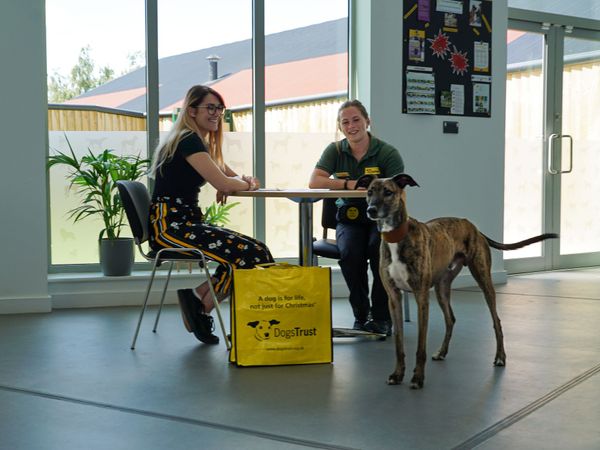
Yes, at most centres. Dogs Trust says most of its centres are open to the public five days a week. You do not need an appointment to visit, ask for advice or meet dogs. The exceptions are Bridgend, Cumbria, Ilfracombe and Newbury, where dogs live in foster homes. For those four, you apply first and the team brings a matched dog to the centre to meet you.
This is a real advantage over charities that do not allow general visiting, such as Woodgreen Pets Charity. Check opening times on your chosen centre’s page before you travel.
How to Adopt a Dog From Dogs Trust
To adopt from Dogs Trust, you create an account, complete one application and choose a rehoming centre. You do not apply for a specific dog. The team compares your application with every suitable dog at that centre, as explained on its how to adopt page.
The Dogs Trust adoption process, step by step
- Create an account and apply: tell Dogs Trust about your home, lifestyle and the type of dog you want.
- Add up to four favourites: these guide the team but are not applications for those dogs.
- Choose a rehoming centre: it need not be your nearest, but you must reach it within a few days of a match.
- Wait for a match: your application stays open for three months, and the team checks it against new dogs as they arrive.
- Meet the dog: some dogs need several meetings before going home, and a home visit may be arranged.
- Take your dog home: your dog goes home with a collar, lead, handbook, food and four weeks of Petplan insurance.
Not every available dog appears on the Dogs Trust website. Dogs that match existing applications quickly are rehomed before they are listed, so it is worth applying even if no dog catches your eye. For a broader view of the process across charities, see our guide to adopting a dog in the UK.
Dogs Trust adoption requirements
Dogs Trust rehomes based on each dog’s needs, but it sets some basic requirements. According to its rehoming policy, you must:
- Be 18 or over.
- Get your landlord’s permission before reserving a dog, if you rent.
- Choose the dog yourself, because Dogs Trust does not rehome dogs as gifts.
- Agree to continue any behavioural rehabilitation or training the team recommends.
- Not leave the dog alone for longer than it can cope with.
- Give the dog access to suitable outside space for exercise and toilet breaks.
Dogs Trust’s firm rehoming rules
Dogs Trust also lists rules it does not bend. It will not rehome a dog to live outdoors only unless that is in the dog’s welfare interests. Dogs must never be chained or tethered. It will not place a dog with anyone in the household who has an unspent conviction for animal-related offences. It also refuses adopters who plan to use aversive tools, such as anti-bark or shock collars.
How much does it cost to adopt from Dogs Trust?
Dogs Trust charges £300 to adopt a puppy or adult dog in England, Wales and Scotland. The fee is £287.50 in Northern Ireland, where you also need a dog licence. Before your dog goes home, it is:
- Fully health checked
- Up to date with vaccinations and treatments such as worming
- Neutered, or you receive a neutering voucher
- Microchipped
The fee also covers four weeks of free Petplan insurance and a Dogs Trust collar and lead. You also get a dog care handbook and several days of food. The fee is only the start of the cost, so read our checklist of things to know before adopting a dog before you commit.
Support after you adopt
Dogs Trust phones adopters about two days after adoption and asks permission to call again about two weeks later. Its post-adoption support includes a Behaviour Support Line, open Monday to Friday from 8.30am to 7.30pm and 9.30am to 5pm at weekends and bank holidays. If a problem cannot be resolved, Dogs Trust will always take the dog back.
Giving Up a Dog to Dogs Trust
If you can no longer keep your dog, call Dogs Trust on 0300 303 2188 or use its online form. Its giving up your dog page describes two options, and suggests exploring alternatives first.
- Homestay: your dog stays with you while Dogs Trust looks for a new home, so there is no wait for kennel space.
- Dogs Trust care: your dog moves into kennels or a foster home until it is matched with a new family.
Centres run at full capacity, so there is usually a wait before kennel space is free for an emergency surrender. You do not need to live near a centre, but you must be able to travel to one of the areas Dogs Trust covers.
Other Dogs Trust Services for Owners
Dogs Trust also runs services designed to keep dogs with their owners. Its get help page lists:
- Behaviour Support Line: expert help with training and behaviour problems.
- Cost of living support: help for dog owners who are struggling financially.
- Pet friendly housing: advice for renters and landlords.
- Freedom Project: support for dogs and owners affected by domestic abuse.
- Hope Project: support for dog owners experiencing homelessness.
- Canine Care Card: Dogs Trust will care for and rehome your dog if you become seriously ill or die.

How Is Dogs Trust Funded?
Dogs Trust is funded mainly by public donations and gifts left in wills. The figures below come from the Charity Commission register entry for Dogs Trust.
| Financial year ending 31 December 2024 | Amount |
|---|---|
| Total income | £143.07m |
| Donations and legacies | £128.53m |
| Trading activities (including shops) | £8.00m |
| Charitable activities income | £3.69m |
| Investment income | £1.68m |
| Total expenditure | £150.60m |
| Spent on charitable activities | £108.59m |
| Spent on raising funds | £42.01m |
| Employees | 1,943 |
| Volunteers | 3,000 |
In that year, Dogs Trust spent more than it received, drawing on its reserves. That is common for large charities in a single year and is not a sign of trouble on its own. The register links to the full annual report for anyone who wants the detail.
Dogs Trust vs Other UK Rehoming Charities
Dogs Trust charges one of the higher dog adoption fees among large UK charities. It also offers the most centres and the easiest visiting. Compare the main options below, then confirm fees on each charity’s own website.
| Charity | Animals | Where | Adult dog fee | Adult cat fee | How you apply |
|---|---|---|---|---|---|
| Woodgreen Pets Charity | Dogs, cats, small pets | One centre, Godmanchester, Cambridgeshire | £285 | £115 | Apply for a specific pet; no general visiting |
| Dogs Trust | Dogs only | 23 rehoming centres across the UK | £300 (£287.50 in Northern Ireland) | Not applicable | Apply once and be matched; most centres open to visitors |
| Battersea Dogs and Cats Home | Dogs and cats | London, Old Windsor and Brands Hatch | £230 | £100 | Register interest and be matched within three months |
| Cats Protection | Cats only | Over 30 centres plus volunteer-run branches | Not applicable | Typically £80 to £120, set locally | Enquire about a specific cat through Find a Cat |
| Blue Cross | Dogs, cats, small pets, horses | 11 rehoming centres and units in England and Wales | £200 to £300 by age (puppies £400) | £100 to £125 by age (kittens £150) | Apply online for a specific pet; no walk-ins |
| Mayhew | Dogs and cats | One centre, Kensal Green, London | £195 | £90 | Apply for a specific animal; virtual interview, then a meeting |
| National Animal Welfare Trust | Dogs, cats, rabbits, guinea pigs, farm animals | Four centres: Hertfordshire, Berkshire, Bedfordshire, Cornwall | £250 | £120 | Register interest in a specific pet; contacted only if matched |
| Scottish SPCA | Dogs, cats, small pets, exotics, equines | Five rehoming centres across Scotland | £300 under 8 years, £250 over 8 (puppies £400) | £150 under 8 years, £100 over 8 (kittens £200) | One application, open for 12 months; the team matches you |
| Raystede | Dogs, cats, small pets, farm animals, horses | One 43-acre centre, Ringmer, East Sussex | £300 | £100 | One application on file; contact them about a specific animal |
Which charity suits you best?
- You want to meet dogs before applying: Dogs Trust is the strongest choice, because most centres welcome visitors without an appointment.
- You live outside the South East: Dogs Trust’s 23 centres give far wider coverage than single-site charities.
- You want a cat or a small pet as well: Dogs Trust only rehomes dogs, so look at charities that rehome several species.
- You have your heart set on one listed dog: Dogs Trust’s matching model may frustrate you. A charity that takes applications for one dog may suit you better.
Is Dogs Trust a Good Charity to Adopt From?
Dogs Trust is a well-established charity with clear fees, wide coverage and lifelong support for adopters. Whether it suits you depends mostly on how you feel about being matched rather than choosing. These strengths and limitations come from the charity’s published policies.
| Strengths | Limitations |
|---|---|
| 23 centres across all four UK nations | You cannot apply for one specific dog |
| Most centres open to visitors without an appointment | Fee of £300 is higher than some charities |
| Fee covers neutering, vaccinations, microchip and four weeks of insurance | Four centres are foster-based, with no dogs on site |
| Will always take back a Dogs Trust dog | Dogs only, no cats or small pets |
| Never destroys a healthy dog in its care | Waits for kennel space when giving up a dog |
How to Support Dogs Trust
You can support Dogs Trust without adopting:
- Foster: give a dog a temporary home through Dogs Trust fostering.
- Sponsor a dog: sponsor a dog in care and receive updates.
- Volunteer: help at a rehoming centre or in a Dogs Trust shop.
- Donate or leave a gift in your will: legacies are one of the charity’s largest income sources.
FAQs
How much does it cost to adopt a dog from Dogs Trust?
Dogs Trust charges £300 to adopt a puppy or adult dog in England, Wales and Scotland, and £287.50 in Northern Ireland. The fee covers a health check, vaccinations, neutering or a neutering voucher, microchipping and four weeks of Petplan insurance.
Can I choose a specific dog at Dogs Trust?
No. Dogs Trust asks you to apply once and matches you with a suitable dog. You can add up to four favourite dogs to your application as a guide, but these are not applications for those dogs.
How long does a Dogs Trust application stay open?
A Dogs Trust application stays open for three months. If no match is found in that time, Dogs Trust closes the application and invites you to apply again with up-to-date information.
Can I visit Dogs Trust without an appointment?
Yes, at most centres. Dogs Trust says most centres are open five days a week without an appointment. Bridgend, Cumbria, Ilfracombe and Newbury care for dogs in foster homes, so you apply first there.
How many rehoming centres does Dogs Trust have?
Dogs Trust has 23 rehoming centres across England, Scotland, Wales and Northern Ireland, including West London at Harefield, Glasgow, Cardiff and Ballymena.
Does Dogs Trust put dogs down?
Dogs Trust says it will never destroy a healthy dog in its care. It adopted this non-destruction policy in 1964.
Will Dogs Trust take back a dog I adopted?
Yes. Dogs Trust says it will always take back a dog adopted from it, whatever the reason and however long ago you adopted. It recommends contacting its behaviour support team first if the problem is behavioural.
How do I give up my dog to Dogs Trust?
Call Dogs Trust on 0300 303 2188 or use its online form. You can choose Homestay, where your dog stays with you until rehomed, or Dogs Trust care in kennels or foster.
What was Dogs Trust called before?
Dogs Trust was called the National Canine Defence League until 2003. Lady Gertrude Stock founded it at Crufts in 1891.
Is Dogs Trust a registered charity?
Yes. Dogs Trust is registered with the Charity Commission for England and Wales under number 1167663 and with the Scottish regulator under SC053144.
Related Articles
- Woodgreen Pets Charity: An Independent Guide
- Battersea Dogs and Cats Home: An Independent Guide
- Cats Protection: An Independent Guide
- Blue Cross: An Independent Guide
- Mayhew Animal Welfare Charity: An Independent Guide
- Raystede Centre for Animal Welfare: An Independent Guide
- National Animal Welfare Trust: An Independent Guide
- Scottish SPCA: An Independent Guide
- How to Adopt a Dog in the UK: Your Complete Step-by-Step Guide
- The Comprehensive Guide to Adopting Your First Rescue Dog
- RSPCA Adoption Requirements UK Explained
Conclusion
Dogs Trust suits adopters who want to meet dogs in person and live near one of its 23 centres. It works best if you are comfortable letting staff choose the match. Its fee is clear, its support continues for the life of the dog and it will always take a dog back.
If you want one particular dog, or you also want a cat, compare Dogs Trust with the other charities in this series first. Whichever route you take, a prepared adopter gives a rescue dog the best possible start.
Insurance Disclaimer: This article is general information, not financial advice. Policy prices and cover vary by provider, pet, and postcode. Compare policies and read the terms carefully, or speak to an FCA-regulated adviser.