

Choosing between fish tanks can feel overwhelming. UK shops sell everything from tiny desktop bowls to 125-litre cabinet setups, and many of the cheapest options are designed for looks rather than fish welfare.
The good news is that a well-chosen tank makes fishkeeping easier, not harder. The right size, filter and heater keep water stable, which means healthier fish and less work for you. Whether you are starting fresh or giving a home to fish someone else could no longer keep, this guide will help you buy once and buy right.
We have compared the best fish tanks available from UK retailers, checked them against RSPCA welfare guidance, and answered the practical questions owners ask most, from running costs to whether your landlord can say no.
Quick Answer
| Category | Recommendation |
|---|---|
| Best Overall and Best Value | Tetra Starter Line 54L LED is a complete 54-litre kit with filter, heater and lighting for around £80. |
| Best for Homes | Fluval Flex 2.0 57L pairs a curved modern design with hidden three-stage filtration for around £180. |
| Best Small Tank | Fluval Spec 19L is a sleek desktop nano tank for shrimp or a single betta, from around £95. |
| Best Premium | Juwel Rio 125 LED with cabinet is a 125-litre tropical setup made in Germany, from around £370. |
Key Takeaways
- The RSPCA advises against fish bowls and novelty tanks because small water volumes cannot stay stable enough for fish to thrive.
- For most beginners, a rectangular glass tank of 50 to 60 litres with a built-in filter is the easiest size to keep healthy.
- Tropical fish need a heater with a thermostat, usually set between 22°C and 26°C, while coldwater fish do not.
- A heated 54-litre tank typically costs around £45 to £60 a year in electricity, and an unheated tank costs far less.
- Fish tanks should never sit in direct sunlight, which causes algae blooms and dangerous temperature swings.
- Always leave a gap of 2 to 3 cm between the water line and the lid rather than filling to the very top.
- Every new tank should be cycled for several weeks before fish are added so beneficial bacteria can establish in the filter.
What to Look For
- Water volume: Bigger tanks hold steadier water quality. Aim for 50 litres or more if you can, and plan around the adult size of your fish.
- Shape and surface area: Rectangular tanks offer more swimming space and better oxygen exchange than bowls or tall columns of the same volume.
- Filtration: Look for a filter matched to the tank volume, ideally with mechanical, chemical and biological stages.
- Heating: If you want tropical fish, check whether a heater is included or budget for one separately.
- Lighting: LED lighting runs cooler and cheaper than older tube lighting and helps live plants grow.
- Support and footprint: A filled tank is very heavy, so you need a level, purpose-built stand or cabinet and a floor that can take the load.
Top Picks
1. Tetra Starter Line 54L LED

The Tetra Starter Line is the tank we recommend most often to first-time owners. The 60 x 30 x 30 cm glass tank comes with almost everything you need, including a pre-set heater, so you can run it as a coldwater or tropical setup. It is one of the best-reviewed fish tanks at Argos, rated 4.5 out of 5 from more than 560 reviews.
Best For: First-time owners wanting a complete, affordable kit.
Key Features:
- 54-litre float glass tank measuring 60 x 30 x 30 cm
- LED lighting with day and lunar modes and a feeding hatch in the lid
- Tetra EasyCrystal filter with replaceable cartridges
- 50W heater pre-set to 25°C, plus TetraMin food and AquaSafe water conditioner
Pros:
- Exceptional value for a complete heated kit
- Classic 60 cm footprint suits most community fish and fits standard stands
Cons:
- Cartridge filters cost more to run over time than reusable sponge media
- Stand or cabinet sold separately
Price Range: £80 – £100 (prices vary by retailer and size)
2. Fluval Flex 2.0 57L
If you want fish tanks for homes that look like a design piece rather than a pet shop box, the Fluval Flex is the one to beat. Its curved front and honeycomb side wrap hide the filter and water line, and the remote-controlled LED lets you blend colours or run effects. It is stocked by Pets Corner and Jollyes among others.
Best For: Living rooms where style matters as much as performance.
Key Features:
- 57-litre tank measuring roughly 41 x 39 x 39 cm
- Adjustable white and RGB LEDs with remote control
- Hidden rear three-stage filtration with foam, carbon and BIOMAX media
- Feeding port, integrated heater channel and cable management
Pros:
- Clean, hidden equipment and a genuinely striking look
- Strong filtration for the tank size
Cons:
- Freshwater only, and the heater is not included
- Matching stand adds roughly £95 to £115
Price Range: £170 – £215 (prices vary by retailer and size)
3. Juwel Rio 125 LED with Cabinet

Juwel is one of the most trusted fish tank brands in the UK, and the Rio 125 is its best-selling entry into proper community fishkeeping. You get a 125-litre tank, matching cabinet, internal filter, heater and LED lighting in one package. According to Charterhouse Aquatics, it is built in Germany and equipped with the Bioflow M internal filter.
Best For: Owners ready for a larger tropical community tank.
Key Features:
- 125-litre tank measuring 81 x 36 x 50 cm, with a 73 cm cabinet
- Bioflow M filter with multiple media types
- Built-in 100W adjustable heater integrated into the filter
- Juwel MultiLux LED lighting, available in several cabinet finishes
Pros:
- Larger volume is more forgiving and stable for beginners
- Complete tropical setup with storage underneath
Cons:
- Heavy and large once filled, so floor strength and space need checking
- Higher upfront cost
Price Range: £370 – £445 (prices vary by retailer and size)
4. Superfish Home 65
The Superfish Home range is designed for aquascaping, with a frame that wraps around the tank and hides the equipment. The Home 65 holds 60 litres and suits planted tanks with small fish and shrimp. Per Maidenhead Aquatics, the filter chamber has space for an optional heater if you want to keep tropical fish.
Best For: Planted tanks with small fish and shrimp.
Key Features:
- 60-litre tank measuring 59 x 32 x 43 cm
- Built-in filter chamber with three-stage internal filter
- 12W dimmable sunrise LED lighting in white and blue
- Cover included to stop fish jumping out
Pros:
- Modern, tidy look with equipment out of sight
- Good lighting for live plants
Cons:
- Heater sold separately for tropical setups
- One buyer of the smaller Home 45 reported tiny fish getting into the filter box, so fit a sponge over the openings for very small species
Price Range: £105 – £130 (prices vary by retailer and size)
5. Aqua One LifeStyle Classic Starter
Aqua One has been a major name in UK aquatics since launching here in 2004, and the LifeStyle Classic is its plug-and-play starter range. It comes in 40, 72 and 125-litre sizes, so you can choose based on your space. HugglePets highlights the trickle filter, where cartridges can be changed without getting your hands wet.
Best For: Families wanting a simple kit in a choice of sizes.
Key Features:
- Available in 40, 72 and 125 litres (the 40-litre is 45 x 29.5 x 38 cm)
- Trickle filter with easy-change cartridges
- Switchable day and night LED lighting
- Hinged lid for easy access
Pros:
- Easy maintenance suits busy households and children’s first tanks with adult supervision
- Three sizes let you scale up to a proper community tank
Cons:
- Check the listing for a heater, and budget for one if you plan to keep tropical fish
- Larger sizes are click and collect only at some retailers
Price Range: £80 – £180 (prices vary by retailer and size)
6. Fluval Spec 19L
The Fluval Spec is the best small tank we found for a desk or kitchen counter. The etched glass and aluminium trim look smart, and the pump and filter sit in a separate rear chamber. Charterhouse Aquatics lists a 37-LED light unit and three-stage filtration in a 43.5 x 27 x 16 cm footprint.
Best For: Shrimp, snails or a single betta in small spaces.
Key Features:
- 19-litre etched glass tank with aluminium trim
- 37-LED overhanging light for plants
- Oversized three-stage filtration hidden at the back
- Adjustable output nozzle for gentle flow
Pros:
- Premium build and a very small footprint
- Excellent water clarity for its size
Cons:
- Too small for most community fish or any goldfish
- No heater included, and some owners find the acrylic lid feels basic for the price
Price Range: £90 – £135 (prices vary by retailer and size)
7. biOrb Classic 60
The biOrb Classic 60 is a 60-litre spherical tank made from acrylic rather than glass, which makes it lighter and far more crack-resistant. It uses ceramic filter media and safe 12V electrics, according to Gardensite. We include it with a caveat: its round shape offers less swimming space than a rectangular tank of the same volume, so stock it lightly with small fish.
Best For: Homes with children where breakage is a worry.
Key Features:
- 60-litre acrylic sphere, 50 cm wide and 52 cm high
- Ceramic media biological filtration with a base filter cartridge
- Multi-colour remote-controlled LED lighting
- Low-voltage 12V system
Pros:
- Shatter resistant and lightweight compared with glass
- Very low maintenance filtration
Cons:
- Acrylic scratches easily, and the curved shape distorts the view
- Heater pack sold separately for tropical fish
Price Range: £185 – £195 (prices vary by retailer and size)
Comparison Table
| Product | Best For | Key Feature | Price Range |
|---|---|---|---|
| Tetra Starter Line 54L LED | First-time owners | Heater, filter, LED and food included | £80 - £100 |
| Fluval Flex 2.0 57L | Stylish living rooms | Curved front, hidden three-stage filter | £170 - £215 |
| Juwel Rio 125 LED with Cabinet | Larger tropical community tanks | 125 litres with cabinet and 100W heater | £370 - £445 |
| Superfish Home 65 | Planted tanks and shrimp | Sunrise LED and built-in filter chamber | £105 - £130 |
| Aqua One LifeStyle Classic | Families choosing a size | Hands-dry trickle filter cartridges | £80 - £180 |
| Fluval Spec 19L | Desks and kitchen counters | Hidden rear three-stage filtration | £90 - £135 |
| biOrb Classic 60 | Homes with young children | Crack-resistant acrylic sphere | £185 - £195 |
Buying Guide
How Big Should Your Fish Tank Be?
The RSPCA recommends working out volume as width x depth x height in centimetres, divided by 1,000. A 60 x 30 x 30 cm tank holds 54 litres. Its aquarium guidance also warns that goldfish bowls, jars and children’s novelty tanks are not designed with welfare in mind, and that goldfish need at least 60 litres of water each.
Always plan around the adult size of your fish, not the size they are in the shop. In practice, 50 to 60 litres is the sweet spot for a first community tank, while 100 litres or more gives you room for larger shoals.
What Is the Safest Fish Tank?
The safest fish tank is the one that keeps both your fish and your household safe. For fish, that means a rectangular tank of adequate volume with a filter, a lid and, for tropical species, a thermostatic heater. For your home, look for tempered or thick float glass, or acrylic if breakage is a concern, plus a purpose-built stand.
Acrylic tanks such as the biOrb are far more crack resistant than glass but scratch more easily. Glass tanks from established fish tank brands like Juwel, Tetra and Fluval are heavier but stay clearer for longer. Whatever you choose, use a drip loop on every cable and plug equipment into an RCD-protected socket.
Fish Tanks for Tropical Fish vs Coldwater
Fish tanks for tropical fish need a heater with a thermostat to hold the water steady, usually between 22°C and 26°C for popular species such as tetras, guppies and platies. The RSPCA freshwater care sheet notes that most fish other than coldwater species need a heater.
Coldwater tanks suit species such as white cloud mountain minnows and some danios, and goldfish if the tank is large enough. If you are new to heating, our guide to aquarium heaters explains wattage and placement.
Different Kinds of Fish Tanks
Understanding the different kinds of fish tanks helps you avoid buying a style that looks good but suits very few fish:
- Rectangular glass tanks: The most fish-friendly shape, with the best surface area and swimming space.
- Bow-front tanks: A curved front glass for a wider view, as on the Aqua One AquaStart range.
- Nano and cube tanks: Under 30 litres, best for shrimp, snails or a single betta.
- Rimless aquascaping tanks: Designed to show off planted layouts, such as the Superfish Scaper range.
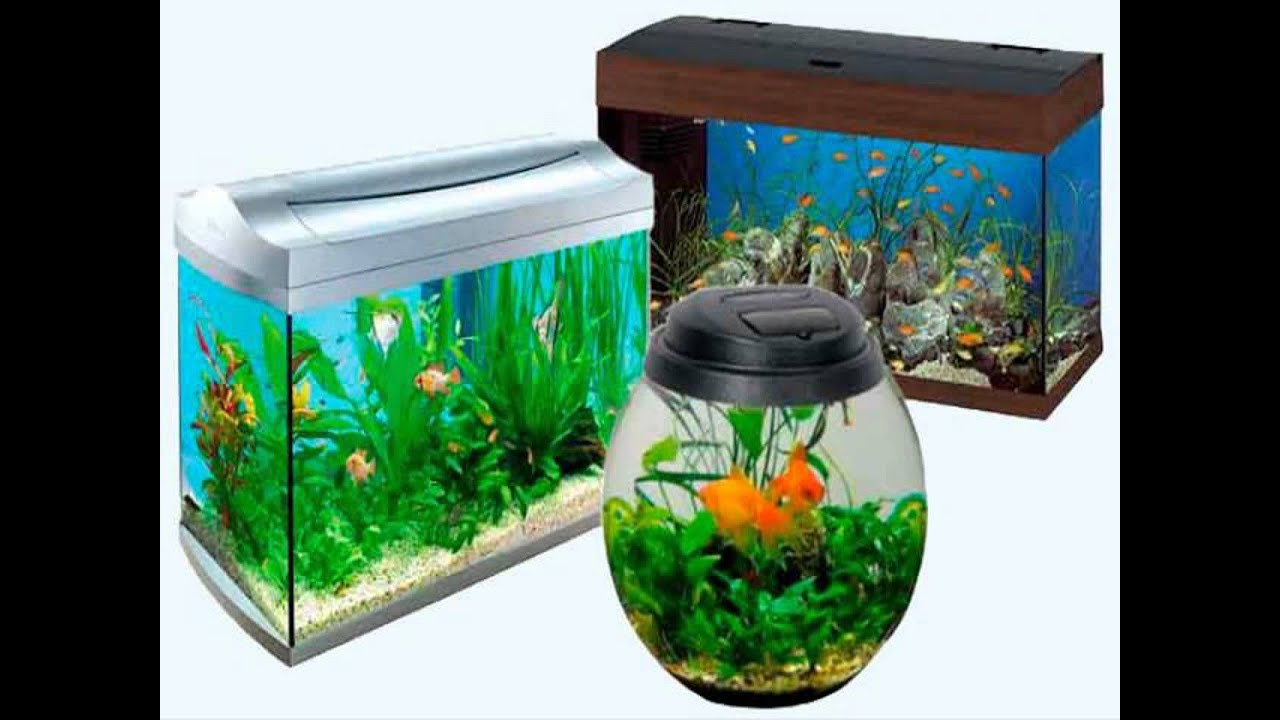
- Spherical and tube tanks: Eye-catching but with limited swimming room, so stock lightly.
- Corner tanks: Triangular tanks that make use of awkward spaces.
- Cabinet sets: A tank and matching stand sold together, the easiest way to get proper support.
- Marine tanks: Saltwater systems with extra equipment and higher running costs, best saved for experienced keepers.
Fish Tank Brands Worth Knowing in the UK
The fish tank brands you will see most in UK shops are Juwel (German-made cabinet aquariums), Fluval (design-led kits with strong filtration), Tetra (great-value starter sets), Superfish (aquascaping and home ranges), Aqua One (starter kits in many sizes), Interpet (UK-based kits such as the Fish Pod) and biOrb (acrylic tanks from Oase). Spare parts and filter media for all of these are widely stocked across the UK, which matters more than people expect when a pump fails at the weekend.
Jollyes Fish Tanks and Other UK Retailers
Jollyes fish tanks cover both coldwater and tropical setups. Its coldwater range runs from 10-litre desktop tanks to 40 litres and above, and it stocks brands such as Fluval and Tetra alongside its own Aqua Dreams starter kits. Jollyes also offers click and collect, which is handy for heavy glass tanks.
Be cautious with very small starter kits from any retailer. Some customer reviews describe keeping several goldfish in a small kit, which falls well short of RSPCA guidance. Argos, Pets at Home, Pets Corner, Maidenhead Aquatics and Amazon UK are also good places to compare prices on the tanks above.
Commercial Fish Tanks
Commercial fish tanks for offices, restaurants, surgeries and waiting rooms are usually larger, custom-built systems installed and maintained by a specialist company. If you are buying for a business, budget for a maintenance contract and plan for the adult size of every species.
Welfare law applies to businesses too. The RSPCA once moved a 2ft giant gourami from a cramped restaurant tank in Surrey to a spacious home at Sea Life London after it outgrew its display.
Where to Put Your Fish Tank
Choose a level, sturdy surface away from windows, radiators and doors. The RSPCA care sheet advises against placing a tank by a window, and Maidenhead Aquatics recommends keeping tanks away from direct sunlight and draughts.
Remember that water weighs roughly 1 kg per litre, so a 125-litre tank with its gravel, glass and cabinet can weigh well over 150 kg. In upstairs flats, place larger tanks against a load-bearing wall and spread the weight across joists where possible.
Running Costs (Do Fish Tanks Use a Lot of Power?)
Most home fish tanks use less power than people expect. As a worked example, the Tetra Starter Line uses a 10W LED, a filter of around 3.5W and a 50W heater. Running the light for 8 hours, the filter all day, and the heater for roughly a third of the time in a heated home adds up to about 0.5 kWh a day.
At the Ofgem price cap unit rate of around 26p per kWh, that works out at roughly £45 to £60 a year. An unheated coldwater tank of the same size costs closer to £15 to £20 a year. The heater is the biggest cost, so a lid and a tank placed away from cold external walls will save money.
Renting and Fish Tanks
Under the Renters’ Rights Act in England, private tenants can ask in writing to keep a pet, and landlords must reply within 28 days and cannot refuse without a fair reason, according to Woodgreen Pets Charity. A leasehold no-pets clause can still be a reasonable ground to refuse, and the rules differ in Scotland, Wales and Northern Ireland, so check your agreement.
For fish tanks specifically, landlords often worry about weight and water damage rather than the fish. Offering details of the tank size, stand and placement in your request usually helps.
Setting Up and Maintaining Your Tank
The RSPCA strongly recommends fishless cycling before adding any fish, which means running the filter for several weeks so beneficial bacteria can grow. Our guide to cycling a new fish tank walks through it step by step. After that, plan on small, regular water changes, and see our step-by-step UK guide to cleaning a fish tank and our fish tank filter guide for routine care.
FAQs
Are fish tanks therapeutic and good for anxiety?
Fish tanks can be therapeutic for many people. A study by the National Marine Aquarium with the universities of Plymouth and Exeter found that watching aquarium displays lowered blood pressure and heart rate and improved mood, with more fish holding attention for longer. A fish tank is not a treatment for anxiety, but it can be a calming part of a wider routine, so speak to your GP if anxiety is affecting daily life.
Are fish tanks bad for asthma?
Fish do not produce fur or dander, so a fish tank is often a good choice for households with asthma. The main risk is extra humidity from uncovered tanks, which can encourage damp, mould and dust mites, all common asthma triggers according to Asthma + Lung UK. Using a lid, ventilating the room and keeping fish food sealed helps keep that risk low.
Do fish tanks cause humidity?
Yes, an open fish tank adds moisture to the air as water evaporates, and warm tropical tanks evaporate faster. A small covered tank makes little difference to a room, but a large open-topped tank can add noticeable humidity. Fitting a lid or cover glass and keeping the room ventilated prevents condensation on nearby windows and walls.
Can fish tanks be in direct sunlight?
No, fish tanks should not be placed in direct sunlight. Sunlight heats the water unevenly, causing temperature swings that stress fish, and it feeds rapid algae growth that turns water green. Place your tank away from windows and use the tank light on a timer instead.
Do fish tanks use a lot of power?
Most home fish tanks use less power than people expect. A heated 54-litre tank typically costs around £45 to £60 a year to run at a unit rate of about 26p per kWh, and an unheated coldwater tank costs closer to £15 to £20. The heater uses the most energy, so a lid and a warm room keep costs down.
Do you fill fish tanks to the top?
No, leave a gap of around 2 to 3 cm between the water and the top of the tank. The gap helps oxygen exchange at the surface, stops water splashing onto lights and electrics, and makes it harder for fish to jump out. Most tanks have a marked or recommended maximum water line, so follow the manufacturer’s guidance.
Do apartments allow fish tanks?
Many flats allow fish tanks, but it depends on your tenancy or lease. In England, private tenants can request a pet in writing and landlords cannot refuse without a fair reason, although a leasehold no-pets clause can still apply. Landlords mainly worry about weight and leaks, so mention the tank size, stand and placement in your request.
Related Articles
- How to Clean a Fish Tank: A Step-by-Step UK Guide
- Fish Tank Filter Guide: How to Choose, Use and Clean One
- Why Koi Fish Make a Great Companion
Conclusion
For most UK homes, the Tetra Starter Line 54L LED is the best place to start: it is affordable, complete and big enough to keep water stable. If design matters, the Fluval Flex 57L is the standout, and if you are ready for a proper tropical community, the Juwel Rio 125 is worth the investment. Whichever you choose, avoid bowls and novelty tanks, cycle the tank before adding fish, and plan around adult fish sizes.
Fish are often overlooked when people think about rescue, yet many are surrendered every year when owners move house or a tank becomes too much. If you have space, ask your local aquatic shop or UK rescue centre about rehoming fish that need a second chance.
Keep reading Pet Rescue Blog for more practical, UK-focused pet care guides written to help you make confident decisions. From fish tank filters and cleaning routines to choosing the right first pet, we cover the questions real owners ask, so bookmark the Fish section and come back whenever you need trusted, straightforward advice.
Health note: This article is for informational purposes only and does not replace advice from your GP, asthma nurse or veterinary surgeon. Always seek professional advice about your health or your fish’s care.