

Every rescue centre in the UK has met the cat who opens cupboards, scales the bookcase and sprints laps of the hallway at 3am. Some of that energy is down to the individual cat, but some breeds are known for being far more athletic than others.
This guide ranks the 10 most athletic cat breeds, using breed standards from the Governing Council of the Cat Fancy (GCCF), the UK’s main pedigree cat registry. It also covers the most muscular cat breeds, the fastest breeds, and an honest answer for runners and fitness fans who want a sporty cat to match their lifestyle.
Key Takeaways
- The most athletic cat breeds are the Abyssinian, Somali, Bengal, Egyptian Mau, Ocicat, Siamese, Oriental, Cornish Rex, Singapura and Japanese Bobtail.
- The Egyptian Mau is widely reported as the fastest domestic cat breed, with a top speed often quoted at around 48 km/h (30 mph).
- The Bengal, Ocicat, Burmese and Maine Coon are among the most muscular cat breeds, each described as muscular or heavy for its size in GCCF breed profiles.
- No cat breed will go running with you like a dog. UK charities including PDSA and Cats Protection advise that most cats find lead walking stressful.
- Athletic cats need short, frequent play sessions. Cats Protection suggests young cats may enjoy 10 or more short games a day.
- Research on domestic cats found that longer hind legs and lower body fat predict better jumping performance.
- Many active cats and kittens wait in UK rescue centres, so adopting is a good way to find an athletic companion whose energy level is already known.
What Makes a Cat Breed Athletic?
An athletic cat breed combines a lean, muscular body, long legs and a high drive to play, climb and chase. Most of the breeds on this list are what the GCCF calls “foreign type”: slender, fine-boned cats with wedge-shaped heads, large ears and a reputation for being busy, curious and people-focused.
Athleticism in cats means short bursts of power rather than stamina. International Cat Care describes cats as sprinters rather than marathon runners, so one minute of frenzied play counts as a good session.
The 10 Most Athletic Cat Breeds at a Glance
The table below compares the 10 most athletic cat breeds by size, standout ability and the type of home that suits them. Weights come from GCCF breed profiles, and individual cats can fall outside these ranges.
| Breed | Typical weight | Standout ability | Best for |
|---|---|---|---|
| Abyssinian | 3.6 to 4.5 kg (8 to 10 lb) | Climbing, constant motion | Owners who are home a lot |
| Somali | 3.6 to 5.4 kg (8 to 12 lb) | Agility, trick training | Families wanting an Aby with a fluffy coat |
| Bengal | 3.6 to 6.8 kg (8 to 15 lb) | Power, climbing, fetch | Experienced, very hands-on owners |
| Egyptian Mau | 3.2 to 4.1 kg (7 to 9 lb) | Speed | Owners with space for running and climbing |
| Ocicat | 3.6 to 5.4 kg (8 to 12 lb) | Strength, muscular build | Sociable households |
| Siamese | 3.6 to 6.8 kg (8 to 15 lb) | Problem solving, climbing | People who enjoy a chatty cat |
| Oriental | 3.6 to 6.4 kg (8 to 14 lb) | Height, curiosity | Owners who want constant company |
| Cornish Rex | 2.3 to 4.5 kg (5 to 10 lb) | Agility, lifelong playfulness | Homes with someone around most of the day |
| Singapura | 2.3 to 3.6 kg (5 to 8 lb) | Jumping for its size | Smaller homes with lots of vertical space |
| Japanese Bobtail | Medium-sized | Jumping, feline agility | Active families with children or dogs |
Top 10 Most Athletic Cat Breeds
1. Abyssinian
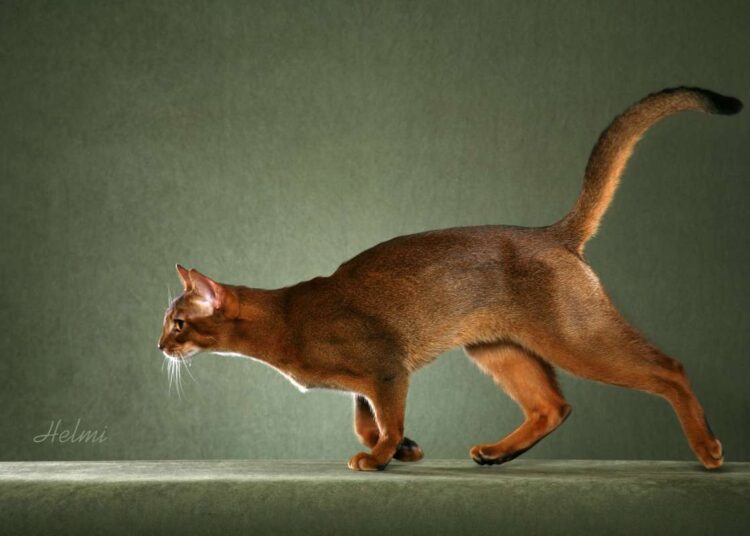
The Abyssinian is often named the most athletic cat breed because it rarely sits still. The GCCF describes the Abyssinian as a lithe, muscular cat of medium to large build on slender, elegant legs, with an average weight of about 4.5 kg (10 lb).
Despite the name, Abyssinia (now Ethiopia) is probably not where the breed began. The GCCF notes that DNA analysis points to an origin near the coast of the Indian Ocean, and that the breed as we know it was developed in the UK, with GCCF recognition in 1929.
- Athletic strengths: climbing, leaping to high shelves, learning to fetch.
- Things to know: Abyssinians are happiest with company, so many owners keep two cats.
- Health to ask about: pyruvate kinase deficiency, an inherited anaemia with a reliable DNA test.
Read our full Abyssinian cat breed guide for more on size, colours and care.
2. Somali
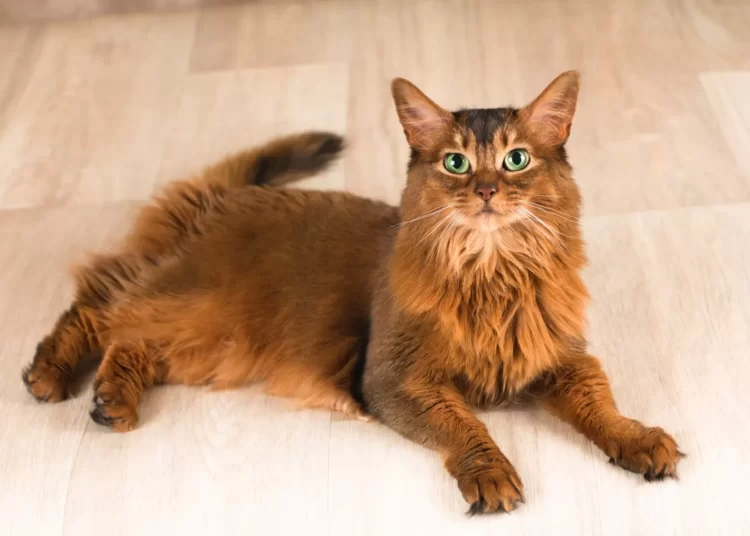
The Somali is the semi-longhaired version of the Abyssinian, with the same athletic body under a softer, fuller coat and a bushy, fox-like tail. The GCCF Somali profile describes the breed as healthy, strong and athletic, weighing around 3.6 to 5.4 kg (8 to 12 lb).
The Somali did not come from Somalia. Breeders in the US and Canada developed it from longhaired kittens born to Abyssinians, and named it after Somalia because it borders Ethiopia. The breed gained CFA championship status in 1979 and GCCF championship status in 1998, and the GCCF recognises 28 colours.
- Athletic strengths: agility, trick training and playful exploring.
- Things to know: the semi-long coat needs weekly grooming.
3. Bengal
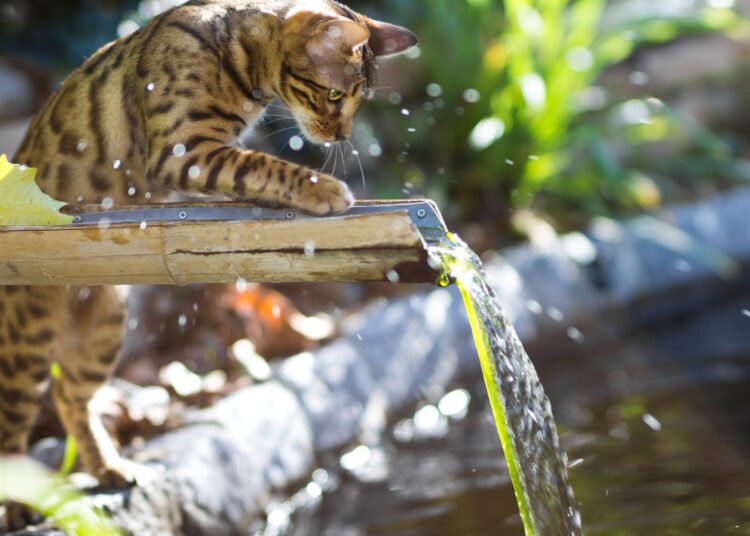
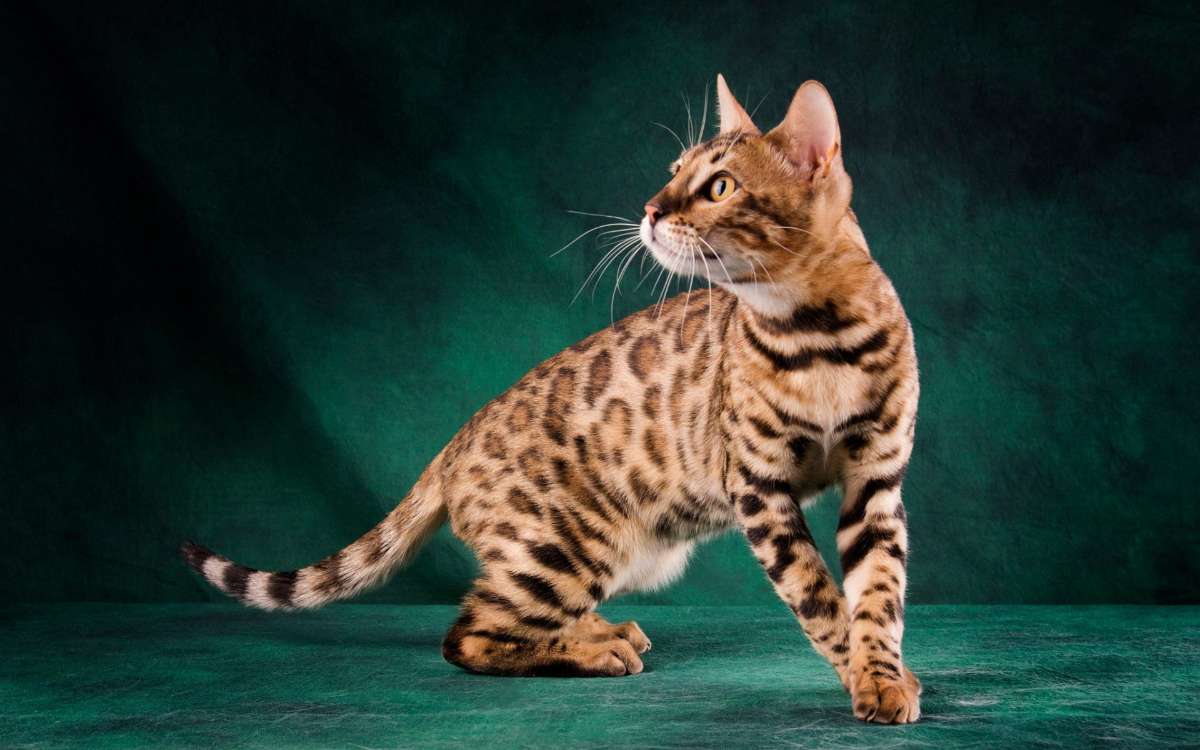
The Bengal is the most powerful of the athletic cat breeds, with a long, muscular body and strong legs. The GCCF Bengal profile notes that its hind legs are slightly longer than its front legs, which helps with jumping.
The Bengal was created in the United States in the early 1960s by Jean Mill, who crossed an Asian leopard cat with a domestic cat. By the fourth generation, the GCCF considers Bengals domestic cats rather than hybrids. Their coat comes in spotted or marbled patterns.
- Athletic strengths: climbing, sprinting, fetch and a famous love of water.
- Things to know: Bengals get bored quickly and may become destructive without daily play and climbing space.
- Weight: roughly 3.6 to 6.8 kg (8 to 15 lb).
4. Egyptian Mau
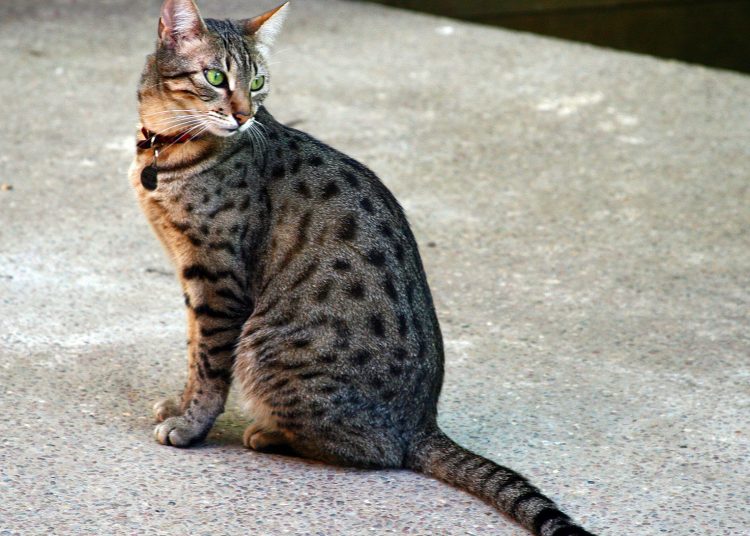
The Egyptian Mau is widely described as the fastest domestic cat breed. Vetstreet reports that the Mau can run at up to 30 mph (about 48 km/h), and the GCCF calls the Mau “reputed to be the fastest movers in the cat fancy”. Treat this figure as an estimate rather than a measured record.
The Mau is a short-coated, elegant but muscular spotted cat in three colours: bronze, silver and smoke. It has large, gooseberry-green eyes. The breed reached the UK in 1998 and gained full GCCF recognition in 2006.
- Athletic strengths: speed, high jumps and retrieving toys.
- Things to know: many Maus love water and enjoy a tall activity centre.
- Weight: about 3.2 to 4.1 kg (7 to 9 lb).
Find out more in our guide to the graceful Egyptian Mau.
5. Ocicat
The Ocicat is a muscular, athletic breed that looks wild but has no wild DNA. The GCCF Ocicat profile describes a well-muscled build with strong, dense bones, which makes both males and females “surprisingly heavy for their size”.
The breed began in 1960s Michigan from Abyssinian and Siamese crosses, with American Shorthair added later. It has a distinctive spotted coat and a low-slung, big-cat style of walking. The GCCF gives a lifespan of 15 to 18 years.
- Athletic strengths: strength, climbing and interactive games.
- Things to know: Ocicats are sociable and like to be involved in everything you do.
6. Siamese
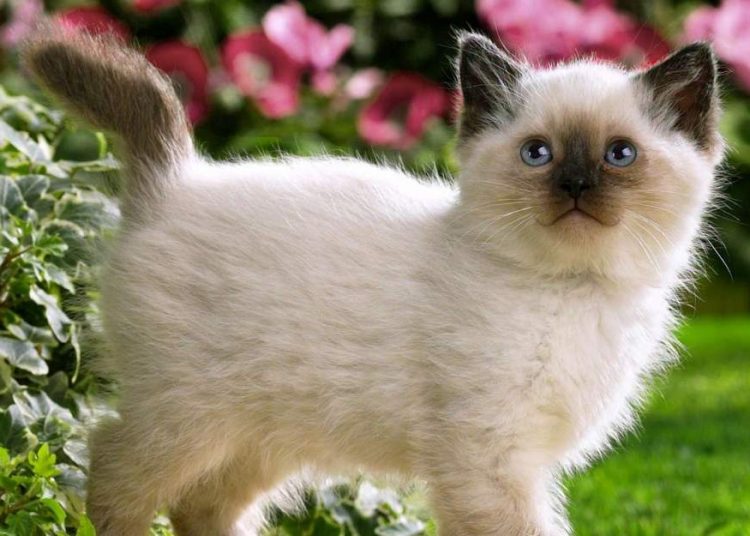
The Siamese is an athletic cat breed with a long, svelte body, fine legs and a brain to match. The GCCF Siamese profile describes a lithe, balanced cat weighing around 3.6 to 6.8 kg (8 to 15 lb).
The Siamese comes from Thailand (formerly Siam). The first pair arrived in the UK in 1884 as a gift from the British Consul-General in Bangkok. Siamese are famously vocal and dislike long periods alone.
- Athletic strengths: climbing, opening cupboards and learning tricks.
- Health to ask about: progressive retinal atrophy (PRA), which has a DNA test.
7. Oriental
The Oriental is the Siamese body type in a full range of colours, and it is just as active. The GCCF Oriental profile calls the breed lively, intelligent and sociable, with a long, svelte body and a weight of around 3.6 to 6.4 kg (8 to 14 lb).
The Oriental was developed in the UK from the 1950s. The first was a self-chocolate kitten that became the Havana. Orientals come in shorthair and longhair, with green eyes in most colours.
- Athletic strengths: reaching the highest point in any room, often the top of the fridge.
- Things to know: Orientals bond closely and demand entertainment.
8. Cornish Rex
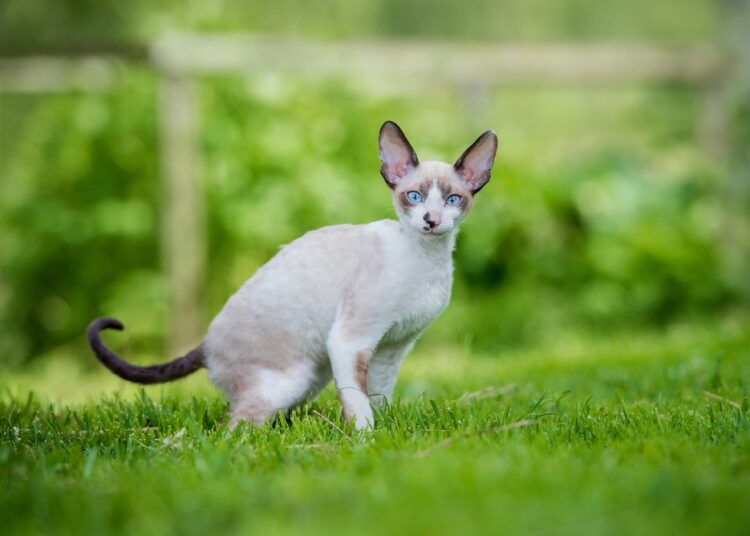
The Cornish Rex is a British athletic cat breed, often called the greyhound of the cat world for its arched back and long legs. The GCCF Cornish Rex profile describes the breed as elegant, agile and very active, with a slender, hard, muscular body.
The first Cornish Rex, a cream kitten called Kallibunker, was born on a farm on Bodmin Moor, Cornwall, on 21 July 1950. The curly coat comes from a natural mutation. The GCCF notes that Cornish Rex stay playful well into old age and often live 16 years or more.
- Athletic strengths: agility, climbing and tireless play.
- Things to know: the Cornish Rex is not hypoallergenic, despite the claim on many websites. People with cat allergies should spend time with the breed before committing.
- Weight: males about 3.6 to 4.5 kg (8 to 10 lb), females about 2.3 to 3.2 kg (5 to 7 lb).
9. Singapura
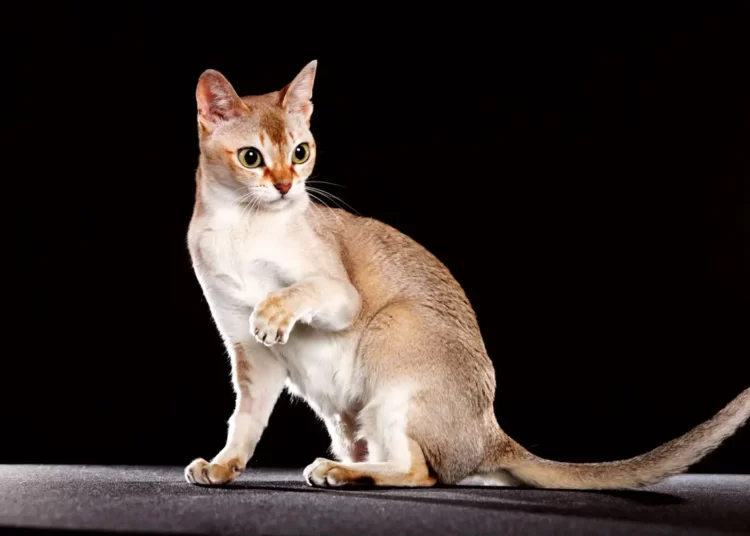
The Singapura is the smallest pedigree cat breed, but it is lithe, muscular and packed with energy. The GCCF Singapura profile calls it “the smallest breed of cat”, weighing about 2.3 to 3.6 kg (5 to 8 lb).
The breed was taken from Singapore to the United States in 1975. A cat later found at Singapore’s SPCA confirmed that this type lived on the island’s streets. The first Singapura arrived in the UK in 1988.
- Athletic strengths: jumping high for its size and quick, nimble movement.
- Health to ask about: the GCCF notes low genetic diversity and the presence of pyruvate kinase deficiency.
10. Japanese Bobtail
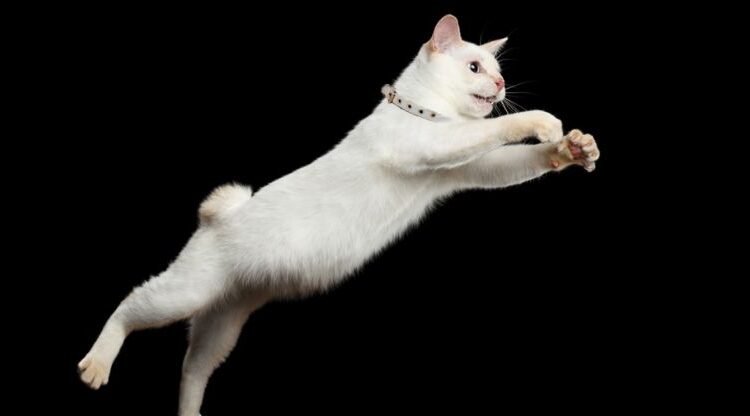
The Japanese Bobtail is an agile, athletic cat breed with powerful back legs and a short pom-pom tail. The Cat Fanciers’ Association (CFA) says its back legs allow it to jump to amazing heights, and that the breed excels at feline agility.
Bobtails appear in Japanese art from the Middle Ages. The first were imported to the United States in 1968. The bobbed tail comes from a dominant gene, not cropping, and every Bobtail’s tail is unique.
- Athletic strengths: high jumps, agility courses and fetch.
- Things to know: the CFA says Bobtails get on well with dogs and children.
What About Hybrid Breeds Like the Savannah?
Hybrid breeds such as the Savannah are extremely athletic, but they are a specialist choice. The Savannah was first bred from a serval and a domestic cat, and Vetstreet notes its long legs let it climb higher than most owners expect. Early-generation hybrids can be demanding to keep. Read our Savannah cat profile before considering one.
What Is the Most Athletic Cat Breed?
The Abyssinian is most often named the most athletic cat breed for all-round activity, while the Egyptian Mau is usually named the fastest. Rankings come from breeder and expert opinion rather than measured trials, so the honest answer depends on whether you mean speed, strength, jumping or stamina for play.
- Fastest cat breed: Egyptian Mau.
- Most muscular cat breed: Bengal or Ocicat for a medium-sized cat, Maine Coon for sheer size.
- Most agile cat breed: Abyssinian, Cornish Rex or Japanese Bobtail.
- Best jumper for its size: Singapura.
Most Muscular Cat Breeds
The most muscular cat breeds are the Bengal, Ocicat, Burmese, Maine Coon and Egyptian Mau. Each is described in GCCF breed profiles as muscular, athletic or heavy for its size. Muscle in cats comes mainly from breed type and genetics, helped by a healthy weight and daily play.
| Breed | Why it looks muscular | Typical weight |
|---|---|---|
| Bengal | Long, sleek, muscular body with strong legs | 3.6 to 6.8 kg |
| Ocicat | Dense bones, well-muscled athletic build | 3.6 to 5.4 kg |
| Burmese | Compact, solid body described as confident and athletic | 2.7 to 6.4 kg |
| Maine Coon | Large, weighty, muscular frame | 4.5 to 9.1 kg |
| Egyptian Mau | Elegant but muscular, built for speed | 3.2 to 4.1 kg |
The GCCF Burmese profile calls the breed playful, energetic and acrobatic. The GCCF Maine Coon profile describes a weighty, muscular cat, with males reaching up to 18 to 20 lb (8 to 9 kg).
Do Cats Have Abs?
Cats have abdominal muscles, but you will not see a “six-pack” on a healthy cat. The loose, swinging skin on a cat’s belly is the primordial pouch. Cats Protection explains that the pouch protects organs and lets the body stretch further when running and jumping. It is normal, even in very fit cats.
Best Cat Breeds for Runners, Athletes and Fitness Enthusiasts
The best cat breeds for fitness enthusiasts are high-energy breeds such as the Abyssinian, Bengal, Somali and Siamese, but no cat will run alongside you like a dog. A cat matches an active lifestyle by sharing play at home, not by joining your training. Be honest about how much time you spend out of the house.
Can You Take a Cat Running?
No, you should not take a cat running. PDSA does not recommend walking cats on a lead, because most cats dislike being restrained and like to feel in control. Cats Protection adds that many cats find a harness stressful.
Some confident cats, often from breeds like the Somali or Bengal, accept a harness for short, calm outings in a quiet garden. If you want to try, start indoors and go slowly. Our guide to teaching a cat to walk on a lead explains the basics.
What If You Train or Work Long Hours?
Busy athletes may suit a calmer cat better than a high-energy breed. Athletic breeds such as the Abyssinian, Siamese and Oriental dislike being left alone and can become bored or destructive. If you are often out at the gym, at races or at work, consider two cats or a breed from our list of low-maintenance cat breeds.
Best Cat Breeds for Bodybuilders
If you want a cat with a powerful, muscular look, the Bengal, Ocicat and Maine Coon are the closest match. These breeds are solid and strong, but they still need gentle handling, interactive play and a healthy weight. Muscle tone in cats comes from play and genetics, not training plans.
Best Kitten Breeds for Runners and Fitness Enthusiasts
Almost every kitten is athletic, so kitten energy is a poor guide to adult behaviour. If you want an athletic adult cat, choose a kitten from an active breed such as the Abyssinian, Bengal or Somali, or adopt an adult cat whose energy level the rescue centre already knows.
Kittens of active breeds need a lot of play and supervision. Our guide to adopting a kitten explains the right age and what to prepare.
Why Are Cats So Athletic?
Cats are athletic because they evolved as ambush hunters that need explosive power to pounce, climb and escape. Long hind legs, a very flexible spine and a light, lean body let a cat leap several times its own height from a standing start.
A study of 18 domestic cats in the Journal of Experimental Biology found that take-off speed in jumping was best explained by hind limb length and body fat. Cats with longer back legs and less fat jumped better. This is one reason lean, long-legged breeds dominate athletic cat lists.
Are Cats Athletic Compared With Dogs?
Cats are more athletic than dogs in short bursts, but much less suited to endurance. A cat can sprint, jump and twist in mid-air with remarkable control, then needs to rest. This is why play sessions for cats should be short and frequent.
Which Cat Has the Fastest Reflexes?
No study has ranked cat breeds by reflex speed, so no breed can honestly claim the title. All cats have fast reactions thanks to their hunting instincts. Breeds known for agility, such as the Abyssinian, Japanese Bobtail and Cornish Rex, are often described as the quickest movers.
How to Exercise an Athletic Cat
Athletic cats need several short, hunting-style play sessions every day. Cats Protection advises that younger cats may enjoy 10 or more games a day, while older cats like three or four. Games of one to two minutes are fine.
- Wand toys: International Cat Care recommends at least five minutes of wand toy play with each cat every day.
- Let them catch the prey: finish laser games with a toy the cat can grab, so play does not end in frustration.
- Go vertical: tall cat trees and shelves give climbers like the Bengal and Abyssinian a safe outlet. See our pick of must-have cat trees.
- Puzzle feeders: make mealtimes a mental workout, which matters for indoor cats.
- Teach tricks: many athletic breeds learn to retrieve. Try our guide to teaching your cat to fetch.
- Rotate toys: swap toys regularly and check them for wear. Our list of interactive cat toys has more ideas.
Health Checks for Athletic Cat Breeds
Several athletic cat breeds carry inherited conditions that reputable breeders test for. Ask to see DNA test results for both parents before you buy a pedigree kitten. The GCCF breed profiles list these conditions:
- Abyssinian, Somali and Singapura: pyruvate kinase deficiency, an inherited anaemia.
- Siamese and Oriental: progressive retinal atrophy, which causes blindness.
- Burmese: hypokalaemic polymyopathy, which causes muscle weakness.
- Maine Coon: hypertrophic cardiomyopathy (HCM) and hip dysplasia.
Active cats can also pick up sprains and falls. Pet insurance can help with unexpected vet bills, and our guide asks whether pet insurance is worth it.
Pros and Cons of Owning an Athletic Cat
| Pros | Cons |
|---|---|
| Playful, entertaining and interactive | Need daily play and climbing space |
| Often intelligent and easy to train | Can become destructive when bored |
| Usually people-focused and sociable | Many dislike being left alone for long hours |
| Short coats on most breeds mean low grooming | Will reach high shelves, worktops and cupboards |
FAQs
What are the most athletic cat breeds?
The most athletic cat breeds are the Abyssinian, Somali, Bengal, Egyptian Mau, Ocicat, Siamese, Oriental, Cornish Rex, Singapura and Japanese Bobtail. These breeds share lean, muscular bodies, long legs and a strong drive to climb, chase and play.
What is the most athletic cat breed?
The Abyssinian is most often named the most athletic cat breed for all-round activity. The Egyptian Mau is usually named the fastest cat breed, with a reported top speed of around 48 km/h (30 mph).
What is the most muscular cat breed?
The Bengal and Ocicat are the most muscular medium-sized cat breeds, and the Maine Coon is the most muscular large breed. GCCF breed profiles describe all three as muscular, strong or heavy for their size.
What are the best cat breeds for runners?
The best cat breeds for runners are active breeds such as the Abyssinian, Bengal and Somali, but cats should not go running with you. UK charities such as PDSA advise against walking most cats on a lead. Choose an active cat to share play at home instead.
What are the best cat breeds for fitness enthusiasts?
The best cat breeds for fitness enthusiasts are high-energy breeds such as the Abyssinian, Bengal, Siamese and Oriental. These cats suit people who enjoy daily interactive play. If you train or work long hours away from home, two cats or a calmer breed may suit you better.
Why are cats so athletic?
Cats are athletic because they evolved as ambush hunters that rely on explosive bursts of speed and jumping power. Research on domestic cats found that longer hind legs and lower body fat give the best jumping performance.
Are cats athletic?
Yes, cats are highly athletic in short bursts. They can sprint, climb and jump several times their own height, but they tire quickly and are not built for endurance like many dogs.
Do cats have abs?
Cats have abdominal muscles, but they do not show a visible six-pack. The loose skin on a cat’s belly is the primordial pouch, which Cats Protection says protects organs and helps cats stretch further when running and jumping.
Can indoor cats be athletic?
Yes, indoor cats can be very athletic if they get daily play, climbing space and puzzle feeders. Cats Protection notes that indoor cats need more entertainment than outdoor cats, and that play sessions are especially important for them.
Related Articles
- Abyssinian Cat: Size, Colour, Lifespan and Care
- Cat Breeds: The Graceful Egyptian Mau
- Best Cat Breeds for Beginners
- 10 Best Cats for Apartment Living
- 5 Ways to Keep Your Cat Busy While You’re Busy
Conclusion
Athletic cat breeds such as the Abyssinian, Bengal and Egyptian Mau make lively, clever and rewarding companions. They suit owners who enjoy daily play and can offer plenty of climbing space and company. They do not suit anyone hoping for a running partner or a cat that sleeps all day.
Before you look for a breeder, consider rescue. Many energetic cats and kittens, including pedigree and part-pedigree cats, are waiting for homes. Search Cats Protection’s adoption listings, the RSPCA Find a Pet service, or read our guide to rehoming through Battersea. A rescue centre can match you with a cat whose energy level already fits your life.
Medical Disclaimer: This article is general information and does not replace advice from a qualified vet. Always speak to your vet about your cat’s health, diet and exercise needs, especially before starting new activities.
Insurance Disclaimer: This article is general information, not financial advice. Policy prices and cover vary by provider, pet, and postcode. Compare policies and read the terms carefully, or speak to an FCA-regulated adviser.