

Last updated: 17 October 2026
Quick answer
A mare in heat (also called “in season” or oestrus) is in the fertile part of her reproductive cycle and will accept a stallion. In the UK breeding season she comes into heat roughly every 21 days and stays in heat for around 5 to 7 days, usually ovulating towards the end. Typical signs are a raised tail, frequent squatting and urinating, a mucus discharge and “winking” of the vulva. Behaviour changes are normal, but extreme, painful or non-stop “heat” should be checked by your vet.
Key takeaways
- A mare’s heat cycle averages about 21 days, with 5 to 7 days in heat.
- UK mares mostly cycle from spring to early autumn, triggered by day length.
- Classic signs: raised tail, squatting, squirting urine and mucus, and vulval “winking”.
- Clear or slightly cloudy mucus in heat is normal; coloured or smelly discharge needs a vet.
- Most mares can be ridden in heat; patience and routine help more than force.
- Most “moody mare” behaviour in one large study was not linked to ovarian hormones.
Some owners never notice when their mare is in heat. A few mares even become more affectionate and easier to ride during this hormone-heavy week, and if yours is one of them, count yourself lucky. For many of us, though, a mare in season can turn into a distracted, squealing, tail-swishing handful almost overnight.
This guide covers everything UK owners ask about mares in heat: what it means, how often it happens, how long it lasts, the signs to look for, what discharge is normal, and how to calm a mare in heat without fighting her. It also explains when “mareish” behaviour is really something else, so you know when to call your vet.
Read also: 500 Horse Names for Male and Female Horses
What does it mean when a mare is in heat?
A mare in heat is in oestrus, the fertile phase of her cycle when she is willing to accept a stallion.
During oestrus, follicles on her ovaries grow and release oestrogen, which drives the behaviour owners recognise as “being in season”. Unlike women or female dogs, mares do not bleed when they are in heat; most signs are behavioural, with some physical changes around the vulva and in her urine. Heat ends shortly after ovulation, when progesterone takes over and she starts to refuse the stallion again. So “mare in heat” simply means she is hormonally ready to breed, whether or not you ever plan to breed her.
Key points
- No bleeding: mares do not have a period, so heat is spotted through behaviour and discharge.
- Hormone driven: rising oestrogen causes the signs; progesterone after ovulation switches them off.
How does the mare heat cycle work?
The mare heat cycle has two main phases: oestrus (in heat) and dioestrus (out of heat), which together last about 21 days.
According to Horse & Hound’s guide to the equine breeding season, oestrus averages five to seven days and dioestrus lasts 14 to 16 days, with the mare normally ovulating around 24 hours before the end of oestrus. The exact day of ovulation can only be confirmed by an ultrasound scan of her ovaries. Cycle length is not fixed: university extension research puts the normal range at 19 to 26 days.
| Phase | Typical length | What’s happening | What you’ll see |
|---|---|---|---|
| Oestrus (in heat) | 5 to 7 days | Follicle grows, oestrogen rises, ovulation near the end | Tail raising, squatting, urinating, winking, interest in horses |
| Dioestrus (out of heat) | 14 to 16 days | Progesterone dominates | Ears back, squealing or kicking at stallions, usually calmer under saddle |
| Full cycle | About 21 days (19 to 26) | One ovulation to the next | Pattern repeats every 3 weeks in season |
| Winter anoestrus | Roughly October to March | Ovaries mostly inactive | Few or no heat signs |
Sources: Horse & Hound, horses.extension.org
How often do mares go into heat, and when does the season start in the UK?
In the breeding season, a mare comes into heat about every three weeks, roughly seven times a year.
Mares are “long-day” breeders, meaning daylight is the controlling factor that switches their cycles on in spring. In the UK, most mares begin cycling naturally from mid-March and continue until autumn. Newmarket Equine Hospital vet Charlie Pinkham notes that the natural breeding season runs from April to September, and that around 80% of mares stop cycling altogether between October and March. The remaining mares may keep cycling through winter, so a winter “season” is not automatically a problem.
Early spring is the awkward bit. Before the first proper ovulation, mares go through a transitional phase, and this “spring heat” can last up to six weeks. That is why many owners feel their mare is “in season all the time” in March and April.
Key points
- Every 21 days or so: from spring through to early autumn in the UK.
- Spring is messiest: transitional heats can drag on for weeks before cycles settle.
- Winter is usually quiet: about four in five mares stop cycling over winter.
How long is a mare in heat?
Most mares stay in heat for about 5 to 7 days, but anything from 2 to around 10 days can be normal.
Length varies with the time of year. Vet-reviewed guidance from EquiSearch gives an average of about five days, ranging from three to around eight. Heats tend to be longer early in the season, while around the summer solstice a mare may be receptive for only two to three days. The signs build gradually over a few days and then stop quite abruptly once she ovulates.
If your mare seems to stay in heat for much longer than a week outside of spring transition, Langford Vets advise that seasons running beyond the usual 5 to 7 days are a reason to look for unusual hormonal activity.
| Situation | Typical length in heat |
|---|---|
| Normal mid-season heat | 5 to 7 days |
| Around midsummer | 2 to 3 days of strong receptiveness |
| Spring transitional heat | Can be erratic, up to about 6 weeks |
| Foal heat (after foaling) | About 5 days |
What are the signs of a mare in heat?
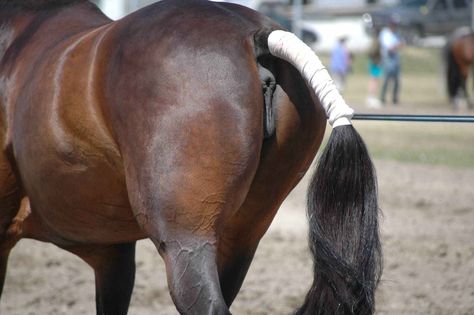
The classic signs of a mare in heat are a raised tail, a wide stance, squatting and squirting urine, and “winking” of the vulva.
Charlie Pinkham MRCVS lists a tail raised to one side, a wide-based stance behind, squatting and squirting urine, clitoral winking and calm, receptive behaviour as the signs to look for. Many of these only appear when another horse, especially a stallion or a gelding, is nearby, because most mares will not show obvious heat without a stallion present.
Physical signs of a mare in heat
- Tail lifted and held to one side, often more than usual
- Standing with hind legs apart, as if to urinate
- Frequent small squirts of urine, sometimes mixed with mucus
- “Winking”: the lips of the vulva open and close, exposing the clitoris
- A clear to slightly yellowish mucus discharge, sometimes dried on the tail or inner thighs
Mare in heat behaviour symptoms
- Calling, whinnying or squealing at other horses
- Hanging around the fence line or stable door nearest to geldings or stallions
- Distraction and reduced focus when ridden
- Sensitivity to touch, especially around the flanks; some mares feel sore when groomed
- Irritability, tail swishing, or, in a minority, unusual affection

Behaviour when she is NOT in heat (dioestrus)
Once she ovulates and moves into dioestrus, the same mare often pins her ears back, squeals, swishes her tail or kicks out if a stallion comes too close. This “refusal” behaviour is a useful clue that heat has finished.
Silent heats and quiet mares
Some mares cycle normally but show almost nothing, known as a “silent heat”. Maiden mares and mares with a foal at foot are also more likely to show weak signs. If you are breeding, a scan is far more reliable than watching behaviour alone.
| Sign | In heat (oestrus) | Out of heat (dioestrus) |
|---|---|---|
| Tail | Raised, held to one side | Clamped or swished in irritation |
| Stance near other horses | Squats, leans towards them | Ears back, may kick |
| Urination | Frequent small squirts | Normal |
| Vulva | Winking, relaxed | Tight, no winking |
| Under saddle | Distracted, may stop or squat | Usually back to normal |
What does mare in heat discharge and urine look like?
Normal mare in heat discharge is clear or cloudy mucus, often mixed with urine; coloured, thick or smelly discharge is not normal.
US equine vet resource Horse Side Vet Guide explains that mares in heat often have a clear or mucous discharge, while white or yellow discharge in a non-pregnant mare can point to infection or inflammation. It also notes that mare urine contains whitish-green crystals that can leave a pale paste on the vulva, which owners often mistake for discharge. When people search “what do mares squirt when in heat”, the answer is usually a small jet of urine mixed with this mucus, not a separate fluid.
| What you see | Likely meaning | What to do |
|---|---|---|
| Clear or slightly cloudy mucus, small amounts, during heat | Normal oestrus discharge | Nothing; keep the area clean |
| Pale chalky paste on the vulva | Dried urine crystals | Normal; wipe gently |
| Thick white, yellow or green discharge | Possible uterine or vaginal infection | Book a vet check |
| Foul smell, matted tail hairs, discharge outside heat | Possible endometritis | Book a vet check |
| Reddish discharge more than about 10 days after foaling, or in a pregnant mare | Abnormal | Call your vet promptly |
Endometritis is a common cause of poor fertility, and many affected mares show no discharge at all, so a clean tail does not rule it out if she is failing to get in foal.
How do you track your mare’s heat cycle?
Mark the first day she shows heat, then expect the next heat to start roughly 21 days later (between 19 and 26).
Professional studs do this by “teasing” mares with a stallion and scoring the reaction. Iron Spring Farm’s broodmare manager describes using a simple 0 to 4 scale, with 0 meaning no signs and 4 meaning obvious heat, and expects a mare that has not been bred to be back in heat roughly 18 to 21 days later. You can use the same idea at home with a diary or phone note, scoring her each day from 0 to 4.
What is foal heat, and how long does it last?
Foal heat is the first heat after foaling, usually starting 5 to 12 days after birth and lasting about 5 days.
Equine reproduction specialist Dr Margo Macpherson describes foal heat (often called the “9-day heat”) as beginning 5 to 12 days after foaling, with ovulation averaging around day 10 in a large Thoroughbred study. A study of 98 Thoroughbred mares found foal heat started about 8 days after foaling on average and lasted about 5 days. After foal heat, the next heat typically follows around 30 days after foaling.
Breeding on the foal heat is debated, because the uterus may not have fully recovered. Many vets only recommend it if the foaling was normal, the placenta passed promptly and a scan shows the uterus is recovering well. Some foals also get loose droppings around their dam’s foal heat, which is common and usually short-lived, though any foal that seems dull or stops feeding needs a vet.
At what age do mares start and stop coming into heat?
Fillies usually have their first heat between about 12 and 18 months, and mares can keep cycling into their twenties.
Vet Dr Lindsay Butzer notes that a mare’s first breeding season typically starts at 12 to 15 months, although some fillies cycle earlier or later. This is one reason colts and fillies are usually separated well before their second spring.
Mares very rarely reach a true menopause, but fertility drops steadily with age. Older mares may start cycling later in spring and have longer gaps between ovulations. Conditions common in older horses, such as Cushing’s disease (PPID), can also cause irregular or absent cycles, so a sudden change in an older mare’s pattern is worth mentioning to your vet.
| Age | What to expect |
|---|---|
| Under 1 year | Heat is uncommon, but possible |
| 12 to 18 months | First heats in most fillies |
| 3 to 15 years | Regular, predictable seasons |
| 15 to 20 years | Cycles continue; fertility declining |
| 20+ years | Often irregular, later-starting cycles; no true menopause |
How do you calm a mare in heat?
The most effective way to calm a mare in heat is to adjust her routine around the cycle rather than fight the behaviour.
Most of the time, a mare’s heat cycle won’t significantly affect daily handling or riding, and small changes go a long way. These practical steps work for most UK yards:
- Know her dates: Use the calculator above so a difficult day doesn’t catch you by surprise, and plan lessons or competitions around her heats where you can.
- Change her turnout company: If she is flirty or argumentative with geldings, turn her out with mares instead, or at least away from the gelding she fixates on. Keep her well away from stallions.
- Groom and tack up gently: Many mares are tender around the flanks and belly in season. Use a soft brush, tighten the girth slowly and avoid sudden movements.
- Ride alone, and keep sessions short: Riding alone rather than in a group reduces distraction. Work on familiar, easy exercises rather than introducing new ones.
- Correct the behaviour only when it matters: EquiSearch recommends focusing on interrupting heat behaviour during work and riding sessions, and letting her be the rest of the time.
- Stay safe around her hindquarters: Avoid approaching from behind, give other riders a heads-up in the arena, and keep a horse’s length between her and others when hacking out.
- Keep the routine steady: Regular turnout, forage and exercise reduce stress, which can make heat behaviour worse.
- Talk to your vet if she seems in pain: Signs such as cramping, mild colic or extreme sensitivity are not just “mareishness” and may need treatment.
Key points
- Plan, don’t fight: knowing when she will be in heat is half the battle.
- Company matters: separating her from geldings or stallions often calms things down quickly.
What treatments can stop a mare coming into heat?
Vets can suppress heat with hormones such as altrenogest, but treatment is usually reserved for mares whose behaviour or pain is genuinely a problem.
Mare in heat behaviour treatment should always start with a vet examination, because many problems blamed on hormones turn out to have other causes (see the next section). Once a hormonal link is likely, the main options are:
| Option | How it works | Things to know |
|---|---|---|
| Altrenogest (Regumate Equine) | Synthetic progestogen given by mouth daily; mimics progesterone to block heat behaviour | A BEVA Congress paper confirms it suppresses oestrous behaviour. It is banned under racing rules and an FEI controlled medication. The UK product information says pregnant women must not handle it, women of childbearing age should avoid contact, and protective gloves must be worn. |
| Pain relief around ovulation | Anti-inflammatories prescribed by your vet | Some owners find low-dose bute around ovulation helps mares that seem sore, but it can’t be used under FEI or Jockey Club rules. Only use on veterinary advice. |
| Other vet-led hormonal methods | Options such as GnRH vaccination or oxytocin protocols to prolong the out-of-heat phase | Availability, licensing and suitability vary; discuss with your vet. |
| Removing the ovaries (ovariectomy) | Surgical; usually a last resort, for example with an ovarian tumour | Not a guaranteed fix: ovariectomised mares can still show sexual behaviour driven by adrenal hormones. |
| Herbal supplements (e.g. chasteberry) | Marketed to “balance” mare behaviour | Very little published research supports chasteberry in horses. Check competition rules before feeding any supplement. |
Remember that heat is a natural process. Irreversible options should only be considered when nothing else works and the welfare of the mare, or the safety of her handlers, genuinely requires it.
When is “mareish” behaviour not actually heat?
Most bad behaviour in mares is not caused by their hormones, so pain and other health problems should be ruled out first.
A large study of 2,914 mares with reported behaviour problems, published in the Equine Veterinary Journal in 2023, found that 86% had no hormone levels suggesting an ovarian tumour. Bucking, bolting, rearing or biting may instead be linked to back, neck or saddle pain, gastric ulcers or dental problems. Bladder, vaginal and urinary conditions can also mimic heat signs, such as squatting and frequent urination.
A simple test: true heat behaviour comes and goes roughly every three weeks in season and fades over winter. If your mare’s “moods” are constant, worsening, or carry on through winter, ask your vet to look beyond her ovaries.
When should you call the vet?
Call your vet if heat signs are extreme, painful, constant or accompanied by abnormal discharge.
Book a vet check if your mare: – Seems to be in heat for much longer than 7 to 10 days outside spring transition, or never seems to come out of heat – Shows stallion-like behaviour such as mounting other horses or aggressive vocalising – Has coloured, thick or foul-smelling discharge – Shows colic signs (pawing, flank watching, rolling) around her heats; some mares do get mild colic around ovulation, but every colic needs a vet’s assessment – Is pregnant and shows signs of heat, as this can occasionally indicate pregnancy loss – Suddenly changes her cycle pattern as an older mare
How we wrote this guide
We based this guide on UK veterinary guidance, peer-reviewed equine reproduction research and advice from equine vets and stud managers, linked throughout. Figures reflect typical mares in the UK breeding season; individual mares vary, and this article does not replace advice from your own vet.
Frequently asked questions
How can I tell if my mare is in heat?
Watch her around other horses, especially geldings or stallions. A mare in heat typically lifts her tail to one side, stands with her hind legs apart, squats and squirts small amounts of urine, and “winks” her vulva. She may also call to other horses and seem distracted when ridden. Some mares show very little, so a vet scan is the only certain way to confirm heat.
How long is a mare in heat for?
Most mares stay in heat for 5 to 7 days, although anywhere from about 2 to 10 days can be normal. Heats tend to be longer early in the season and shorter in midsummer, when strong receptiveness may last just 2 or 3 days. In spring, transitional heats can be erratic and drag on for several weeks before regular cycles settle.
How often does a mare come into heat?
During the breeding season a mare comes into heat about every 21 days, with a normal range of 19 to 26 days. That works out at roughly seven heats a year. In the UK most mares cycle from around March or April to September or October, and around 80% stop cycling altogether over winter, because their cycles are triggered by longer daylight hours.
How long is a mare in standing heat?
“Standing heat” is when a mare will actually stand to be mounted, and it is usually the last 1 to 3 days of her heat, around ovulation. Signs build gradually over the first few days, peak just before she ovulates, then stop quite suddenly. Breeders use teasing and ultrasound scans to time covering or insemination within this window.
How long does a mare stay in foal heat?
Foal heat usually starts 5 to 12 days after foaling, often around day 8 or 9, and lasts about 5 days. Ovulation in foal heat averages around 10 days after birth. The next heat normally follows about 30 days after foaling. Many vets prefer to skip breeding on foal heat unless the foaling was normal and a scan shows the uterus has recovered well.
How do you calm a mare in heat?
Track her cycle so you can plan around it, turn her out away from geldings and stallions, groom and tack up gently, and keep ridden work short, familiar and preferably alone. Correct unwanted behaviour only when you are working her. If she seems sore, crampy or dangerous to handle, ask your vet about pain relief or hormonal treatment rather than relying on supplements.
How do you get a mare out of heat?
You can’t safely end a heat at home, but she will come out of it naturally once she ovulates, usually within a week. If heat behaviour is causing real problems, your vet can prescribe altrenogest (Regumate) to suppress it or discuss other options. Altrenogest must be handled with gloves, and pregnant women should not handle it at all.
What do mares squirt when in heat?
Mares in heat squirt small jets of urine, often mixed with clear or cloudy mucus. This is a normal sign of heat and is usually seen when another horse is nearby. Mare urine can also leave a pale chalky paste on the vulva from natural crystals. Thick, coloured or foul-smelling discharge is not normal and should be checked by a vet.
Can a mare colic when she is in heat?
Yes, some mares show mild colic signs around ovulation, possibly from ovarian discomfort or a large follicle pulling on its ligament. However, colic always needs a vet’s assessment, because it is far more often caused by gut problems. If your mare colics repeatedly around her heats, your vet can scan her ovaries and discuss pain relief or hormonal suppression.
Can I ride my mare when she is in heat?
Yes, most mares can be ridden normally while in heat. Some become distracted, sensitive or reluctant to go forward, so keep sessions short, ride alone if possible and give her more patience than usual. If she becomes unsafe, seems in pain or her performance drops sharply every three weeks, speak to your vet about ruling out pain and managing her cycle.
Can a pregnant mare show signs of heat?
Yes, a small percentage of pregnant mares show some heat signs, although they are unlikely to accept a stallion. Follicles can keep developing in early pregnancy. However, heat in a mare you believe is in foal can also mean the pregnancy has been lost, so it is always worth asking your vet to scan her and confirm everything is on track.
Are mares in heat aggressive?
Some are, but many are not. Heat can make mares irritable, ticklish or squealy, especially around other horses, while some become unusually affectionate. True aggression or stallion-like behaviour is less typical and research suggests most problem behaviour in mares is not caused by hormones. If your mare is aggressive, ask your vet to rule out pain and other health problems first.