

Bringing home a rescue dog is one of the most rewarding decisions you will ever make, but it comes with a financial commitment that many new owners underestimate. The cost of owning a dog in the UK varies widely depending on size, breed, insurance choices, and how much paid care you use, from dog walking to boarding.
Whether you are considering adopting from a shelter or already have a dog at home, understanding the real numbers helps you budget properly and avoid nasty surprises down the line. This guide breaks down annual costs, one-time setup expenses, hidden costs, and practical ways to save, using UK-specific pricing throughout.
We will also flag where costs vary most by breed, size, and region, so you can build a budget that reflects your own situation rather than a generic average.
Quick Answer
| Category | Recommendation |
|---|---|
| Typical small dog owner | Budget roughly £800 to £1,000 a year for food, routine vet care, and prevention alone. |
| Typical large dog owner | Expect basics closer to £1,400 a year before insurance or paid care are added. |
| Budget-conscious owner | Prioritise insurance and parasite prevention first, then cut back on grooming and premium food. |
| Owner using daycare or full-time walking | Factor in an extra £1,800 to £7,200+ a year, since paid care is often the single biggest variable cost. |
What Affects Your Dog’s Cost
- Size and breed: Larger dogs eat more, need bigger doses of medication, and are usually more expensive to insure than smaller breeds.
- Age: Puppies need setup costs and training, while senior dogs tend to need more frequent vet visits and higher insurance premiums.
- Insurance policy type: Lifetime cover costs more upfront than time-limited policies but protects you against ongoing conditions, which matters most for breeds prone to health issues.
- Where you live: Vet clinics, groomers, and boarding services in London and other major cities generally charge more than rural areas.
- How much paid care you use: Dog walking, daycare, and boarding can turn a modest annual budget into a much larger one if you work full time or travel often.
- Rescue versus purchase: Adoption fees often include microchipping, neutering, and vaccinations already, which lowers your first-year setup cost significantly.
Annual Cost Breakdown by Category
The table below shows the main recurring costs UK dog owners face each year, based on WeCovr’s UK dog ownership cost guide and several other UK pet finance sources.
Food
Food is one of the most predictable costs, but it scales with your dog’s size and diet type. A small dog on budget kibble sits at the low end, while a large dog on premium or raw food sits at the high end.
Typical Annual Range: £360 to £1,080+ (varies by size, activity level, and food quality)
Key Cost Drivers:
- Body size and portion needs
- Activity level and metabolism
- Budget kibble versus premium or raw diets
Pet Insurance
Insurance premiums have risen sharply for many owners, particularly for breeds with known health risks and older dogs. According to NimbleFins’ dog insurance cost analysis, the gap between a healthy young crossbreed and a higher-risk breed can be substantial.
Typical Annual Range: £134 to £960+ (varies by breed, age, postcode, and policy type)
Key Cost Drivers:
- Breed-specific health risks
- Age of the dog
- Postcode and policy type (lifetime versus time-limited cover)
Flea, Worming, and Tick Prevention
Regular parasite prevention is one of the cheapest ways to avoid much larger vet bills later. Costs depend on your dog’s weight and whether you buy vet-branded or retail products.
Typical Annual Range: £120 to £300
Routine Vet Care
Annual check-ups and booster vaccinations are a core, non-negotiable cost. City-based practices tend to charge more than rural clinics.
Typical Annual Range: £100 to £250+
Grooming
Grooming costs range from nothing, for short-coated breeds whose owners maintain at home, to several hundred pounds a year for high-maintenance coats. Per NimbleFins’ grooming cost data, London-based grooming tends to sit at the higher end.
Typical Annual Range: £0 to £800+
Toys, Chews, and Enrichment
Puppies and dogs with strong chewing habits go through toys faster, pushing this cost toward the higher end.
Typical Annual Range: £60 to £240+
Dog Walking and Daycare
This is often the single largest variable cost, especially for owners working full time in urban areas who rely on daily walkers or daycare.
Typical Annual Range: £0 to £7,200+
Boarding and Pet Sitting
Boarding costs depend heavily on how often you travel and whether you choose kennels, home boarding, or a pet sitter. See The Good Kennel Guide’s boarding cost breakdown for regional comparisons.
Typical Annual Range: £0 to £1,500+
Comparison Table: Annual Cost Categories
| Expense Category | Low Estimate | Mid Estimate | High Estimate |
|---|---|---|---|
| Food | £360 | £720 | £1,080+ |
| Pet insurance | £134 | £389 | £960+ |
| Flea, worming, tick prevention | £120 | £180 | £300 |
| Routine vet care | £100 | £150 | £250+ |
| Grooming | £0 | £300 | £800+ |
| Toys, chews, enrichment | £60 | £120 | £240+ |
| Poo bags, treats, dental items | £60 | £120 | £180+ |
| Training or classes | £0 | £100 | £400+ |
| Dog walking or daycare | £0 | £1,800 | £7,200+ |
| Boarding or pet sitting | £0 | £350 | £1,500+ |
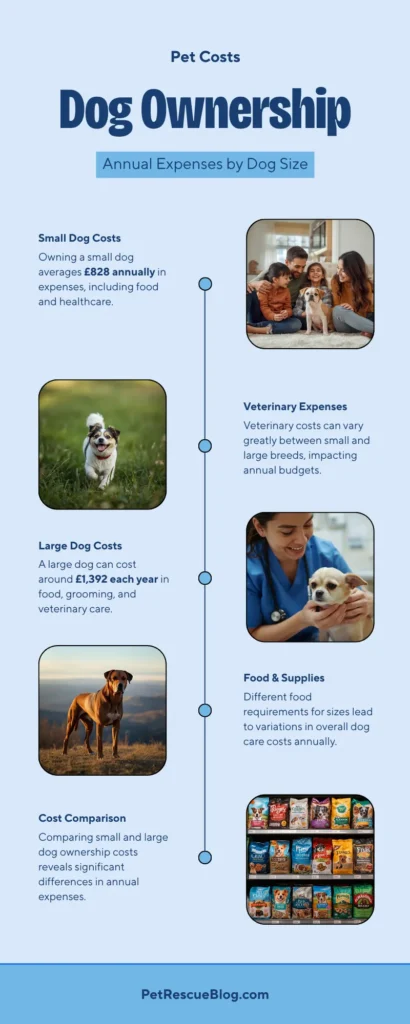
Most owners with routine care land somewhere between £1,000 and £3,000+ a year, though this climbs well beyond that once daycare, boarding, and premium insurance are added. PDSA’s published monthly averages work out to roughly £828 a year for a small dog, £996 for a medium dog, and £1,392 for a large dog, covering the basics before any bigger extras.
One-Time Setup Costs
The first month with a new dog carries costs beyond the ongoing annual budget. According to SavingTool’s UK dog cost breakdown, these one-time items add up quickly if you are starting from scratch.
| Item | Low Estimate | Mid Estimate | High Estimate |
|---|---|---|---|
| Adoption fee or purchase price | £0 | £250 to £1,000 | £1,000 to £3,000+ |
| Initial vaccinations | £70 | £90 | £120+ |
| Microchipping | £10 | £20 | £30 |
| Spay or neuter | £150 | £250 | £400+ |
| Essential equipment | £80 | £180 | £350+ |
| Puppy-proofing and setup | £20 | £50 | £100+ |
A realistic first-month total, excluding purchase price, sits around £330 to £1,000+. Including a purchase or adoption fee, that figure rises to roughly £500 to £3,500+. A rescue dog often costs less to set up because vaccinations, microchipping, and neutering may already be included in the adoption fee, which is one more reason adopting from a shelter can be the more budget-friendly path.
Hidden and Unexpected Costs
- Emergency vet bills: A single emergency visit for surgery, poisoning, or a fracture can run from several hundred to several thousand pounds, according to NimbleFins’ full ownership cost report.
- Behavioural training: Professional help for reactivity or separation anxiety typically costs £50 to £150+ per session, or a few hundred pounds for a short course.
- Pet deposits for renters: Landlord permission, pet rent, or deposit changes can add an ongoing housing cost, particularly in city rentals, and this varies widely by landlord.
- Replaced items: Chewing means repeat spending on bedding, leads, shoes, and furniture, especially with puppies or bored adult dogs.
- End-of-life care: Senior diagnostics, pain management, and cremation can add up to a final bill of a few hundred pounds or more, depending on the treatment path chosen.
Charities recognise how quickly these costs can become unmanageable. Dogs Trust’s Emergency Fund, for example, contributes up to 25 percent of an outstanding bill or £350, whichever is lower, for eligible owners facing an urgent situation. That kind of support exists because uninsured emergencies genuinely do catch owners off guard.
Regional Cost Differences
Costs tend to run higher in London and other major UK cities, where vet clinics, groomers, dog walkers, and kennels all charge more. Rural areas often have cheaper routine services, though travel time to reach a vet or groomer can offset some of that saving.
Insurance pricing is also postcode-sensitive, with wide gaps by breed and age. A young crossbreed can be far cheaper to insure than a French Bulldog or an older Labrador. Boarding rates commonly fall between £20 and £60 a night depending on location and service level. There is no UK-wide licensing fee for ordinary pet ownership, so most of the regional variation you will notice comes from private service pricing rather than government charges.
Money-Saving Tips
- Buy food in larger bags only if your dog will finish it before the expiry date, since bulk buying lowers the per-meal cost.
- Compare insurance policies carefully. A low premium often means weaker cover, so check the excess, claim limits, dental cover, and whether it is lifetime or time-limited.
- Look into charity or reduced-cost vet options if you qualify, such as the PDSA Pet Care scheme, which offers discounted consultations and treatment for eligible owners.
- Handle simple grooming at home for short-coated breeds, since professional grooming is a significant recurring cost for many dogs.
- Stay on schedule with vaccinations and parasite prevention. Prevention is reliably cheaper than treating a problem after it develops.
- Invest in toys, chews, and basic training to reduce destructive behaviour, which cuts down on both replacement costs and stress-related vet visits.
- Do not skimp on insurance, parasite prevention, or an emergency savings buffer. These are consistently the most financially painful things to cut corners on.
A useful rule of thumb: only skip insurance if you can genuinely set aside enough cash to cover a major vet bill without straining your budget. For most owners, a solid policy is safer than hoping an emergency never happens.
Cost Comparison
| Comparison | Lower-Cost End | Higher-Cost End | Why |
|---|---|---|---|
| Small vs large dogs | Around £828 a year for basics | Can exceed £1,392 a year before extras | Food, medication doses, and insurance generally rise with size |
| Puppy vs adult vs senior | Adult dogs are usually cheapest to maintain | Puppies and seniors cost more | Puppies need setup and training, seniors need more vet care and higher insurance |
| Rescue vs purchase | Rescue is often much cheaper upfront | Buying from a breeder can be significantly more expensive | Rescue fees often include microchipping, neutering, and vaccinations |
A small rescue adult dog can cost far less in year one than a large pedigree puppy, mainly because the puppy needs setup, training, more replacements, and typically higher insurance. At the other end of the spectrum, a senior dog of a breed with known health issues can become the most expensive to insure and treat over time. If you are weighing your options, our guide on adopting an adult dog versus a puppy covers this trade-off in more depth.
FAQs
How much does it cost to own a dog per month in the UK?
Basic monthly costs typically range from about £69 for a small dog to £116 for a large dog, covering food, routine prevention, and standard vet care. This does not include insurance, grooming, or paid daycare, which can add substantially more.
Is pet insurance worth it for a rescue dog?
For most owners, yes. Rescue dogs can arrive with unknown health histories, and a single emergency vet bill can easily exceed a year’s worth of premiums. Comparing lifetime versus time-limited policies before you commit is worth the extra time.
What is the biggest hidden cost of dog ownership?
Emergency vet care is usually the largest unplanned expense, with serious incidents such as surgery or poisoning potentially costing several thousand pounds. Paid daycare or dog walking can also become a major hidden cost for owners who did not budget for it upfront.
Is it cheaper to adopt or buy a dog in the UK?
Adoption is typically far cheaper upfront, since shelter fees often include microchipping, vaccinations, and neutering. Buying from a breeder usually costs more, and pedigree or high-demand breeds can push the purchase price into the thousands.
Do costs differ much by region in the UK?
Yes. Vet care, grooming, and boarding tend to cost more in London and other major cities, while rural areas often have cheaper routine services. Insurance premiums also vary by postcode, in addition to breed and age.
Related Articles
Important Dog Adoption Checklist
7 Quick Tips for TOILET TRAINING a Puppy or Dog
What is Pet Insurance in the UK and Why It Exists?
Conclusion
Owning a dog in the UK is a meaningful financial commitment, but it does not have to be an unpredictable one. Once you understand where your money goes, from food and insurance to the paid care many working owners rely on, you can build a realistic budget rather than being caught off guard by a single expense.
The numbers above give you a solid starting point, but your own costs will shift based on your dog’s size, age, breed, and where you live. Building in a buffer for emergencies and staying consistent with preventative care will save you money in the long run.
Whether you are considering fostering or have already found your forever companion, understanding these costs upfront makes the transition smoother for both of you. If you have not yet brought a dog home, consider adopting from your local shelter, where a rescue dog’s adoption fee often includes some of the setup costs covered in this guide.
Disclaimer: This article provides general information only and is not financial or veterinary advice. Costs vary by breed, location, and individual circumstances. Consult a licensed veterinarian for health-related decisions and an FCA-regulated advisor or insurer for pet insurance guidance specific to your situation.