

Plenty of the gentlest family dogs we hear about started life in a shelter, and many of them went on to share a home with crawling babies and busy toddlers. Choosing well matters, because the right dog for a family with small children is less about looks and more about patience, size and how much time you really have.
This guide covers the best dog breeds for families with small children and toddlers, wherever you live. We compare ten breeds across large, medium and small sizes, explain the honest drawbacks of each, and show how to keep little ones and dogs safe together.
Key Takeaways
- Labrador Retrievers, Golden Retrievers, Collies and Newfoundlands are the classic large family breeds, but they need daily exercise and can knock toddlers over.
- Beagles and Bulldogs are medium-sized, sociable choices, although Beagles are vocal and Bulldogs struggle in hot weather.
- Cavalier King Charles Spaniels, Bichon Frises, Miniature Poodles and Havanese are good small-breed options for gentle households.
- Very tiny toy breeds can be injured by a toddler who drops, squeezes or falls on them, so sturdier small breeds are usually a safer match.
- Breed is only a starting point: the individual dog’s temperament, training and history matter more.
- No dog is safe to leave alone with a baby or toddler, and that applies to every breed and every family pet.
- An adult rescue dog that has been assessed with children can be a more predictable choice than a puppy.
Quick Answer
The best dog breeds for families with small children are the Labrador Retriever, Golden Retriever, Collie, Newfoundland, Beagle, Bulldog, Cavalier King Charles Spaniel, Bichon Frise, Poodle and Havanese. Large retrievers suit active families with a garden, while Cavaliers, Bichons and Miniature Poodles suit smaller homes. Whatever you choose, supervise every interaction between a dog and a toddler.
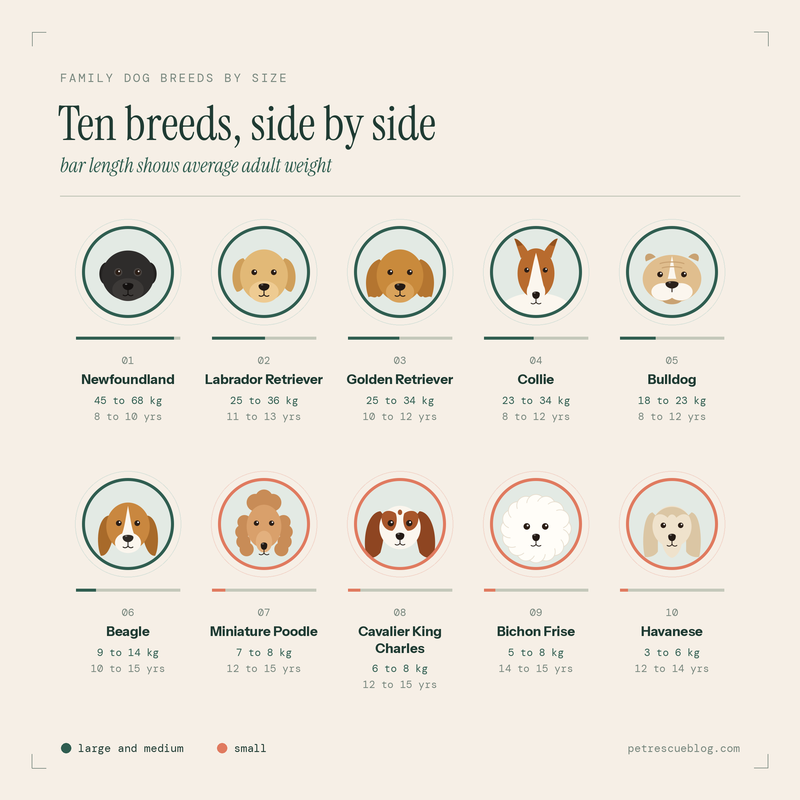
Family Dog Breeds at a Glance
| Breed | Size | Height | Weight | Typical lifespan | Main thing to plan for |
|---|---|---|---|---|---|
| Labrador Retriever | Large | 55 to 62 cm (21.5 to 24.5 in) | 25 to 36 kg (55 to 80 lb) | 11 to 13 years | Lots of exercise; strong appetite |
| Golden Retriever | Large | 55 to 61 cm (21.5 to 24 in) | 25 to 34 kg (55 to 75 lb) | 10 to 12 years | Heavy shedding; higher cancer risk |
| Collie | Large | 56 to 66 cm (22 to 26 in) | 23 to 34 kg (50 to 75 lb) | 8 to 12 years | Herding instinct; drug sensitivity test |
| Newfoundland | Giant | 66 to 71 cm (26 to 28 in) | 45 to 68 kg (100 to 150 lb) | 8 to 10 years | Size, drool and poor heat tolerance |
| Beagle | Medium | 33 to 38 cm (13 to 15 in) | 9 to 14 kg (20 to 30 lb) | 10 to 15 years | Barking and scent-led wandering |
| Bulldog | Medium | 30 to 38 cm (12 to 15 in) | 18 to 23 kg (40 to 50 lb) | 8 to 12 years | Breathing problems; overheats easily |
| Cavalier King Charles Spaniel | Small | 30 to 33 cm (12 to 13 in) | 6 to 8 kg (13 to 18 lb) | 12 to 15 years | Inherited heart disease |
| Bichon Frise | Small | 24 to 29 cm (9.5 to 11.5 in) | 5 to 8 kg (12 to 18 lb) | 14 to 15 years | Daily brushing and regular grooming |
| Miniature Poodle | Small | 25 to 38 cm (10 to 15 in) | 7 to 8 kg (15 to 17 lb) | 12 to 15 years | Clipping every 6 to 12 weeks |
| Havanese | Small | 23 to 30 cm (9 to 12 in) | 3 to 6 kg (7 to 13 lb) | 12 to 14 years | Small frame needs gentle handling |
Sizes and lifespans are taken from the breed profiles published by VCA Animal Hospitals. Individual dogs vary.
What Makes a Dog Breed Good With Small Children?
A good family dog for young children is patient, tolerant of noise and handling, sturdy enough to cope with clumsy play, and calm enough not to bowl a toddler over. Size alone is not the answer, because small dogs can be fragile and large dogs can be clumsy.
- Temperament: look for breeds known for a gentle, sociable nature rather than strong guarding or chasing instincts.
- Sturdiness: a dog that can shrug off an accidental bump is safer for everyone than a very delicate one.
- Energy level: match the dog’s exercise needs to the time your family really has on a busy weekday.
- Trainability: dogs that learn quickly with reward-based methods are easier to teach calm habits around children. Our dog training guide covers the basics.
- Grooming and shedding: long or curly coats add daily work to an already full household.
- Climate: flat-faced and heavy-coated breeds cope badly with heat, which matters if you live somewhere warm.
How We Chose These Breeds
We shortlisted breeds that veterinary breed profiles describe as good or excellent with children, then weighed each one’s size, exercise needs, grooming and known health risks. We used published veterinary sources and peer-reviewed research rather than hands-on testing, and we list the drawbacks of every breed so you can judge the fit for your own home.
We removed breeds better suited to experienced owners, such as strong guarding breeds, and we included small breeds because many families with toddlers live in apartments, flats or homes without a garden.
Which Large Dog Breeds Are Best for Families With Young Children?
The Labrador Retriever, Golden Retriever, Collie and Newfoundland are the large breeds most often recommended for young families. They are patient and people-focused, but their size means toddlers need close supervision during play.
1. Labrador Retriever
Labradors are friendly, outgoing and eager to please, which is why they remain one of the most popular family dogs around the world. VCA Animal Hospitals describes them as typically excellent with children.
Best for: active families with outdoor space.
- Pros: gentle, tolerant and quick to learn.
- Pros: usually gets on well with other pets when socialised.
- Cons: needs significant daily exercise, or boredom can turn into chewing.
- Cons: prone to weight gain. University of Cambridge research found that about a quarter of Labradors carry a POMC gene mutation that makes them hungrier and burn fewer calories, so dropped toddler snacks are a real issue.

2. Golden Retriever
Golden Retrievers share the Labrador’s kind, patient nature and tend to adore children. VCA also describes them as typically excellent with children and notes they need plenty of walking, retrieving and training games.
Best for: families who want a soft, affectionate companion.
- Pros: calm with children once out of adolescence.
- Pros: highly trainable and keen to work with people.
- Cons: moderate to high shedding, with heavy seasonal moults.
- Cons: a higher cancer risk than many other breeds, so regular vet checks matter.

3. Collie
Rough and Smooth Collies are intelligent, sensitive dogs with a long history as family companions. VCA rates the breed five out of five for being good with children and describes it as playful and very good with them.
Best for: families who enjoy training and daily play.
- Pros: devoted, gentle and easy to train.
- Pros: the smooth coat variety needs only a quick weekly brush.
- Cons: as a herding breed, a Collie may try to round up running children, which needs early training.
- Cons: many Collies carry the MDR1 mutation, which researchers at Washington State University linked to dangerous reactions to some common veterinary drugs. Ask your vet about a simple genetic test.

4. Newfoundland
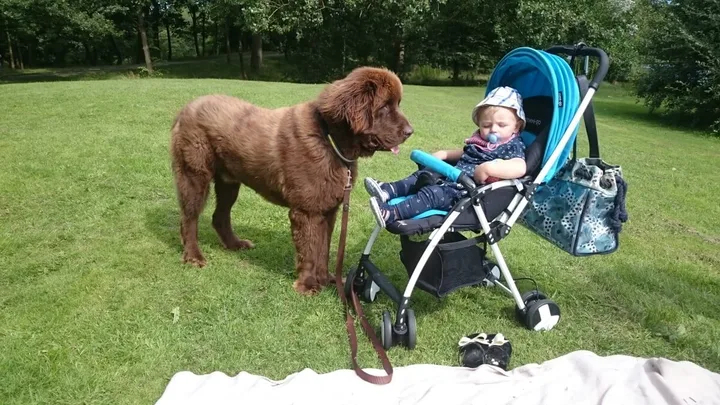
The Newfoundland is a true gentle giant, famous for its sweet, watchful temperament around children. VCA calls the breed patient and good with children, while reminding owners that large dogs and children should always be supervised.
Best for: calm families in cooler climates with plenty of space.
- Pros: exceptionally patient and placid indoors.
- Pros: needs only moderate daily walks.
- Cons: can weigh up to 68 kg (150 lb), so an accidental lean can topple a toddler.
- Cons: drools, sheds heavily and copes poorly in hot weather.
Which Medium-Sized Dog Breeds Suit Families With Toddlers?
Beagles and Bulldogs are compact enough for smaller homes but sturdy enough to handle lively children. Both are sociable, although each comes with trade-offs you should plan for.
5. Beagle
Beagles are cheerful, curious and naturally sociable because they were bred to work in packs. VCA lists them as generally good with children.
Best for: energetic families who enjoy long walks.
- Pros: playful, robust and a manageable size.
- Pros: typical lifespan of 10 to 15 years.
- Cons: strongly scent-driven, so recall training is hard and secure fencing is essential.
- Cons: can howl and bark, especially when bored, and may be stubborn to train.

6. Bulldog
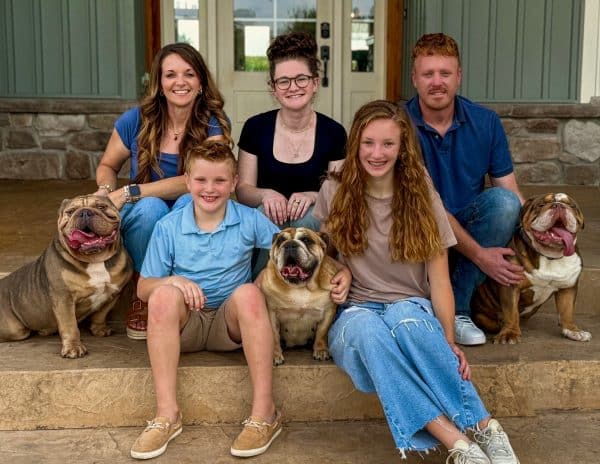
Bulldogs are calm, affectionate and tolerant, and they need less exercise than most family breeds. VCA describes them as playful and good with children.
Best for: relaxed families in apartments or flats in cooler climates.
- Pros: laid-back and happy with short walks.
- Pros: solid build copes well with clumsy little hands.
- Cons: extremely prone to overheating because of its flat face, which rules it out for many hot countries.
- Cons: a Royal Veterinary College VetCompass study found English Bulldogs had about twice the odds of being diagnosed with at least one disorder compared with other dogs, including breathing problems, skin fold infections and cherry eye. Expect higher vet bills.
What Are the Best Small Dog Breeds for Families With Kids?
The best small dog breeds for families with kids are the Cavalier King Charles Spaniel, Bichon Frise, Miniature Poodle and Havanese, because they are gentle, sociable and sturdier than the tiniest toy breeds. Small dogs suit homes with limited space, but toddlers must learn to handle them carefully.

7. Cavalier King Charles Spaniel
Cavaliers are sweet-natured lap dogs that love company and rarely tire of cuddles. VCA describes them as generally excellent with children and in need of only moderate daily activity.
Best for: gentle families who want a cuddly companion.
- Pros: affectionate, adaptable and easy-going.
- Pros: happy in smaller homes.
- Cons: mitral valve heart disease is a significant concern and often develops earlier than in other dogs.
- Cons: the breed is also at risk of syringomyelia, a painful neurological condition, so choose health-screened parents or a rescue with a known vet history.
8. Bichon Frise
Bichons are cheerful, playful little dogs that thrive on family life. VCA lists them as generally good with children, with a low-shedding coat.
Best for: families who prefer a low-shedding small dog.
- Pros: sheds very little hair around the home.
- Pros: long typical lifespan of 14 to 15 years.
- Cons: the coat needs daily brushing and regular professional grooming.
- Cons: prone to skin allergies, dental disease and bladder stones.
9. Poodle (Miniature or Standard)
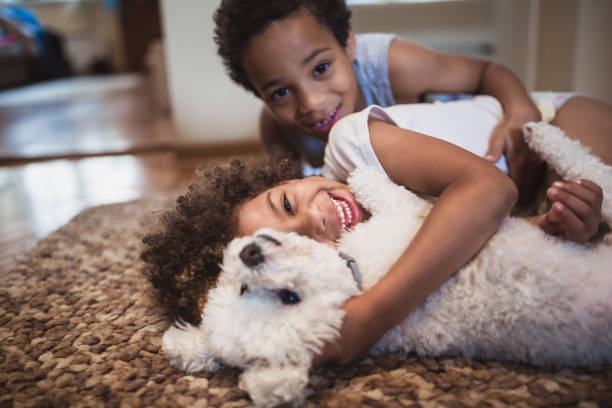
Poodles are clever, affectionate and among the easiest breeds to train. VCA rates them excellent with kids, noting they do best with gentle, respectful children. Miniatures suit smaller homes, while Standards suit families who want a larger, sturdier dog.
Best for: families who want a smart, low-shedding dog in a choice of sizes.
- Pros: sheds only a little and learns new routines fast.
- Pros: available in three sizes to suit different homes.
- Cons: needs clipping every six to twelve weeks.
- Cons: avoid the Toy size with toddlers, as it weighs only 3 to 4 kg (6 to 9 lb).
10. Havanese
The Havanese is a bright, people-loving companion that enjoys being at the centre of family life. VCA rates the breed five out of five for being good with children and describes it as playful and gentle.
Best for: families with slightly older or very gentle children.
- Pros: sociable, cheerful and below average for shedding.
- Pros: adapts well to apartment living.
- Cons: brushing and combing two to four times a week is needed to prevent mats.
- Cons: at 3 to 6 kg (7 to 13 lb), it is easily hurt if a toddler picks it up or falls on it.

Should You Get a Puppy or an Adult Rescue Dog With Toddlers?
For many families with toddlers, a calm adult dog that has already lived happily with children is a safer bet than a puppy. Puppies nip, jump and need constant training, which is a lot to manage alongside a young child.
A good rescue organisation will tell you how a dog behaves with children, other pets and visitors before you commit. Mixed-breed dogs can make wonderful family pets too, and shelter staff can describe each dog’s real temperament rather than a breed stereotype. Our guide to adopting your first rescue dog walks you through the process.
If you choose a puppy, buy only from a breeder who health-tests and raises puppies around everyday family noise. Our article on ethical breeding practices explains what to look for.
Which Dogs Might Not Suit a Home With Toddlers?
Very tiny toy breeds, high-drive working dogs and strong guarding breeds are usually harder to manage with toddlers. That does not make them bad dogs, but they tend to suit experienced owners or families with older children.
- Tiny toy breeds: the smallest toy dogs can be seriously injured by a fall or a hug that is too tight.
- High-energy working and herding breeds: without hours of exercise and training, they may become frustrated, mouthy or try to herd children.
- Strong guarding breeds: protective instincts can make visiting children and busy households stressful for the dog.
- Dogs with an unknown history: any dog, of any breed, that has not been assessed around children needs extra caution.
As Penn State Health Children’s Hospital points out, no one can predict whether a dog will bite from its size and breed, so always focus on the individual dog’s behaviour.
How Do You Keep Toddlers and Dogs Safe Together?
Supervise every interaction, give the dog a child-free retreat, and teach your toddler gentle rules from the start.

According to the World Health Organization, children are the largest group of people bitten by dogs, and they face a greater risk of head and neck injuries than adults.
- Never leave them alone together. The American Veterinary Medical Association advises never leaving a baby or small child alone with a dog, however well behaved either one is.
- Create a safe space. Blue Cross suggests a baby gate or indoor kennel so your dog can rest away from little hands.
- Keep food and toys separate. Stop toddlers carrying snacks or grabbing the dog’s toys, and let the dog eat in peace.
- Watch for stress signals. Lip licking, yawning, turning away or freezing mean the dog needs a break. If your dog is struggling, our tips to calm a reactive dog can help.
- Teach simple rules. No hugging, no climbing on the dog, and no disturbing a dog that is sleeping or eating.
- Train with rewards. Calm behaviour around children can be taught with reward-based methods such as clicker training.
The AVMA also suggests that families consider waiting until children are older than four before adopting a new dog. If you already have a toddler, plan your introductions carefully and keep sessions short and positive.
Does Where You Live Change Which Breed Is Best?
Yes: climate, housing and local laws can make a good breed on paper a poor fit in practice. Check these three points before you choose.
- Climate: flat-faced breeds like Bulldogs and heavy-coated giants like Newfoundlands struggle in heat. Families in hot regions often do better with Poodles, Beagles or Labradors, provided walks avoid the hottest hours.
- Housing: in an apartment or flat, a Cavalier, Bichon, Miniature Poodle or Havanese is usually easier than a large retriever. Rental agreements and building rules may also limit size or number of pets.
- Local rules: dog licensing, microchipping, lead laws and breed restrictions differ between countries and even between cities. Check your local council, municipality or national government website before adopting.
- Breed information: your national kennel club, such as the American Kennel Club in the US or the Royal Kennel Club in the UK, publishes breed standards and lists of breed rescues.
FAQs
What is the best dog breed for a family with a toddler?
The Labrador Retriever and Golden Retriever are the most widely recommended breeds for families with toddlers because they are patient, tolerant and easy to train. For smaller homes, a Cavalier King Charles Spaniel or Miniature Poodle is a good alternative. Whatever the breed, choose an individual dog with a calm temperament and supervise every interaction.
Are small dogs better for families with small children?
Not always. Small dogs are easier to manage in limited space, but very tiny toy breeds can be injured by toddlers and may snap when hurt or frightened. Sturdier small breeds such as the Bichon Frise, Miniature Poodle and Cavalier King Charles Spaniel are usually safer choices than the smallest toy breeds.
What is the best puppy breed for toddlers?
Labrador, Golden Retriever and Poodle puppies are popular with young families because they grow into tolerant, trainable adults. However, every puppy nips, jumps and needs constant training. Many families with toddlers find a calm adult dog that has already lived with children easier to manage than a puppy.
At what age can a child be left alone with a dog?
Babies and toddlers should never be left alone with any dog, including the family pet. Veterinary bodies such as the American Veterinary Medical Association advise supervising young children around dogs at all times. Older children can take on more responsibility gradually, once they understand dog body language and the dog is relaxed with them.
Which dog breeds are calm and low-maintenance for families?
The Cavalier King Charles Spaniel and Bulldog are among the calmest family breeds and need only moderate exercise. Bulldogs have short coats but significant health needs, while Cavaliers need regular brushing and heart checks. No breed is truly maintenance-free, so budget time for training, grooming and vet care.
Are mixed-breed rescue dogs good with children?
Many mixed-breed rescue dogs are excellent with children. A reputable rescue will assess each dog’s temperament around children and other pets, which tells you more than breed alone. Ask the rescue about the dog’s history and arrange several supervised meetings with your children before adopting.
Related Articles
- The Comprehensive Guide to Adopting Your First Rescue Dog
- Dog Training: A Comprehensive Guide
- The Importance of Ethical Breeding Practices for Dogs
- 7 Ways to Calm Your Reactive Dog
- Corgi Mini Aussie Mix Explained: Size, Personality and Lifestyle
Conclusion
The best dog breeds for families with small children combine patience, sturdiness and a manageable energy level. Labradors and Golden Retrievers remain the top all-round choices, while Cavaliers, Bichons and Miniature Poodles suit smaller homes and warmer climates better than Bulldogs or Newfoundlands.
Above all, choose the individual dog rather than the breed label, and supervise every moment your toddler and dog share. If you are ready to welcome a family dog, consider an adult rescue that has already met children. Start with our guide to adopting your first rescue dog and contact a local shelter or breed rescue near you.