



The Irish doodle is a hybrid dog created by crossing an Irish Setter with a Poodle, combining athletic energy with intelligence and sociability. This mix has gained popularity among families and active individuals seeking a friendly companion that adapts well to structured routines, regular interaction and modern household lifestyles.
Although not a formally recognized breed, the irish doodle is valued for its balanced personality and expressive nature. Appearance and behavior may vary slightly, but most individuals share common traits such as enthusiasm, attentiveness and a strong preference for human companionship rather than independent or solitary behavior patterns.
Breed Background and Development
The Irish doodle was developed to blend the elegance and enthusiasm of the Irish Setter with the trainability and adaptability of the Poodle. This combination results in a dog that is both energetic and responsive, making it appealing to owners who enjoy interaction, outdoor activity and consistent engagement.
Because it is a mixed breed, the Irish doodle does not follow a rigid standard. Coat texture, size and energy level can vary depending on genetics. However, responsible breeding typically aims for a well balanced dog suited to family life rather than extreme physical or behavioral traits.
Irish Doodle Temperament and Personality
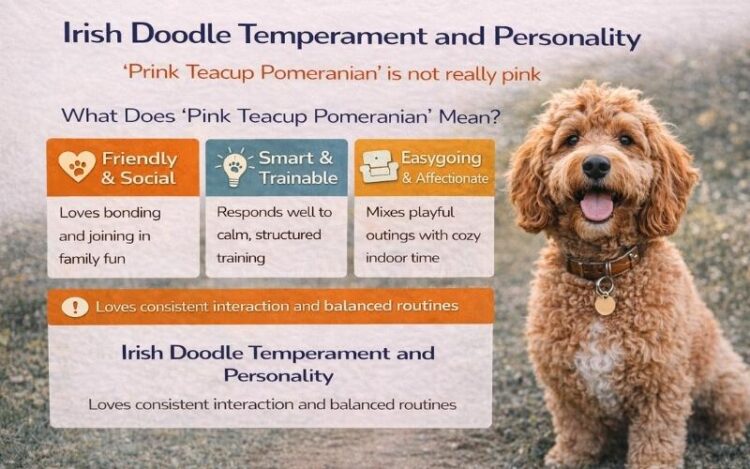
The Irish doodle temperament is commonly described as friendly, outgoing and emotionally intuitive. These dogs tend to form strong bonds with their owners and enjoy being involved in daily activities. Their social nature makes them happiest in homes where companionship and interaction are consistent.
They are alert without being overly reactive and often respond well to calm leadership. When given structure and mental stimulation, Irish doodles usually display balanced behavior, combining playful energy outdoors with relaxed, affectionate behavior indoors during quieter moments.
How Big Do Irish Doodles Get?
Size is an important consideration for anyone interested in an Irish doodle, as it affects living space, exercise routines and long term care. Most Irish doodles grow into medium to large dogs with athletic builds, making them suitable for active households that can support regular movement and engagement without extreme physical demands.
Adult size is influenced by the Poodle parent, which may be standard or miniature. Because of this variation, understanding typical size ranges helps owners plan feeding routines, housing arrangements and daily activity levels more realistically. The table below outlines general size expectations commonly seen in fully grown irish doodles.
Irish Doodle Size Overview
| Feature | Typical Range |
| Adult Height | 22 to 27 inches |
| Adult Weight | 45 to 70 pounds |
| Body Type | Athletic and balanced |
| Growth Completion | 12 to 18 months |
| Energy Level | Moderate to active |
While these figures provide helpful guidance, individual irish doodles may fall slightly above or below these ranges. Their athletic frame supports endurance and flexibility rather than bulk, making them well suited for walking, play and family activities. Proper exercise and routine help maintain balanced growth and long term comfort.
Irish Doodle Puppies and Early Development
Irish doodle puppies are energetic, curious and highly social during their early development stages. This period is critical for building confidence, adaptability and comfort with everyday environments. Consistent exposure to household sounds, people and routines helps puppies develop balanced behavior while maintaining their naturally playful and affectionate temperament.
Establishing structure early supports emotional stability. Predictable schedules for feeding, play and rest help Irish doodle puppies understand expectations. When routines are clear and gentle guidance is used, puppies typically mature into attentive, cooperative adults who adjust easily to changes in their surroundings.
Training Style and Learning Behavior

Irish doodles are intelligent and responsive learners, making training more about communication than repetition. They respond best to calm leadership, positive reinforcement and short, engaging sessions that maintain focus. Training that feels interactive rather than strict often produces faster progress and stronger trust between dog and owner.
Consistency plays a major role in long term success. When expectations remain clear and commands are reinforced regularly, Irish doodles tend to develop reliable habits. Early training encourages confidence and helps prevent confusion, especially in busy households where multiple people interact with the dog daily.
Daily Activity and Lifestyle Needs
The Irish doodle thrives in homes that offer regular physical movement combined with mental engagement. Daily walks, play sessions and interactive activities help release energy while supporting emotional balance. Although active, they do not require extreme exercise when mental stimulation is included.
Lifestyle compatibility matters greatly. Irish doodles do best with owners who enjoy involvement and routine rather than minimal interaction. Balanced daily activity helps maintain calm indoor behavior while preserving the breed’s natural enthusiasm for outdoor play and social experiences.
Living Environment and Home Compatibility
The Irish doodle adapts well to different living environments when its physical and emotional needs are met consistently. While they can live in apartments, access to outdoor activity and daily engagement is important. These dogs thrive in homes where they are included in routines rather than treated as occasional companions.
They do best in households that provide structure and predictability. Frequent isolation or irregular schedules can lead to restlessness. Homes with active owners, family interaction and time for daily involvement often see the most balanced and relaxed behavior from irish doodles.
Grooming and Daily Care Needs
Grooming is an essential part of caring for an irish doodle, as their coat can vary from wavy to curly. Regular brushing helps prevent tangles and keeps the coat comfortable. Grooming sessions also allow owners to maintain familiarity and ensure the dog remains relaxed with handling.
Daily care extends beyond grooming. Consistent feeding schedules, regular activity and calm interaction help maintain emotional balance. When routines are predictable, irish doodles typically show calmer indoor behavior and greater responsiveness to guidance throughout the day.
Before understanding care responsibilities in detail, it helps to view them as part of a routine rather than individual tasks. The table below summarizes common daily care expectations, giving owners a clear picture of what consistent maintenance typically involves for an irish doodle.
Irish Doodle Care Overview
| Care Area | What to Expect |
| Grooming | Regular brushing |
| Activity | Daily walks and play |
| Training | Positive, consistent |
| Social Needs | High interaction |
| Living Style | Family-oriented |
Maintaining these care routines supports both physical comfort and emotional stability. When grooming, activity and interaction are balanced, Irish doodles often display confident behavior and strong attachment to their household. Consistency reduces stress and helps the dog settle into predictable patterns.
Irish Doodle Puppies for Sale and Early Planning
Searches for Irish doodle puppies for sale are often driven by excitement rather than preparation. However, responsible ownership begins with understanding daily routines, space needs and time commitment before bringing a puppy home. Puppies require structure, patience and consistent interaction to develop balanced behavior.
Early planning helps prevent mismatches between lifestyle and expectations. Considering work schedules, activity levels and grooming time ensures the puppy transitions smoothly. Homes that prepare in advance often experience fewer challenges during early development stages and stronger long term bonding.
Irish Doodle for Sale and Responsible Ownership
When people search for Irish doodle for sale, it is important to focus on readiness rather than availability. Ownership involves long term commitment, daily care routines and emotional involvement beyond the puppy phase. Understanding these responsibilities helps ensure the dog remains a positive addition to the household.
A well matched home environment supports stability and confidence. Owners who value routine, interaction and consistency often experience more rewarding companionship. Thoughtful preparation leads to better outcomes for both the Irish doodle and its owner.
Irish Doodle vs Goldendoodle Comparison

Many potential owners compare Irish Doodles with Goldendoodles due to their shared Poodle ancestry. While both are intelligent and family oriented, the Irish doodle tends to be more athletic and expressive due to Irish Setter traits, while Goldendoodles are often calmer and more uniform.
Understanding these differences helps align expectations. Households that enjoy active engagement may prefer an Irish doodle, while those seeking a more relaxed temperament may lean toward a Goldendoodle. Lifestyle compatibility should guide the decision.
Do Irish Doodles Bark a Lot?
Irish doodles are not typically excessive barkers, but vocal behavior varies by environment and stimulation. They may bark to alert, express excitement or seek attention rather than out of aggression. Consistent routines and mental engagement help keep barking manageable.
Clear boundaries and calm reinforcement encourage appropriate communication. When boredom is reduced and interaction needs are met, Irish doodles generally remain balanced and responsive rather than noisy or reactive.
Long Term Commitment and Lifestyle Fit
Owning an Irish doodle is a long term responsibility that extends beyond basic care. These dogs form strong emotional bonds and thrive on regular interaction. Stability, predictable routines and daily involvement play major roles in long-term behavioral balance and emotional well-being.
Owners who enjoy engagement and consistency often find this breed deeply rewarding. In return for attention and structure, Irish doodles typically offer loyalty, affection and an enthusiastic presence within the household.
Conclusion
The irish doodle is a friendly, intelligent and adaptable companion suited for active households that value connection and routine. Understanding temperament, size, care needs and long-term responsibility allows potential owners to make informed decisions rather than appearance-based choices.
From raising Irish doodle puppies to managing adult routines, preparation matters. With consistent care, engagement and realistic expectations, the irish doodle can become a loyal, expressive and deeply rewarding part of everyday family life.
Frequently Asked Questions (FAQs)
Are Irish Doodles good dogs?
Irish doodles are generally good dogs for families and active individuals. They are affectionate, social and intelligent, thriving in environments where they receive consistent interaction, mental stimulation and structured routines that support balanced behavior and emotional stability.
How big do Irish Doodles get?
Irish doodles typically grow into medium to large dogs, weighing between 45 and 70 pounds. Their size depends on the Poodle parent and genetics, resulting in an athletic build that supports active lifestyles without excessive bulk or heaviness.
What is the difference between a Goldendoodle and an Irish Doodle?
The primary difference lies in parent breeds. Irish doodles inherit traits from Irish Setters, making them more energetic and expressive, while Goldendoodles are often calmer. Lifestyle preference and activity level usually determine which mix is a better fit.
How much do Irish Doodles cost?
The cost of an Irish doodle varies based on availability and demand. Beyond initial cost, owners should consider grooming, training and daily care expenses when evaluating long term responsibility and overall ownership investment.
Do Irish Doodles bark a lot?
Irish doodles are not known for excessive barking. They may bark to alert or communicate excitement, but consistent routines and mental engagement usually keep vocal behavior situational rather than frequent or disruptive.
Are Irish Doodles easy to train?
Irish doodles are intelligent and eager to learn. They respond best to positive reinforcement and consistent guidance. Short, engaging training sessions help build trust, improve cooperation and support long term behavioral reliability.