

There is no single official RSPCA checklist that every applicant must tick off. The charity is clear that every adoption is assessed individually against the needs of that specific animal, rather than against one fixed set of rules. That said, the same requirements come up again and again across the RSPCA’s own process pages and its branch pages, so it is possible to lay out what is actually required in practice.
This guide covers the recurring requirements, the step by step process, RSPCA adoption fees, and the legal side, using only what the RSPCA and its branches publish themselves. If you’re searching for RSPCA adoption near me, the same principles apply everywhere, though your nearest RSPCA adoption centre will confirm its own fees, availability, and timescales.
What does the RSPCA actually require before you can adopt?
The RSPCA’s national guidance focuses on whether an applicant can meet the needs of a particular animal, not on a rigid national checklist. Rather than fixed rules, the charity says its teams look at whether an applicant can meet the specific needs of the animal they’ve applied for, and will suggest a different match if the pet isn’t right for the home. Across the RSPCA’s own pages and multiple branch pages, though, these are the requirements that come up consistently:
- A completed application specific to the animal you’re interested in, not a generic form
- A phone conversation with an RSPCA team member before any meeting is arranged
- One or more in-person meetings with the animal, ideally with everyone in the household attending
- A home visit, sometimes done virtually by video call, particularly for dogs and some cats
- Written permission from your landlord if you rent, confirming pets are allowed
- Confirmation you can meet your legal duties under the Animal Welfare Act 2006
- Evidence you can afford ongoing costs such as food, insurance, and veterinary care, not just the adoption fee
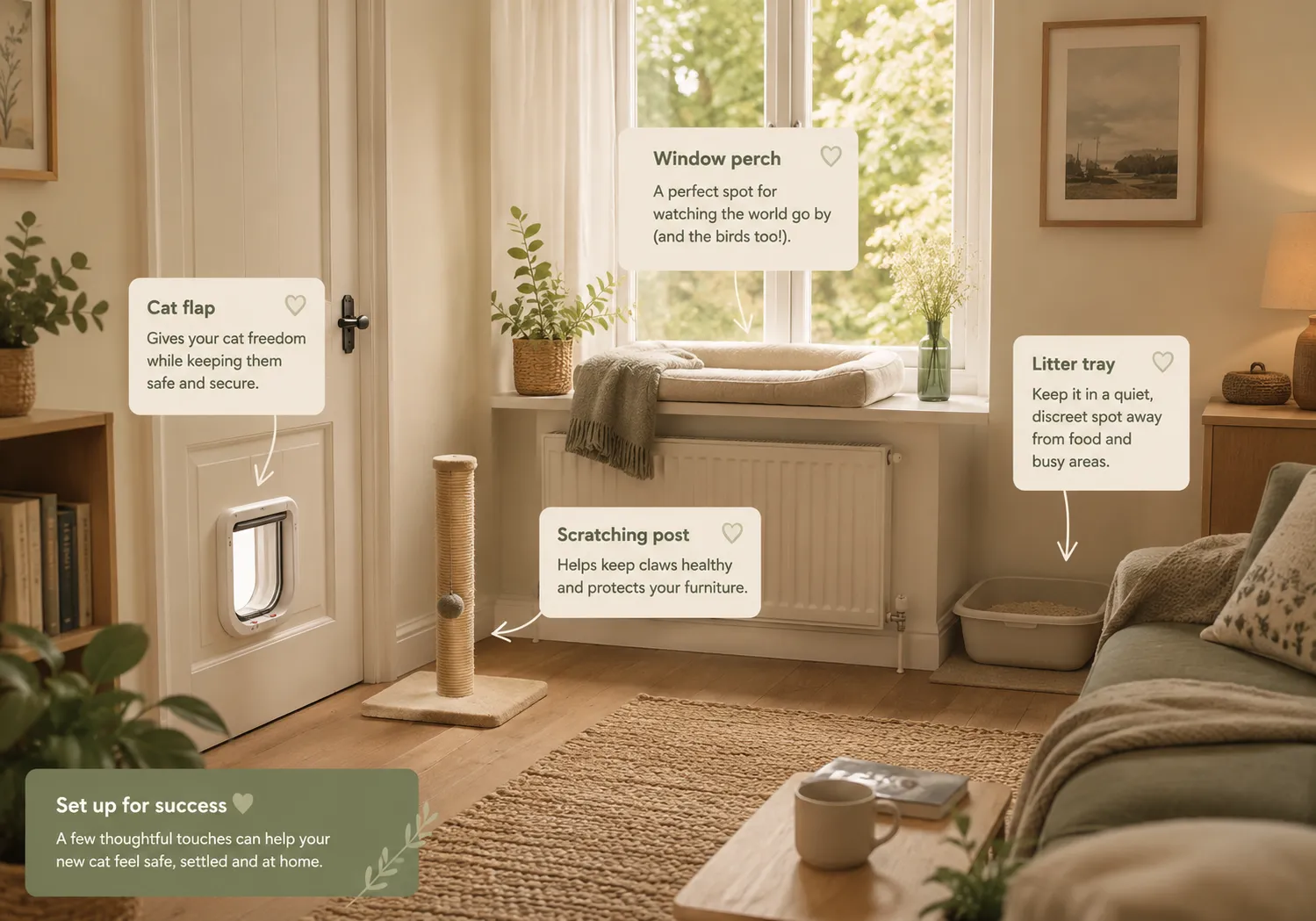
- A home setup suited to that specific animal, such as a secure garden or cat flap for some cats, or a permanently fixed hutch and run for rabbits
- Compliance with UK microchipping law, which applies to dogs since 2016 and cats since June 2024
- For some branches, extra caution around very young children or existing pets in the household, decided case by case
None of this is presented by the RSPCA as a pass or fail exam. It is closer to a conversation that narrows down which animal, if any, is right for your household.
How does the RSPCA adoption process work (step by step)?
The national process, as described on the RSPCA’s own site, generally runs like this:
- Browse available animals using the RSPCA’s Find a Pet search, filtering by location, age, size, and lifestyle needs, to see what’s available at your nearest RSPCA adoption centre.
- Complete the application on the specific animal’s profile page. This is what helps the RSPCA understand your home, routine and experience so they can judge whether that particular animal’s needs can be met.
- A phone conversation with the team, where they’ll be upfront about the animal’s needs and answer your questions.
- A meeting with the animal if there’s a good match, sometimes more than one, especially for animals with complex needs.
- A home visit or virtual check for many dogs and some cats, covering things like garden safety, sleeping areas, and daily routine.
- Paperwork and the adoption fee once everyone is happy to proceed.
- Collection, usually by appointment, with the animal already microchipped, and vaccinated, neutered, or booked in for neutering if old enough.
Timelines are not fixed either. The RSPCA says adoption timelines vary case by case, so a straightforward match can move faster than one involving an animal with additional behavioural or medical needs. If you’re specifically looking to adopt a dog, our full guide to adopting a dog in the UK walks through the process from the dog’s side of the match.
Do you need the landlord’s permission to adopt?
Yes, in almost every case if you rent. Multiple RSPCA branches confirm this is checked early. RSPCA Coventry states plainly that renters will need to show permission from their landlord that they’re allowed to keep the animal before the process can move to the next stage. RSPCA Woodside goes further, requiring a copy of the tenancy agreement or a landlord’s letter as a document to have ready before the adoption process even begins.
The RSPCA’s national dog adoption page confirms the same principle: renting doesn’t rule you out, as long as your tenancy agreement allows dogs, and living in a flat doesn’t automatically disqualify you either. The animal’s individual needs and your lifestyle are assessed together, not the property type alone.
What legal responsibilities come with adopting an RSPCA animal?
Two separate legal frameworks apply once you adopt, and the RSPCA is explicit about both.
The Animal Welfare Act 2006
All animal owners in England and Wales are legally required to meet five welfare needs, covering a suitable environment, a suitable diet, the ability to exhibit normal behaviour patterns, appropriate housing with or apart from other animals, and protection from pain, suffering, injury, and disease. The RSPCA states directly that all animal owners are required by law to meet these five welfare needs under the Act, and this applies regardless of where the animal came from.
Microchipping law
Dogs have needed to be microchipped by law since 2016. Cats followed in 2024: as of 10 June 2024, cat microchipping became mandatory in England, with owners given 21 days to comply if found without one, and a fine of up to £500 for continued non-compliance. Feral, farm, and genuinely unowned community cats are the only exemptions. Rescue cats and dogs adopted from the RSPCA are microchipped before you take them home, but the responsibility to keep your contact details updated on the database sits with you as the new keeper.
Are there rules about children, other pets, or home setup?
This is where requirements genuinely differ by branch and by animal, rather than following one national rule.
Young children
RSPCA Central London states it cannot always rehome animals into households with children under the age of five, since many animals coming into care need a quieter settling in period. This is a branch level and animal level judgement, not a blanket national ban.
Existing pets
Several branches, including Coventry and Woodside, require a supervised meeting between a resident dog and the dog being adopted before confirming the match, to check compatibility before moving forward.
Home setup for specific species
Requirements here are genuinely animal specific. RSPCA Guildford and Epsom will not rehome rabbits into homes where the hutch and run aren’t permanently attached, or where unsupervised free range time is the only exercise on offer. RSPCA Central London asks cat adopters to confirm they can keep a cat indoors for an initial settling in period and have a cat flap or other emergency access afterwards, since most of the cats in their care are used to outdoor access. If you’re bringing home a cat specifically, our guide on preparing your home for a new cat covers the practical side of this setup.
RSPCA adoption fees: how much is the RSPCA adoption fee?
There is no single national RSPCA adoption fee. Adoption fees are set locally and vary by animal type, age, and branch, so the honest answer to how much the RSPCA adoption fee is that it depends on where you’re adopting from and what you’re adopting. As one example, RSPCA Lincolnshire Mid, North East and Lincoln Branch publishes the following fee schedule:
| Animal | Typical fee (one branch example) |
|---|---|
| Puppy | £280 |
| Adult dog | £240 |
| Senior dog (over 10) or with medical conditions | £200 |
| Kitten (up to 1 year) | £120 |
| Adult cat | £95 (£185 for two) |
| Rabbit | £60 (£100 for a bonded pair) |
| Guinea pig | £40 to £50 |
Treat these as an illustration of the range rather than a national price list. RSPCA adoption fees for dogs are generally higher than RSPCA adoption fees for cats, since dogs typically need more behavioural assessment, vaccination, and neutering work before they’re ready to rehome. Your local centre or branch will confirm its own fees. The RSPCA is also upfront that the fee itself rarely covers the full cost of the animal’s care while in their custody, and any adoption fee sits well below the ongoing cost of owning a pet.
Before you commit, it’s worth reading up on what pet insurance in the UK actually covers and how policies differ, since ongoing vet costs are usually the biggest expense, not the adoption fee itself. If you’re specifically thinking about larger procedures down the line, our piece on veterinary surgery insurance is a useful next read.
What happens after collection day?
By the time you collect your pet, the RSPCA has usually already handled the essentials. Dogs, cats, and rabbits are microchipped, vaccinated, neutered or booked in for neutering, and treated for fleas and worms before you take them home, and you’ll receive their veterinary history along with settling in advice.
Support afterward varies by branch. Some, like RSPCA Radcliffe, offer a window (in their case, two weeks) where the centre will cover veterinary costs for problems that emerge shortly after adoption, provided treatment is carried out by their own vet. This isn’t a universal RSPCA guarantee, so it’s worth asking your specific branch what aftercare support they provide before you collect your pet.
Frequently asked questions
Can I adopt if I live in a rented flat?
Yes, as long as your tenancy agreement allows pets. Confirm this with your landlord in writing before applying, since most branches will ask for proof.
Can I adopt if I have young children?
It depends on the branch and the individual animal. Some branches are cautious about placing animals into homes with children under five, since many rescue animals need a calmer environment while they settle in.
Do I need a garden to adopt a cat or dog?
Not always. It depends on the individual animal. Some cats are used to outdoor access and do best with a garden or cat flap, while others are suited to indoor only living. Dogs are assessed on exercise needs and your routine rather than garden size alone.
How long does the RSPCA adoption process take?
There’s no fixed timeline. It depends on the animal, how many meetings are needed, and how quickly a home visit can be arranged. Some straightforward matches move within a couple of weeks, while animals with additional behavioural or medical needs can take longer.
How much is the RSPCA adoption fee?
It varies by branch and by animal, but as a guide, dog adoption fees tend to run higher than cat, rabbit, or guinea pig fees, largely because of the extra vet and behavioural work involved. Check with your specific branch for its current adoption cost.
How do I find RSPCA adoption near me?
Use the RSPCA’s Find a Pet search and filter by location to see which animals and adoption centres are near you, since fees, availability, and requirements can differ from branch to branch.
Is the adoption fee the only cost I need to plan for?
No. The adoption fee is usually well below the actual cost of caring for the animal while in RSPCA custody, and it doesn’t cover your ongoing costs of food, insurance, and vet care once the animal is home.
Ready to start the process yourself? Browse animals currently waiting for a home and read more adoption stories in our Pet Adoption section.