
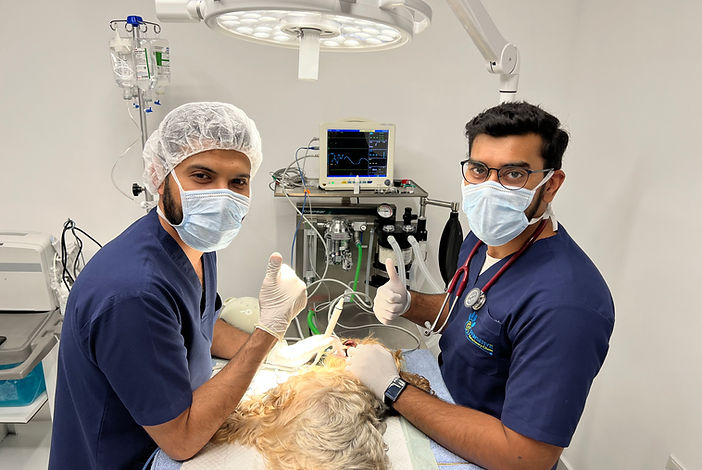
Your dog yelps suddenly during a morning walk and can’t put weight on her back leg. Or your cat comes home one evening limping, clearly in pain. Within hours, you’re sitting in a veterinary clinic being told that surgery is the only option, and the bill could be anywhere from £3,000 to £7,000.
For millions of UK pet owners, that moment of love turns into a moment of genuine financial panic. Veterinary surgery insurance exists precisely for this scenario. It is a financial safety net that means you never have to choose between your pet’s health and your bank account.
This guide covers everything UK pet owners need to know about veterinary surgery insurance, from how it works and what it covers to how much it typically costs. We will also take a brief look at how other major markets around the world approach this type of cover.
What Is Veterinary Surgery Insurance?
So, what is veterinary surgery insurance, exactly? In the simplest terms, it is a component of a standard pet insurance policy that covers the cost of surgical procedures your pet may need due to illness or injury. While some specialist policies focus specifically on surgical interventions, in most cases veterinary surgery cover is built into a broader accident and illness pet insurance plan.
Here is how it works in practice: you pay a monthly or annual premium to your insurer. If your pet is involved in an accident or develops a condition that requires surgery, you make a claim and the insurer pays out towards the veterinary fees, up to the limits stated in your policy.
In the UK, there are four main types of pet insurance policies, each with a different level of surgical cover:
- Accident-only policies cover injuries caused by accidents (such as a broken bone or a swallowed object) but do not cover illnesses. These are the most affordable but also the most limited.
- Time-limited policies cover both accidents and illnesses, but only for a set period (usually 12 months from the onset of a condition). Once that period ends, the condition is excluded.
- Maximum benefit policies cover each condition up to a fixed financial limit, with no time restriction. Once you have claimed up to the limit for a particular condition, it is excluded going forward.
- Lifetime policies are the most comprehensive. They provide a set amount of cover (renewed each policy year) for ongoing and recurring conditions. For surgical needs relating to chronic conditions, a lifetime policy is almost always the best choice.
Why Do You Need Veterinary Surgery Insurance?
The honest answer to why you need veterinary surgery insurance comes down to cost. Veterinary medicine in the UK has advanced enormously, and so have the fees. Here are some realistic figures for common surgical procedures:
- Cruciate ligament repair: £3,000 to £7,000
- Hip replacement: £3,500 to £6,500
- Fracture repair: £1,000 to £4,000
- Foreign body removal (swallowed objects): £1,500 to £3,000
- Bloat surgery (GDV): £1,500 to £5,000
- Tumour removal: £1,000 to £5,000+
Very few households have several thousand pounds sitting readily available in an emergency fund, and even those who do may not want to spend it in a single afternoon.
Beyond the financial argument, there is an emotional one. When a vet presents you with a treatment plan, you should be able to make that decision based on what is medically best for your pet, not on what you can afford. For anyone who has adopted or rescued an animal, that principle is particularly close to home. Insurance removes the impossible choice between love and money.
Meet Bella: Bella is a 4-year-old Labrador who tore her cruciate ligament during a game of fetch. Her owner, Sarah, had taken out a lifetime policy when Bella was a puppy at around £28 per month. When the diagnosis came in and the surgery quote was £5,200, Sarah’s insurer covered £4,800 after the excess. Without insurance, Sarah would have had to consider a payment plan, a loan, or in the worst case, a less effective conservative treatment. With it, Bella was back on her feet within three months.
What Does Veterinary Surgery Insurance Cover?
Understanding what veterinary surgery insurance covers helps you choose the right policy and avoid nasty surprises at claim time. Most comprehensive UK policies will cover the following:
- Accidents: Surgery resulting from physical injuries, such as broken bones, lacerations, or the removal of swallowed objects.
- Illnesses: Surgery for conditions that develop over time, including cruciate ligament rupture, gastric dilation and volvulus (GDV), cancer, and organ-related conditions.
- Hereditary and congenital conditions: Many mid-range and lifetime policies cover conditions a pet is genetically prone to, such as hip dysplasia in Labradors or brachycephalic obstructive airway syndrome (BOAS) in flat-faced breeds, provided these were not symptomatic before the policy started.
- Diagnostic tests: X-rays, MRI scans, CT scans, and ultrasounds carried out to identify the condition requiring surgery are typically included under the same claim.
- Hospitalisation and post-operative medication: Overnight stays at the veterinary clinic and any drugs prescribed during recovery are usually covered as part of the surgical claim.
- Specialist referrals: If your vet refers your pet to a specialist surgeon, most policies cover fees at the referral practice, subject to the same limits.
What Does Veterinary Surgery Insurance NOT Cover?
This section is just as important as the one above. Knowing what veterinary surgery insurance does not cover could save you from a refused claim at the worst possible moment.
- Pre-existing conditions: Any condition that showed signs or symptoms before your policy started, or during the waiting period at the beginning of a new policy, will almost certainly be excluded. This is the single most common reason claims are declined.
- Routine and preventative procedures: Neutering, spaying, dental cleaning (unless caused by an accident), and vaccinations are not covered. Insurance is designed for unexpected surgical events, not scheduled care.
- Elective procedures: Surgery that is optional or cosmetic in nature is excluded from all standard policies.
- Excess fees: Every policy includes a compulsory excess (a fixed amount you pay towards each claim). This is not covered by the insurer. Most policies allow you to choose a voluntary excess on top of this to reduce your premium.
- Co-payments: Some policies, particularly those for older pets, include a co-payment clause where you pay a percentage of the total bill (often 20%) after the excess has been deducted. Always check for this before purchasing.
- Bilateral conditions: If your dog tears the cruciate ligament in one knee and later injures the other knee, many policies treat the second injury as a related or bilateral condition, which may attract reduced cover or be excluded altogether.
- Experimental treatments: Surgical procedures that are not yet established or widely accepted within the veterinary profession will not be covered.
Key Terms to Know
- Excess: The amount you contribute towards each claim before the insurer pays the remainder.
- Pre-existing condition: Any health condition that your pet showed signs of before you took out the policy, including conditions identified during the waiting period.
- Lifetime cover: A policy type that renews your pet’s cover limit each year, allowing ongoing and recurring conditions to be claimed for throughout the pet’s life (subject to annual limits).
- Co-payment: A percentage of the claim cost that you are required to pay even after the excess has been deducted. Common in policies for older pets.
- Waiting period: A short period at the start of a new policy (typically 14 days for illness, 48 hours for accidents) during which claims cannot be made.
How Much Does Veterinary Surgery Insurance Cost?
There is no single answer to how much veterinary surgery insurance costs in the UK because premiums vary based on several factors.
- Species and breed: Flat-faced breeds such as French Bulldogs, English Bulldogs, and Persian cats carry a higher statistical risk of requiring surgery, particularly for respiratory conditions. Insurers price accordingly. A Labrador will almost always cost less to insure than a French Bulldog of the same age.
- Age: Premiums rise as your pet gets older. This is why it pays to insure pets when they are young and healthy. Some insurers will not take on new applicants past a certain age.
- Location: Veterinary fees in London and the South East of England are generally higher than in the rest of the UK. Insurers factor regional fee levels into their pricing.
- Level of cover and policy limits: A lifetime policy with a £10,000 annual limit will cost considerably more than an accident-only policy with a £3,000 per-incident cap.
- Voluntary excess: Choosing a higher voluntary excess (for example, £250 instead of £100) can bring your monthly premium down, provided you are comfortable covering that amount at claim time.
Rough cost examples (for guidance only):
- A 2-year-old crossbreed dog on a mid-range lifetime policy: approximately £20 to £40 per month
- A 2-year-old French Bulldog on a similar policy: approximately £50 to £90 per month
- A 9-year-old French Bulldog: potentially £100 to £150 or more per month
- A 3-year-old domestic shorthair cat on a lifetime policy: approximately £10 to £25 per month
These figures are indicative. Use comparison sites such as Compare the Market or Go.Compare to get actual quotes tailored to your pet.
The UK vs. The World: How Other Markets Handle Vet Surgery Insurance
The UK has one of the most developed pet insurance markets in the world, but it is far from the only one. Here is a brief look at how veterinary surgery insurance is handled in other major markets.
- United States: The US market is largely private and broadly similar in structure to the UK, though generally more expensive. Lifetime policies are less common, with most US insurers offering annual or per-incident limits instead. Major providers include Trupanion, Nationwide, and Healthy Paws. Pet insurance uptake in the US has grown significantly over the past decade but still covers a smaller proportion of pets than in the UK.
- Australia: Australia has one of the highest rates of pet ownership globally, and its insurance market is well-established. Policies work in a manner very similar to the UK model, with accident and illness cover as standard. Major providers such as Petplan operate in both markets. Australians tend to be aware of the cost of veterinary care and insurance adoption is relatively high.
- Germany: Germany takes a notably different approach. It is common for German pet owners to hold two separate policies: a liability insurance (Tierhalterhaftpflicht), which in some federal states is mandatory for dog owners and covers damage your pet causes to third parties, and a separate health or surgery insurance that covers veterinary fees. The health component often operates on a reimbursement model and is popular among owners of larger or pedigree breeds.
- Sweden: Sweden is arguably the most mature pet insurance market in the world. A remarkably high proportion of Swedish cats and dogs are insured, and the country’s approach to pet welfare and insurance has influenced how other European markets have developed their products. Swedish policies tend to be comprehensive and the culture of insuring pets is deeply embedded.
Conclusion
Veterinary surgery insurance is not a luxury. For pet owners in the UK, it is one of the most practical steps you can take to protect both your animal and your finances from the unexpected.
The key takeaways are straightforward: understand what your policy covers before you need it, pay close attention to exclusions, and choose a policy level that matches the realistic cost of surgery for your specific breed and age of pet.
If you are considering adopting or rescuing a new animal, factor the cost of lifetime insurance into your monthly budget from the outset. It is one of the most meaningful ways to ensure you can always say yes to the life-saving treatment your pet deserves, regardless of what the bill says.
Disclaimer: All prices, policy details, and cost examples in this article are for guidance only and reflect general market conditions at the time of writing. Actual premiums and claim outcomes will vary depending on your specific insurer, policy terms, and individual circumstances. Always read your policy documents carefully before purchasing or making a claim.