

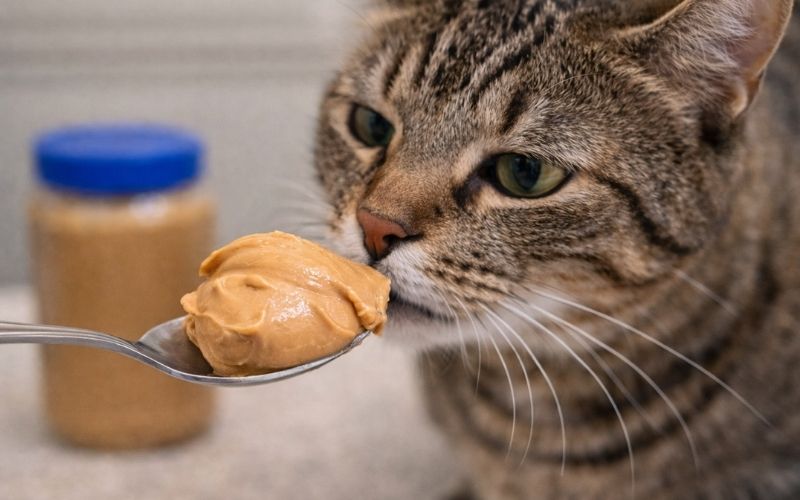
Many cat owners ask can cats have peanut butter after noticing their pet showing interest in human snacks. While peanut butter is common in households, cats have very different dietary needs. Understanding how this food fits into feline nutrition helps owners avoid confusion and make safer feeding choices.
Peanut butter is not a natural part of a cat’s diet. Cats are obligate carnivores, meaning their bodies are designed primarily for animal based nutrition. Foods that appeal to humans may not always align with what cats can digest comfortably or benefit from nutritionally.
This article focuses on awareness rather than alarm. By separating myths from facts, owners can better understand peanut butter, ingredient concerns and broader questions about what human food cats can eat safely. Clear information supports responsible feeding habits and healthier daily routines for cats.
Is Peanut Butter Toxic to Cats? Understanding the Risk
Concerns about peanut butter safety often arise when owners hear alarming claims online. While peanut butter is not a natural food for cats, that does not automatically make it poisonous. Understanding ingredient composition and feline digestion helps clarify why caution is recommended without creating unnecessary fear.
Many people search phrases like does peanut butter kill cats, but the reality is more nuanced. Peanut butter can be difficult for cats to digest due to high fat and sugar content. Occasional exposure may not be dangerous, but regular intake can contribute to digestive discomfort or unwanted reactions.
To better understand where the risk comes from, it helps to look at common ingredients found in peanut butter products. The table below outlines frequently used components and general awareness regarding how they may affect cats when consumed accidentally or in small amounts.
Common Peanut Butter Ingredients and General Cat Safety Awareness
Understanding peanut butter ingredients helps explain why this food is not suitable for cats. While some components may seem harmless to humans, cats process fats, sugars and additives very differently. The table below highlights common peanut butter ingredients and general awareness regarding how each may affect cats.
| Ingredient | General Awareness for Cats |
| Peanuts | Not toxic, but hard to digest |
| Oils and Fats | Can cause digestive upset |
| Sugar | No nutritional value for cats |
| Salt | Not recommended for feline diets |
| Additives | May increase sensitivity |
After reviewing these ingredients, it becomes clear that peanut butter offers no real benefit for cats. While small amounts may not cause immediate harm, repeated exposure or sensitive digestion can lead to avoidable issues. Awareness allows owners to make safer feeding choices without relying on myths.
Xylitol and Why It Matters for Cats
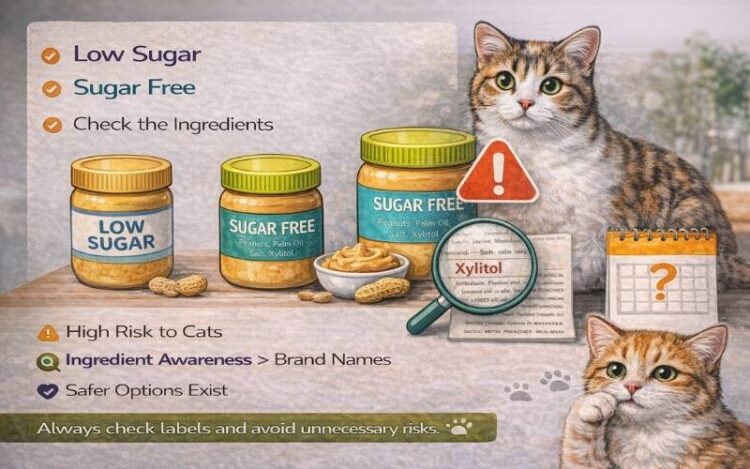
Xylitol is an artificial sweetener sometimes found in sugar free foods, including certain peanut butter brands. While discussions often focus on dogs, cat owners should still be aware of ingredient labels. Xylitol is never appropriate for cats and should always be avoided.
The concern with xylitol comes from how small animals process unfamiliar sweeteners. Even trace exposure can create unnecessary risk. This is why ingredient awareness is more important than brand names alone when evaluating whether cats should be exposed to peanut butter in any form.
Which Peanut Butters May Contain Xylitol
Some peanut butters marketed as low sugar or sugar free may contain xylitol. These products are often promoted for human dietary preferences, not pet safety. Because formulations change, owners should never assume a product is safe without checking the ingredient list carefully.
This awareness directly connects to questions like does peanut butter kill cats, which usually stem from xylitol concerns. While not all peanut butter contains it, the possibility alone makes peanut butter an unnecessary risk for cats, especially when safer alternatives exist.
Is Jif Peanut Butter Safe for Cats? Ingredient Awareness
Many owners ask whether popular brands such as Jif are safe for cats. Jif peanut butter does not typically contain xylitol, but it still includes fats, sugars and salt. These ingredients offer no nutritional benefit and may upset a cat’s digestive system.
Because cats do not require plant based fats or sweeteners, even standard peanut butter varieties remain unsuitable. Ingredient awareness helps owners understand that safety is not only about toxicity, but also about digestive comfort and long term dietary appropriateness.
What Human Food Can Cats Eat Safely?
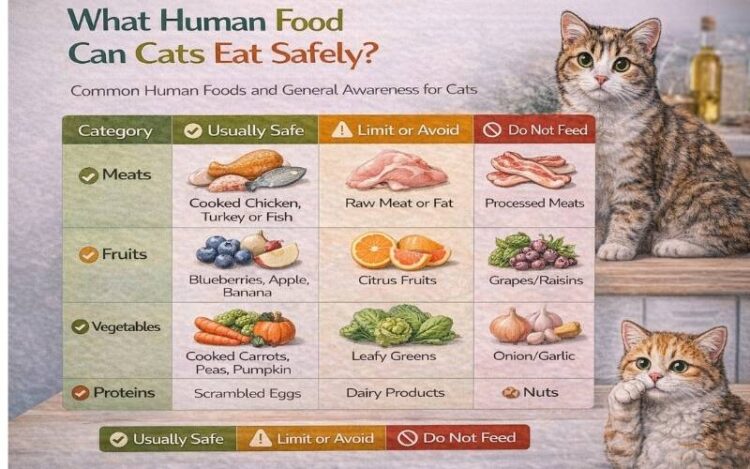
Many owners asking what human food can cats eat want safe ways to share occasional treats. While cats should rely primarily on animal based diets, some simple human foods can be tolerated in very small amounts. Understanding which options are generally safer helps reduce accidental feeding risks.
Cats process food differently than humans. Foods without seasoning, sugar or additives are generally better tolerated. Even then, human foods should never replace regular meals. Awareness of basic food categories allows owners to make cautious choices while avoiding unnecessary digestive discomfort.
To provide a clearer overview, the table below highlights common human foods and their general awareness level for cats. This comparison helps owners understand which items are typically tolerated and which should be avoided entirely.
Common Human Foods and General Cat Safety Awareness
Before offering any human food, owners should understand that cats have very specific dietary needs. Some foods may be tolerated occasionally, while others can cause discomfort or serious issues. The table below provides general awareness to help owners recognize which common foods are better avoided and which may be safer in limited situations.
| Human Food | General Awareness for Cats |
| Plain cooked chicken | Generally tolerated in small amounts |
| Plain cooked fish | Acceptable occasionally, unseasoned |
| Eggs | Small portions, fully cooked |
| Cheese | Limited tolerance, small amounts |
| Peanut butter | Not recommended, no benefit |
| Chocolate | Always avoid |
After reviewing these examples, it becomes clear that simplicity matters most. Foods prepared plainly and offered sparingly reduce risk. Even foods considered acceptable should be treated as rare extras rather than habits, helping maintain balanced nutrition and long term comfort for cats.
Why Some Cats Seem Obsessed With Peanut Butter
Some cats appear curious or obsessed with peanut butter due to its strong smell and high fat content. Cats rely heavily on scent rather than taste and unfamiliar smells can trigger investigation. Curiosity does not mean preference or nutritional need, only sensory interest.
This behavior can confuse owners into thinking peanut butter is appealing or safe. In reality, cats often investigate novel foods briefly and lose interest. Offering unfamiliar human foods can reinforce curiosity, which is why setting clear boundaries around feeding helps avoid unnecessary exposure.
What Annoys Cats the Most Around Food
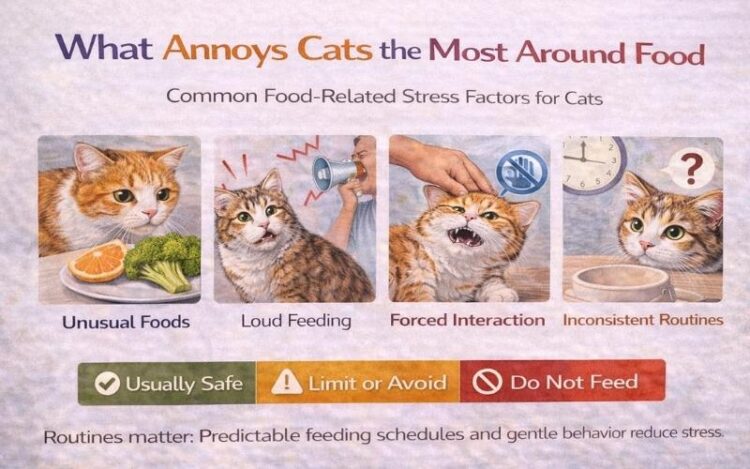
Cats are sensitive to routine disruptions, unfamiliar textures and strong smells. Offering foods they cannot digest comfortably may cause stress rather than enjoyment. Loud environments, forced interaction and inconsistent feeding habits often annoy cats more than food itself.
Maintaining predictable routines helps cats feel secure. Introducing strong smelling human foods can disrupt this balance. Understanding feline preferences supports calmer behavior and reduces frustration, especially in food related situations where cats may become confused or overstimulated.
Conclusion
Cats have unique dietary needs that differ greatly from human eating habits. While curiosity may lead owners to question can cats have peanut butter, understanding feline nutrition helps prevent unnecessary risks. Foods that seem harmless to people often provide no benefit and may create avoidable digestive discomfort for cats.
Peanut butter is not designed for feline digestion and contains fats, salts, and additives that cats do not require. Although myths like does peanut butter kill cats exaggerate the danger, the lack of nutritional value makes it an unnecessary food choice. Avoidance supports simpler and safer feeding routines.
Learning what human food cats can eat safely encourages responsible ownership and informed decision making. By focusing on appropriate nutrition, consistent routines, and ingredient awareness, owners can reduce stress around feeding. Respecting a cat’s natural dietary needs helps promote comfort, balance, and long term well being.
Frequently Asked Questions (FAQs)
Is it safe for cats to eat peanut butter?
Peanut butter is not recommended for cats. While small amounts may not cause immediate harm, it provides no nutritional value and can upset digestion. Ingredient risks and high fat content make it an unnecessary food choice for cats.
Is Jif toxic to cats?
Jif peanut butter does not usually contain xylitol, but it still includes fats, sugars and salt. These ingredients are unsuitable for cats and may cause digestive discomfort. Safety involves more than toxicity and includes overall dietary appropriateness.
What is the most toxic thing a cat can eat?
Certain human foods such as chocolate, onions, garlic, grapes and foods containing xylitol are considered highly dangerous for cats. These items should always be avoided, as even small amounts can pose serious risks to feline health.
Can I give Jif peanut butter to my cat?
Giving Jif peanut butter to cats is not advised. Even without xylitol, it contains ingredients cats do not need and cannot process well. Avoiding it entirely helps prevent digestive issues and unnecessary dietary stress.
How toxic is peanut butter to cats?
Peanut butter itself is not highly toxic, but it can cause digestive upset and discomfort. The real concern lies in ingredients like sugar, salt, oils or xylitol in some brands. Avoidance is safer than testing tolerance.
Can cats have 100% peanut butter?
Even 100% peanut butter without additives is not recommended for cats. Cats do not benefit from plant based fats or proteins and digestion may still be difficult. Safer alternatives better align with feline nutritional needs.
Which peanut butters contain xylitol?
Some sugar free or low sugar peanut butters may contain xylitol. Because formulations change, owners should always read ingredient labels carefully. Any product containing xylitol should be kept completely away from cats.
Why is my cat obsessed with peanut butter?
Cats may be drawn to peanut butter because of its strong smell and novelty. This curiosity does not mean it is safe or desirable. Interest usually fades quickly when the scent is no longer present.