



The phrase why dachshunds are the worst breed often appears in online discussions, usually driven by frustration rather than objective analysis. Dachshunds are not inherently bad dogs, but they do come with specific traits that can be challenging for certain owners. Understanding these traits helps explain why opinions about this breed are often polarized.
This article explores the real reasons behind common complaints, separating exaggeration from reality. By examining temperament, behavior patterns, daily care demands and owner expectations, readers can better understand why dachshunds may feel difficult for some households while remaining deeply loved by others.
Understanding the Dachshund Personality
Dachshunds were originally bred as hunting dogs, which explains their bold, determined and independent nature. These traits helped them work confidently underground, but in a home environment, that same confidence can sometimes be mistaken for stubbornness or defiance. Their personality is strong for their size.
Because dachshunds tend to think for themselves, they may question commands rather than follow them automatically. This independence can frustrate owners who expect quick obedience, contributing to the belief behind why dachshunds are the worst breed for people unfamiliar with strong-willed dogs.
Common Behavioral Challenges
One frequently mentioned challenge is selective listening. Dachshunds are intelligent, but they often decide whether a command is worth responding to based on motivation. This behavior can feel disrespectful to owners who expect consistent compliance without understanding the breed’s mindset.
Rather than lacking intelligence, dachshunds often display strategic thinking. Without consistent guidance and patience, this trait can turn into undesirable habits such as ignoring commands, excessive barking or guarding behavior, which may reinforce negative opinions about the breed.
Training Difficulties and Consistency
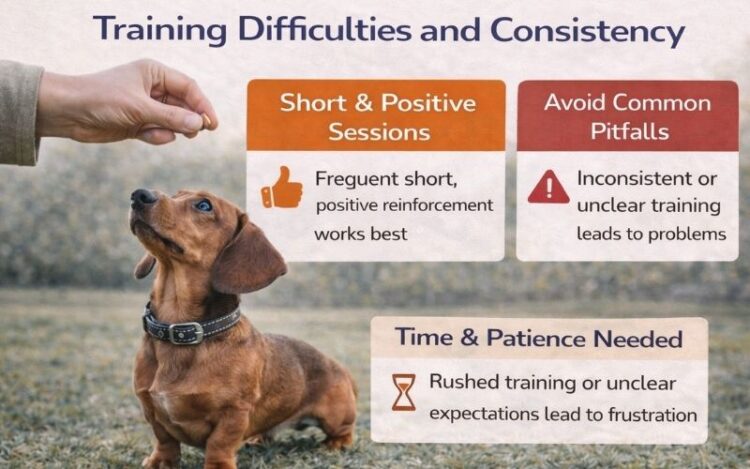
Training dachshunds requires consistency, repetition and calm leadership. They respond best to positive reinforcement and structured routines rather than forceful or rushed methods. Long training sessions often backfire, while short and engaging interactions tend to be more effective.
When training is inconsistent or expectations are unclear, behavioral problems may develop. Owners who underestimate the time and patience required may feel overwhelmed, further contributing to the reputation behind why dachshunds are the worst breed for inexperienced owners.
Common Dachshund Challenges and Real Explanations
Understanding dachshund behavior often requires looking beyond surface reactions. Many traits labeled as problems are actually expressions of instinct, personality or emotional attachment. The table below explains common challenges owners mention and what those behaviors usually reflect in everyday situations.
| Common Complaint | What It Often Means |
| Stubborn behavior | Independent thinking |
| Excessive barking | Alert and protective nature |
| Training difficulty | Needs patience and structure |
| Territorial behavior | Strong instincts |
| Emotional sensitivity | Deep attachment to owners |
Are Dachshunds Aggressive by Nature?
Dachshunds are not naturally aggressive, but they can be reactive when stressed, startled or overwhelmed. Their small size sometimes leads owners to overlook boundaries, which can cause dogs to become defensive when they feel unsafe or threatened.
Reactivity is often confused with aggression. Proper social exposure, predictable routines and respectful handling help reduce defensive behaviors. When these needs are unmet, dachshunds may appear more intense than they actually are.
Are Dachshunds One of the Most Aggressive Dogs?
Claims that dachshunds are among the most aggressive dogs usually stem from misunderstanding their communication style. Growling, barking or snapping are often warning signals rather than signs of intent to harm. These behaviors reflect stress, fear or territorial instincts.
When owners understand and respond appropriately, dachshunds usually settle into balanced behavior. Aggression is not a defining trait, but unmanaged stress can make reactions more noticeable compared to calmer breeds.
Comparisons to Other Breeds
When people ask what is the most misbehaved dog breed, the answer often depends on owner expectations rather than breed reality. Breeds bred for independence are frequently labeled difficult when compared to dogs bred for obedience or constant human direction.
Dachshunds are not uniquely problematic, but their personality does not suit everyone. Mismatched expectations often lead to frustration, reinforcing negative stereotypes rather than addressing the real issue of compatibility.
Daily Care and Attention Needs
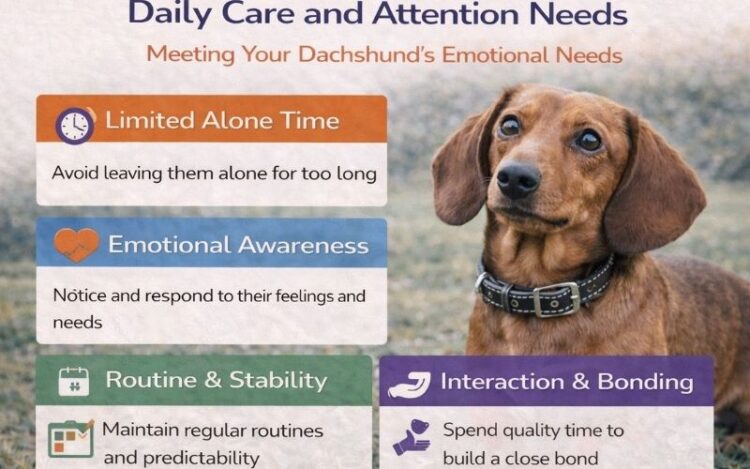
Dachshunds thrive on attention, routine and emotional connection. They do not do well with long periods of isolation, which can lead to anxiety related behaviors such as barking or restlessness. Owners with busy schedules may find this demand challenging.
Their strong emotional awareness means they quickly notice changes in routine or household dynamics. Without stability, stress behaviors may emerge, fueling the perception behind why dachshunds are the worst breed for low-interaction homes.
Health Awareness Without Medical Claims
While avoiding medical advice, it is important to acknowledge that dachshunds require careful handling due to their body structure. Jumping, rough play or improper lifting can cause discomfort over time.
Owners who adapt the environment and handle dachshunds gently often see better comfort and mobility. Awareness and prevention play an important role in maintaining quality of life.
Dachshund Lifestyle Compatibility
Lifestyle compatibility plays a major role in how well a dachshund adjusts to a home environment. Some households naturally align with the breed’s emotional and routine based needs, while others may struggle. The table below highlights how different lifestyle factors typically match up with dachshund temperament and daily requirements.
| Lifestyle Factor | Compatibility Level |
| Calm households | High |
| Highly active homes | Moderate |
| First-time dog owners | Mixed |
| Consistent routines | High |
| Long work hours | Low |
Food Safety Curiosity and Owner Questions

Many dog owners ask general safety questions, such as can dogs eat gummy bears. While dachshunds are curious and food motivated, sugary snacks are not suitable for dogs and can cause digestive discomfort.
Understanding basic food safety helps prevent accidental issues. Smaller breeds often feel the effects of unsuitable foods more quickly, making awareness especially important.
Minor Care Questions Owners Often Ask
Another common question is can you put neosporin on a dog. This reflects how often owners turn to household products for minor concerns. However, dogs may lick treated areas, and not all human products are appropriate.
Responsible care includes knowing when professional guidance is necessary rather than relying on assumptions. Education helps owners make safer choices.
Why the Reputation Persists Online
Negative experiences are often shared more loudly than positive ones. Online discussions tend to amplify frustration, while satisfied owners remain quieter. This imbalance fuels dramatic claims like why dachshunds are the worst breed.
Without context about training, environment or expectations, these opinions can spread quickly. Understanding the full picture helps counter misleading narratives.
Myths vs Reality
The idea that dachshunds are bad dogs ignores their loyalty, intelligence and strong emotional bonds. Many challenges arise from mismatch rather than inherent flaws. Owners who appreciate assertive personalities often find dachshunds deeply rewarding.
Reality shows that success depends on preparation, patience and honest understanding of breed traits rather than appearance alone.
Conclusion
The belief behind why dachshunds are the worst breed is rooted more in misunderstanding than fact. Dachshunds are expressive, confident dogs with specific needs that do not fit every household. When expectations clash with reality, frustration naturally follows.
For the right owner, however, dachshunds can be loyal, entertaining and deeply connected companions. Understanding challenges openly allows potential owners to make informed, responsible decisions.
Frequently Asked Questions (FAQs)
What are the disadvantages of Dachshunds?
Dachshunds can be stubborn, vocal and emotionally sensitive. Their independent nature requires patience and consistent routines. Without structure, they may develop habits that frustrate owners expecting easy obedience or minimal involvement.
What is the most misbehaved dog breed?
There is no single most misbehaved dog breed. Behavior depends on training, environment and expectations. Breeds with strong independence, like dachshunds, may appear misbehaved when their instincts are misunderstood.
Are Dachshunds one of the most aggressive dogs?
Dachshunds are not naturally aggressive, but they can be reactive if stressed or poorly socialized. Their alert nature is often misinterpreted as aggression rather than communication or anxiety.
What is the #1 most aggressive dog breed?
No breed is inherently the most aggressive. Aggression is influenced by upbringing, environment and handling. Labeling breeds oversimplifies complex behavioral factors.
Can dogs eat gummy bears?
Dogs should not eat gummy bears due to sugar and artificial ingredients. Small breeds like dachshunds are especially sensitive to digestive upset from human sweets.
Can you put Neosporin on a dog?
Using human products on dogs should be avoided without guidance. Dogs may lick treated areas and not all products are safe for pets.