


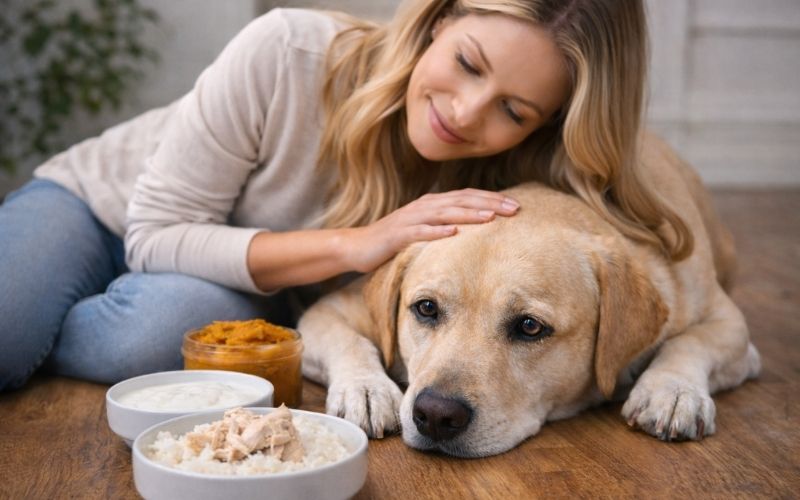
Many dog owners ask what home remedy can i give my dog for diarrhea when they notice loose stools or sudden digestive changes. Diarrhea is a common issue and often appears due to diet changes, stress, scavenging or mild digestive sensitivity rather than serious underlying problems.
In many cases, diarrhea is temporary and the dog otherwise behaves normally. Mild discomfort, soft stools or brief digestive upset can happen even in healthy dogs. Understanding common triggers helps owners respond calmly and focus on gentle, supportive care instead of reacting with unnecessary concern.
This guide explains safe, practical approaches often discussed in home remedies for dog diarrhea. The focus is on comfort, routine and awareness rather than treatment claims. Clear information helps owners understand what can I give my dog for diarrhea at home while maintaining a balanced and responsible approach.
Food Based Home Support for Mild Diarrhea
When owners explore dog diarrhea home treatment, food choices often play an important role. Temporary digestive upset can sometimes improve when dogs receive simple, gentle meals that reduce strain on the stomach. The goal is to allow digestion to settle rather than introduce rich or complex ingredients.
Many natural remedies for dog diarrhea focus on limiting ingredients and avoiding sudden changes. Plain foods are easier to process and help prevent further irritation. Consistency matters during this phase, as switching foods too frequently can slow improvement instead of supporting comfort.
To better understand common food based options discussed in safe home remedy for dog diarrhea, the table below outlines gentle foods and their general role in supporting digestion during mild, short term diarrhea at home.
Gentle Food Options Often Used for Dog Diarrhea Home Treatment
Before choosing specific foods, owners should understand that gentle options are meant to support digestion, not cure diarrhea. These foods are commonly discussed in dog diarrhea home treatment because they reduce digestive strain and help the stomach settle. The table below outlines simple food choices often used during mild digestive upset.
| Food Option | General Digestive Awareness |
| Plain white rice | Easy to digest, simple carbohydrate |
| Boiled chicken | Lean protein without seasoning |
| Scrambled egg (plain) | Soft texture, mild on stomach |
| Plain pumpkin | Supports stool consistency |
| Small frequent meals | Reduces digestive workload |
After reviewing these options, owners should remember that food based support is usually short term. Once stools begin to firm, a gradual return to regular meals helps avoid relapse. These approaches are commonly discussed for mild diarrhea in dogs home remedy situations where the dog remains active and alert.
Hydration and Digestive Comfort at Home
Hydration is one of the most important aspects of dog diarrhea treatment at home. Loose stools can cause fluid loss, especially in smaller dogs. Ensuring constant access to fresh water supports digestion and overall comfort while the body works to rebalance naturally.
Some dogs may drink less during digestive upset, so encouraging small, frequent sips is helpful. Avoid flavored drinks or additives. Simple water intake supports circulation and digestion without adding stress to the stomach, making hydration a key part of home remedies for dog diarrhea.
What Settles a Dog’s Stomach Naturally

Many owners ask what settles a dog’s stomach when diarrhea appears. Rest, routine and reduced activity often help calm digestion. Over excitement or excessive exercise can worsen symptoms, so creating a calm environment supports recovery during mild digestive upset.
A quiet space, predictable schedule and gentle interaction allow the digestive system to reset. These approaches are commonly included in natural remedies for dog diarrhea, as they support comfort without introducing new foods or changes that could irritate the stomach further.
Limiting noise, visitors and schedule disruptions also helps the stomach settle naturally. Dogs often respond positively to familiar surroundings and reassurance during digestive upset. Maintaining normal feeding times, gentle walks only when needed and avoiding over stimulation supports recovery without placing extra demand on an already sensitive digestive system.
Avoiding Common Home Care Mistakes
During diarrhea, it is tempting to try multiple remedies quickly. However, frequent changes can confuse digestion. Consistency is more effective than variety when managing mild diarrhea in dogs home remedy situations where symptoms are not severe.
Avoid giving rich treats, table scraps or unfamiliar foods. These can prolong digestive upset. Keeping routines simple helps owners better observe improvement and prevents unnecessary strain on the digestive system during recovery.
Another common mistake is offering human medications or supplements without proper guidance. Products intended for people can irritate a dog’s stomach or mask symptoms rather than support recovery. Patience, observation and simple care choices usually provide better results than rushing to add new remedies.
Puppy Diarrhea Home Remedy Considerations
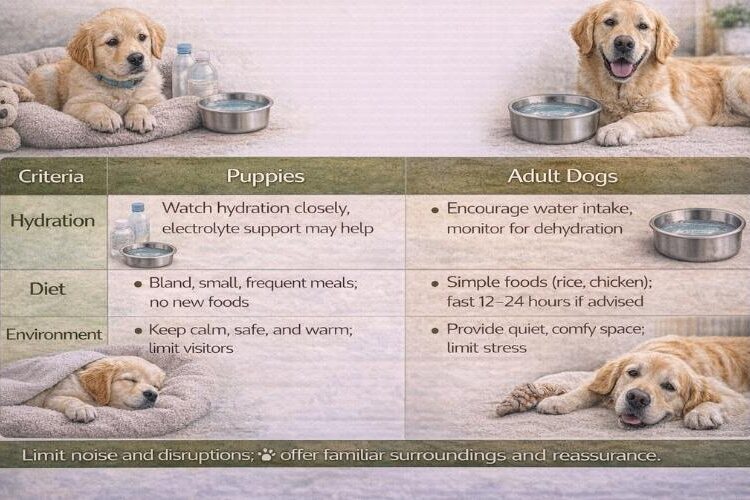
Managing diarrhea in puppies requires extra care because their bodies are smaller and more sensitive. When owners search puppy diarrhea home remedy, it often reflects concern about hydration and energy levels. Puppies can lose fluids quickly, so close observation and gentle routines are especially important.
Puppies benefit from calm environments, consistent feeding schedules and limited food variety during digestive upset. Sudden changes can worsen symptoms. Home care focuses on comfort and stability rather than experimentation, helping young dogs regain digestive balance without unnecessary stress or stimulation.
To better understand differences in care needs, the table below compares general home support considerations for puppies and adult dogs experiencing mild diarrhea. This overview helps owners adjust expectations while maintaining safe and responsible dog diarrhea home treatment practices.
Puppy vs Adult Dog Home Care Awareness for Diarrhea
Before comparing puppies and adult dogs, it is important for owners to understand that age plays a major role in how dogs handle digestive upset. Puppies are more vulnerable to fluid loss and energy changes, while adult dogs often recover more steadily. The table below highlights key differences to help owners adjust home care appropriately.
| Care Area | Puppies | Adult Dogs |
| Hydration risk | Higher, monitor closely | Moderate |
| Meal frequency | Smaller, frequent meals | Controlled portions |
| Energy levels | Drop quickly | Usually stable |
| Observation needs | Constant | Regular |
| Recovery pace | Slower | Often quicker |
After reviewing these differences, it becomes clear why puppies need closer supervision during digestive upset. Maintaining warmth, routine and consistency supports recovery. Avoid introducing new foods or treats, as simplicity helps reduce digestive strain and supports gradual improvement.
Conclusion
Asking what home remedy can i give my dog for diarrhea reflects a desire to help quickly while avoiding unnecessary risks. In many mild cases, gentle support through hydration, simple foods and calm routines allows digestion to stabilize naturally without aggressive intervention or frequent changes that may worsen discomfort.
Understanding home remedies for dog diarrhea means focusing on consistency rather than speed. Dogs benefit from predictable care, limited food variety and rest while their digestive system recovers. Rushing solutions or experimenting with unfamiliar options can prolong symptoms instead of supporting improvement.
By learning what can I give my dog for diarrhea at home, owners become more confident and observant. Responsible care involves patience, monitoring changes and respecting digestive limits. With awareness and gentle support, many dogs return to normal routines comfortably and safely.
Frequently Asked Questions (FAQs)
Is scrambled egg good for dogs with diarrhea?
Plain scrambled egg without butter, oil or seasoning is sometimes used as part of a bland diet. Its soft texture may be easier to digest during mild diarrhea. It should only be offered temporarily and in small portions alongside other gentle foods.
What human medicine can I give my dog for diarrhea?
Human medicines should not be given to dogs without proper guidance. Many over the counter products are not formulated for canine digestion and may cause harm. Home care focuses on hydration, rest and gentle foods rather than shared medications.
What stops diarrhea fast naturally?
There is no instant solution, but consistency helps. Rest, hydration and simple meals often allow digestion to rebalance naturally. Avoiding rich foods and excitement supports gradual improvement rather than forcing quick changes that may irritate the stomach.
What settles a dog’s stomach when they have diarrhea?
A calm environment, predictable routines and bland food options help settle digestion. Reducing activity and stress allows the digestive system to rest. These simple adjustments are commonly included in natural remedies for dog diarrhea.
What is the number one food you should never feed your dog?
Chocolate is widely recognized as unsafe for dogs and should never be fed. It contains compounds dogs cannot process properly. Keeping dangerous foods out of reach is an essential part of responsible home care.
How can I stop my dog’s diarrhea asap?
Stopping diarrhea quickly is less important than supporting recovery safely. Gentle home care, hydration and simple meals often lead to improvement within a short time. Avoid rushing remedies or introducing new foods, as patience usually brings better results.
What are the signs of a dog stomach bug?
Common signs may include loose stools, mild lethargy, temporary appetite changes or gurgling sounds. When symptoms remain mild and the dog stays alert, home observation and supportive care are often sufficient during recovery.
Can I give my dog Pepto Bismol for diarrhea?
Pepto Bismol is a human product and not designed for dogs. Giving it without guidance is not recommended. Home care approaches focus on hydration, rest and diet adjustments rather than using human medications.